

Liu Wei Di Huang Wan (Six Ingredient Pill with Rehmannia)
Liu Wei Di Huang Wan Liù Wèi Dì Huáng Wán
Six Ingredient Pill with Rehmannia
- Category
- Formulas that Tonify
- Subcategory
- Formulas that Nourish and Tonify the Yin
- Ingredients
- 6 herbs
Actions
What does Liu Wei Di Huang Wan do?
Liu Wei Di Huang Wan enriches Kidney yin and, through it, nourishes Liver yin — it is the foundational Kidney-yin tonic of Chinese herbal medicine, the template from which most later yin-nourishing formulas descend. Its six herbs are organized into a paired “three tonify, three drain” (san bu san xie) structure: three richly tonifying herbs are each balanced by a lighter, draining or moderating partner, so the formula nourishes deeply without becoming stagnating or cloying.
The three-tonify / three-drain pairing:
- Shu Di Huang (tonify) richly enriches Kidney yin and essence — balanced by Ze Xie (drain), which drains Kidney turbidity and excess fluid and offsets Shu Di Huang’s rich, cloying nature.
- Shan Zhu Yu (tonify) nourishes and astringes Liver and Kidney essence — balanced by Mu Dan Pi (drain), which clears Liver fire and moves stagnant blood, offsetting Shan Zhu Yu’s slightly warm, astringent tendency.
- Shan Yao (tonify) tonifies Spleen qi and Kidney/Spleen yin — balanced by Fu Ling (drain), which drains dampness and supports Spleen transportation, offsetting Shan Yao’s tendency to be cloying if unopposed.
The net effect is described as “three parts tonification to three parts drainage” — deep, sustainable yin nourishment across Kidney, Liver, and Spleen without the stagnation a purely tonifying formula could cause.
Source: Sacred Lotus sources & references + Bensky & Barolet, Formulas & Strategies; Chen & Chen, Chinese Herbal Formulas and Applications (san bu san xie structural analysis). Traditional-use framing; not medical advice.
Indications
What is Liu Wei Di Huang Wan used for?
Liu Wei Di Huang Wan treats Kidney (and Liver) yin deficiency — the broad constitutional pattern in which the body's cooling, moistening, substance-building yin is depleted, so heat and dryness signs surface without any true excess fire.
- Sore, weak, or aching lower back and knees
- Dizziness, lightheadedness, or vertigo
- Tinnitus or diminished hearing
- Nocturnal emission (spontaneous seminal loss)
- Night sweats and a feverish (five-center) heat felt in the palms, soles, and chest
- Dry mouth and throat, or a chronic sore throat
- Scanty, dark, or difficult urination
- Wasting-and-thirsting (xiao ke) presentations with thirst and emaciation
- Low-grade tidal (afternoon) fever
Tongue and pulse: a red tongue with little or no coating; a thin, rapid pulse — both classic signs of yin deficiency with empty heat.
Source: Sacred Lotus sources & references on pattern/tongue/pulse + Bensky & Barolet, Formulas & Strategies. Traditional-use framing; not medical advice.
Western Uses:
What conditions is Liu Wei Di Huang Wan used for in modern practice?
Liu Wei Di Huang Wan is the foundational Kidney-and-Liver yin tonic (dizziness, tinnitus, sore weak lower back, night sweats, heat in the "five centres"), so it is referenced very broadly across yin-deficiency presentations: delayed growth in children, low back pain (lumbago), optic neuritis, central retinitis, pulmonary tuberculosis, diabetes, hyperthyroidism, Addison's disease, hypertension, nervous exhaustion (neurasthenia), functional anovulatory uterine bleeding, chronic urinary tract infections, and deafness.
The unifying thread is the yin-deficiency pattern, not any single diagnosis. Tuberculosis (infectious and notifiable), diabetes, thyroid and adrenal disease, hypertension, and sight-threatening eye conditions (optic neuritis, retinitis) all require medical diagnosis and treatment; this classic tonic is a traditional adjunct, not a substitute. Traditional-use correlates only, not a treatment claim.
Source: Sacred Lotus sources & references + Bensky & Barolet, Formulas & Strategies (pattern framed from the formula's well-established Kidney/Liver-yin-deficiency indication; the DB pattern field for this formula is empty — flagged). Biomedical correlates as reference only. Not medical advice.
Ingredients
6 substances in Liu Wei Di Huang Wan — each links to its full herb monograph.
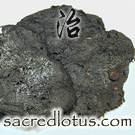 Shu Di Huang21-24 gTonify Blood
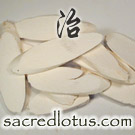 Shan Yao12-15 gTonify Qi
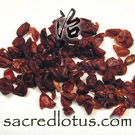 Shan Zhu Yu12-15 gAstringe, Stabilize, Bind
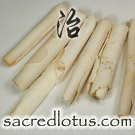 Fu Ling9-12 gRegulate Water and Drain Dampness
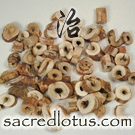 Mu Dan Pi6-9 gCool the Blood
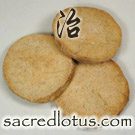 Ze Xie9-12 gRegulate Water and Drain Dampness
Preparation & dosage
How is Liu Wei Di Huang Wan prepared?
Classically the six herbs are ground to a fine powder and formed into honey pills (wan) — the preparation named directly in the formula's title — though it is equally common in modern practice as a water decoction (tang) when a stronger or faster effect is wanted.
- Herb processing: Shu Di Huang is Rehmannia root that has been repeatedly steamed and sun-dried (often with wine) until black and moist, which shifts it from the cooling, blood-nourishing raw root (Sheng Di Huang) to a warmer, richer Kidney-essence tonic — the processing is essential to this formula's yin-nourishing (rather than heat-clearing) intent.
- Reference proportions (from Sacred Lotus sources & references): Shu Di Huang 21–24 g; Shan Zhu Yu 12–15 g; Shan Yao 12–15 g; Fu Ling 9–12 g; Ze Xie 9–12 g; Mu Dan Pi 6–9 g — the classic ratio is roughly 8 (Shu Di Huang) : 4 (Shan Zhu Yu, Shan Yao) : 3 (Fu Ling, Ze Xie, Mu Dan Pi), preserved closely here.
- Modern pill/patent form: widely sold as a standardized patent pill (often called Liu Wei Di Huang Wan or by its Japanese Kampo name, Rokumigan); dosing on commercial pills follows the manufacturer's label rather than the classical decoction amounts above.
Source: Sacred Lotus sources & references + Bensky & Barolet, Formulas & Strategies.
Traditionally powdered and formed into honey pills (wan); also widely prepared as a water decoction (tang) or sold as a standardized patent pill. Reference relative amounts (from Sacred Lotus sources & references): Shu Di Huang 21-24 g; Shan Zhu Yu 12-15 g; Shan Yao 12-15 g; Fu Ling 9-12 g; Ze Xie 9-12 g; Mu Dan Pi 6-9 g. Reference only; not a prescription.
Safety — read before use
What are the cautions for Liu Wei Di Huang Wan?
Liu Wei Di Huang Wan is rich and cloying, so it is unsuitable when digestion is weak or when the presentation is one of excess, cold, or exterior pathogenic invasion rather than internal yin deficiency. Shu Di Huang and Shan Zhu Yu are dense, nourishing herbs that can burden a compromised Spleen if used without modification.
- Avoid (or use only with modification) in Spleen qi deficiency with poor appetite or a tendency toward loose stools or diarrhea — the rich tonics can worsen digestive weakness.
- Avoid in Damp-Phlegm conditions presenting with a white, greasy tongue coating, where the cloying tonics would aggravate dampness.
- Not for Kidney-yang deficiency or cold patterns: this is a pure yin tonic with no warming herbs; cold-type presentations (as in the related but warmer Jin Gui Shen Qi Wan or You Gui Wan) call for a different formula.
- Not for exterior (externally contracted) conditions: as with most tonifying formulas, it is generally withheld during an acute external invasion (e.g. common cold) until the exterior pattern resolves.
- Professional guidance advised for prolonged use, in pregnancy, or alongside other medications, particularly for the wasting-and-thirsting (diabetic) pattern, where it is traditionally used adjunctively rather than as a sole treatment.
Source: Bensky & Barolet, Formulas & Strategies; Chen & Chen, Chinese Herbal Formulas and Applications (cautions for rich yin-tonifying formulas). Traditional-use framing; not medical advice.
Originally Appeared In:
- Craft of Medicinal Treatment for Childhood Disease Patterns (Xiao Er Yao Zheng Zhi Jue)
Notes:
How does Liu Wei Di Huang Wan differ from Jin Gui Shen Qi Wan, You Gui Wan, and its own modifications?
Liu Wei Di Huang Wan is the pure Kidney-yin half of a yin/yang pair — it is literally its parent formula, Jin Gui Shen Qi Wan, with the two warming herbs removed, and it is in turn the structural base for a large family of later modifications that add herbs to shift its emphasis.
- vs Jin Gui Shen Qi Wan (its direct parent, in our database): Jin Gui Shen Qi Wan is Liu Wei Di Huang Wan plus Fu Zi (prepared aconite) and Gui Zhi (cinnamon twig), which warm and tonify Kidney yang alongside the yin tonics — used for Kidney-yang deficiency with cold signs (lower back/leg pain worse in cold, frequent clear urination, edema). Liu Wei Di Huang Wan keeps only the yin-nourishing half, for yin deficiency with empty heat rather than cold.
- vs You Gui Wan (in our database): a much stronger Kidney-yang tonic built around Rou Gui, Fu Zi, and Lu Jiao Jiao with the yin tonics as support — for pronounced yang deficiency (cold limbs, impotence, infertility), the mirror-image use case to Liu Wei Di Huang Wan's pure yin deficiency.
- vs Zuo Gui Yin (in our database): a gentler, purely yin-nourishing decoction without the “three drain” herbs (no Ze Xie, Mu Dan Pi, or Fu Ling) — used when yin deficiency is present without significant heat or dampness to drain.
The Liu Wei Di Huang Wan modification family (well-known variants; not separately catalogued on this site) shows how flexible the six-herb base is:
- Zhi Bai Di Huang Wan adds Zhi Mu and Huang Bai to drain more vigorous deficiency fire (night sweats, stronger heat signs).
- Qi Ju Di Huang Wan adds Gou Qi Zi and Ju Hua to direct the formula toward the eyes (blurry vision, dry/sore eyes, photophobia from Liver/Kidney yin deficiency).
- Mai Wei Di Huang Wan (also known as Ba Xian Chang Shou Wan, “Eight Immortal Longevity Pill”) adds Mai Men Dong and Wu Wei Zi to nourish Lung yin and astringe, for a chronic cough with Kidney-yin deficiency.
- Du Qi Wan adds Wu Wei Zi alone, to astringe Kidney qi more strongly (e.g. for wheezing/asthma with a Kidney-deficient root).
- Gui Shao Di Huang Wan adds Dang Gui and Bai Shao to strengthen the Liver-blood-nourishing side of the formula.
Source: Bensky & Barolet, Formulas & Strategies; Chen & Chen, Chinese Herbal Formulas and Applications (formula family and comparisons); Sacred Lotus sources & references for Jin Gui Shen Qi Wan/You Gui Wan/Zuo Gui Yin cross-reference.
Clinical Studies & Research:
Is there modern research on Liu Wei Di Huang Wan?
Yes — Liu Wei Di Huang Wan (widely studied under its Chinese name, Liuwei Dihuang, abbreviated LWDH or LDP) is one of the most extensively researched classical formulas, with clinical trial data in diabetic kidney disease alongside a large body of preclinical work on aging, neuroprotection, and other conditions correlating loosely with its traditional Kidney/Liver-yin-deficiency indication.
- Diabetic nephropathy (meta-analysis, clinical): a 2016 meta-analysis of 18 randomized controlled trials (1,275 patients) found that adding Liuwei Dihuang pills to standard Western treatment for diabetic nephropathy was associated with greater reductions in fasting and post-prandial blood glucose, HbA1c, and markers of kidney damage (BUN, serum creatinine, urinary protein) than Western treatment alone; the authors noted the included trials were of generally low methodological quality and called for more rigorous confirmation (PMID 26997962).
- Longevity and stress resistance (preclinical, C. elegans and aged mice): a 2019 study found that Liuwei Dihuang extended lifespan in both the roundworm C. elegans and aged mice, associated with improved stress resistance and altered fat metabolism pathways — a modern angle on the formula's traditional reputation as a longevity/anti-aging tonic (PMID 31165002).
- Parkinson's disease mechanisms (preclinical, network pharmacology): a 2021 network pharmacology analysis identified candidate active components of Liuwei Dihuang pills (including quercetin, kaempferol, stigmasterol, and beta-sitosterol) and predicted hub protein targets related to neuroinflammation and cell death pathways relevant to Parkinson's disease (PMID 34746302).
Sources: PubMed 26997962; PubMed 31165002; PubMed 34746302. Research context, not a therapeutic claim; the diabetic-nephropathy evidence is clinical but graded low-quality by its own authors, and the aging/Parkinson's studies are preclinical or computational, not human trials.
Sources & References
Compiled and edited by Thomas Dehli, Founder & Editor, Sacred Lotus Updated
The information here is referenced from numerous sources — teachers, practitioners, class notes from Five Branches University, the books below, and the published research literature, with citations given as resolvable PubMed identifiers. Where sources disagree, I have flagged the discrepancies directly. If facts couldn't be verified, I have left them out. How we source our content.
Reference information for students and practitioners — not medical advice. Consult a qualified practitioner. Terms of use.
Chinese Formulas Books & References
 https://amzn.to/4fYI3f8
 https://amzn.to/4j55NRA
 https://amzn.to/4gMROyv
 https://amzn.to/4h7msSK