

Gui Zhi Tang (Cinnamon Twig Decoction)
Gui Zhi Tang
Cinnamon Twig Decoction
- Category
- Formulas that Release the Exterior
- Subcategory
- Formulas that Release Exterior Cold
- Ingredients
- 5 herbs
Actions
What does Gui Zhi Tang do?
Gui Zhi Tang harmonizes the Ying (nutritive) and Wei (protective) qi and releases the muscle layer (jie ji), resolving the mild Tai Yang “wind-strike” (zhong feng) exterior pattern in which sweating occurs but the fever does not resolve. It is the archetype formula for this harmonizing strategy in the Shang Han Lun and the template many later formulas are built on.
- Releases the exterior and disperses wind — Gui Zhi and Sheng Jiang together open the pores and expel wind from the muscle layer without the forceful, sweat-forcing action of Ma Huang.
- Harmonizes Ying and Wei — Gui Zhi’s acrid warmth disperses the overly “strong,” outward-floating Wei qi while Bai Shao’s sour astringency gathers and nourishes the “weak,” leaking Ying qi; corrected together, sweating stops and the exterior resolves.
- Harmonizes the Middle (Spleen–Stomach) — Sheng Jiang, Da Zao, and Zhi Gan Cao support digestion, generate fluids, and protect Stomach qi through the sweating process.
- Regulates sweating bidirectionally — the same combination that helps stop the abnormal sweating of Ying–Wei disharmony can also, with warm porridge and covering, coax out a light therapeutic sweat to expel wind — a “dual-directional” action noted in modern pharmacological reviews.
Source: Sacred Lotus sources & references (composition); Shang Han Lun (Treatise on Cold Damage); Bensky & Barolet, Formulas & Strategies. Traditional-use framing; not medical advice.
Indications
What is Gui Zhi Tang used for?
Gui Zhi Tang treats Tai Yang wind-strike (zhong feng) — a mild exterior wind-cold pattern of constitutional or exterior deficiency in which the patient sweats yet the fever and chills persist, unlike the sweat-free exterior-excess pattern that Ma Huang Tang addresses.
- Fever with sweating that does not resolve the fever — the hallmark sign; sweat is present but the exterior pattern continues.
- Aversion to wind (more prominent than aversion to cold), often with headache and a stiff or tense neck.
- Floating and moderate (fu huan), or floating and weak, pulse — per Sacred Lotus sources & references, reflecting Ying–Wei disharmony rather than a tightly bound excess exterior.
- Thin, white tongue coating — per Sacred Lotus sources & references; no interior heat or dampness signs.
- Nasal congestion, a dry, retching sensation, or mild nausea may accompany the exterior pattern.
- Spontaneous, effortless sweating unrelated to exertion or heat in constitutionally weak individuals with an underlying Ying–Wei disharmony (e.g., recurrent colds in children, low-grade post-illness or postpartum fever with sweating and wind-aversion) — an extended, non-acute use of the same harmonizing logic.
Source: live Sacred Lotus sources & references (pattern, tongue, pulse fields); Shang Han Lun, line 12; Bensky & Barolet, Formulas & Strategies. Traditional pattern description, not a diagnosis.
Western Uses:
What conditions is Gui Zhi Tang used for in modern practice?
Gui Zhi Tang harmonises the nutritive and defensive qi in a wind-cold exterior pattern marked by sweating and sensitivity to wind (an exterior deficiency), so it is referenced for mild exterior and disharmony presentations: the common cold, influenza, postpartum recovery care, morning sickness, and some skin conditions such as frostbite, eczema, and ringworm (tinea).
It is chosen for the exterior-wind-cold-from-deficiency pattern, not for a diagnosis. Severe or unrelenting vomiting in pregnancy (hyperemesis) needs medical care, and frostbite is a medical emergency; persistent skin conditions warrant assessment. Traditional-use correlates only, not a treatment claim.
Source: Sacred Lotus sources & references (pattern) + Bensky & Barolet, Formulas & Strategies; biomedical correlates as reference only. Not medical advice.
Ingredients
5 substances in Gui Zhi Tang — each links to its full herb monograph.
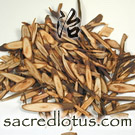 Gui Zhi9 gWarm, Spicy Herbs that Release the Exterior
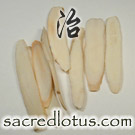 Bai Shao9 gTonify Blood
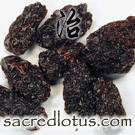 Da Zao5-12 piecesTonify Qi
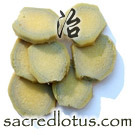 Sheng Jiang9 gWarm, Spicy Herbs that Release the Exterior
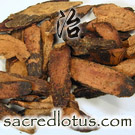 Zhi Gan Cao6 gTonify Qi
Preparation & dosage
How is Gui Zhi Tang prepared?
It is decocted as a single course and, classically, taken together with hot rice porridge and warm covering to gently assist a mild sweat — not simmered and drunk like a routine daily tea. The Shang Han Lun instructs the physician to decoct the five herbs, then have the patient drink the strained liquid warm, follow it immediately with a bowl of hot thin rice congee to bolster Stomach qi and the medicinal action, and then lie covered with a light blanket for roughly two hours to encourage a slight, all-over dampness of sweat (wei si han) — specifically NOT the drenching sweat that Ma Huang Tang aims for.
- Herb processing: Sheng Jiang is used fresh/uncooked (as distinct from dried Gan Jiang), and the licorice is honey-fried (Zhi Gan Cao) rather than raw — both noted in Sacred Lotus sources & references and standard to this formula.
- Dosing rhythm: the classical instruction is to stop further doses once a light sweat appears; if no sweat comes, the interval between doses is shortened, and in stubborn cases up to two or three days’ worth may be given, watching the response rather than fixing the dose in advance.
- Dietary restriction during the course: the classical text advises avoiding raw, cold, greasy, and strongly spiced or scented foods, dairy, and alcohol, which can interfere with the formula’s harmonizing action.
Source: Shang Han Lun (Treatise on Cold Damage), line 12 (preparation, hot porridge, warm covering, dosing rhythm, dietary restriction); live Sacred Lotus sources & references (herb processing). Reference only, not a prescription.
Decoction, classical Shang Han Lun ratio: Gui Zhi 3 liang, Bai Shao 3 liang, Sheng Jiang 3 liang, Zhi Gan Cao 2 liang, Da Zao 12 pieces (broken open) — reflected in Sacred Lotus sources & references as Gui Zhi 9 g, Bai Shao 9 g, Sheng Jiang 9 g, Zhi Gan Cao 6 g, Da Zao 5-12 pieces. Classically taken warm, followed by hot rice porridge and light covering to assist a mild sweat; stop further doses once a light sweat appears. Reference only, not a prescription.
Safety — read before use
What are the cautions for Gui Zhi Tang?
Gui Zhi Tang is a mild, warming, sweat-adjusting formula for exterior DEFICIENCY and must not be substituted for Ma Huang Tang in an exterior EXCESS pattern. The Shang Han Lun itself makes this contraindication explicit.
- Not for exterior wind-cold excess: the classical text states that when the pulse is floating and tight, with fever and NO sweating, Gui Zhi Tang “must not be given” — that tightly bound, sweat-free pattern calls for Ma Huang Tang instead. Giving Gui Zhi Tang’s warm, dispersing herbs to an already-sealed excess exterior does not release it correctly.
- Not for wind-heat or damp-heat/internal-heat patterns — per Sacred Lotus sources & references; the formula’s warm, acrid herbs (Gui Zhi, Sheng Jiang) can aggravate heat signs.
- Avoid alcohol while taking it — per Sacred Lotus sources & references and the classical dietary restriction; alcohol’s heat and dampness conflict with the formula’s harmonizing action and its warm nature.
- Licorice caution: contains Zhi Gan Cao; per the classical Eighteen Incompatibilities, licorice is not combined with Gan Sui, Da Ji, Yuan Hua, or Hai Zao. Regular high-dose licorice intake is a general caution in hypertension and for anyone monitoring potassium/fluid balance.
Source: Sacred Lotus sources & references (cautions field); Shang Han Lun (Treatise on Cold Damage), line 16 (classical contraindication); classical Eighteen Incompatibilities. Reference only, not medical advice.
Originally Appeared In:
- On Cold Damage (Shang Han Lun)
Notes:
How does Gui Zhi Tang compare with related formulas, and how is it modified?
Gui Zhi Tang is traditionally called the first formula of the Shang Han Lun and, per later commentators, “the leading formula of all formulas” (qun fang zhi guan) — the classical text builds an entire teaching pair around it and Ma Huang Tang, and an entire modification family branches from its five-herb core.
- vs Ma Huang Tang: the two formulas are the Shang Han Lun’s core differentiation of Tai Yang disease. Ma Huang Tang treats wind-cold exterior EXCESS (shang han) — severe chills, body aches, NO sweating, floating-tight pulse — with a forceful diaphoretic; Gui Zhi Tang treats wind-strike exterior DEFICIENCY (zhong feng) — milder chills/fever WITH sweating that fails to resolve the pattern, floating-moderate pulse — with a gentle, harmonizing action. Each formula is classically contraindicated in the other’s pattern.
- Gui Zhi Jia Ge Gen Tang — Gui Zhi Tang plus Ge Gen, for the same Ying–Wei-deficient, sweating exterior pattern but with a pronounced stiff neck and upper back (its Ma Huang Tang-based counterpart, plain Ge Gen Tang, treats the equivalent stiff-neck pattern WITHOUT sweating).
- Gui Zhi Jia Hou Po Xing Zi Tang — adds Hou Po and Xing Ren, for the same exterior pattern complicated by cough or wheeze.
- Gui Zhi Jia Fu Zi Tang — adds Fu Zi, for over-sweating that has begun to injure yang (profuse sweat, cold limbs, urinary difficulty) after excessive diaphoresis.
- Xiao Jian Zhong Tang — Gui Zhi Tang with the Bai Shao doubled plus maltose (Yi Tang), repurposed from releasing the exterior to warming and tonifying the Middle for spasmodic abdominal pain.
- Dang Gui Si Ni Tang — built on the Gui Zhi Tang framework (Gui Zhi, Bai Shao, Zhi Gan Cao, Da Zao) without Sheng Jiang, adding Dang Gui, Xi Xin, and Tong Cao to warm blood vessels and treat cold-type reversal of the extremities.
- Huang Qi Gui Zhi Wu Wu Tang — removes Zhi Gan Cao, adds Huang Qi and extra Sheng Jiang, redirecting the same warming/nourishing logic toward Blood Bi (numbness/tingling from qi-blood deficiency with obstruction) rather than an exterior pattern.
Source: Shang Han Lun (Treatise on Cold Damage) and its classical Ma Huang Tang/Gui Zhi Tang differentiation; Bensky & Barolet, Formulas & Strategies (modification family); Sacred Lotus record for Xiao Jian Zhong Tang composition.
Clinical Studies & Research:
Is there modern research on Gui Zhi Tang?
Modern research on Gui Zhi Tang (Keishi-to in Japanese Kampo) is modest but includes both human physiology studies and a registered systematic-review protocol; it centers on the formula’s classically described “dual-directional” regulatory action rather than on treating a single named disease.
- Circulatory/autonomic physiology (healthy adults): a controlled study comparing six Kampo formulations in healthy men found that Keishi-to (Gui Zhi Tang) increased systolic blood pressure and stroke volume, a distinct autonomic/circulatory signature from Mao-to (Ma Huang Tang), which raised blood pressure, heart rate, cardiac output, and cardiac index more broadly while lowering total peripheral resistance — a modern physiological echo of the classical excess/deficiency distinction between the two formulas (PMID 10472819).
- Allergic rhinitis (systematic-review protocol): a registered protocol for a systematic review and meta-analysis of Gui-zhi decoction for allergic rhinitis cites prior pharmacological work describing a “dual-directional regulation” effect on sweat-gland activity, body temperature, and immune function, plus reported anti-inflammatory, antibacterial, antiviral, and anti-allergic activity, and notes the formula’s inclusion in a 2015 clinical guideline for allergic-rhinitis symptom relief; the review itself was not yet completed at time of writing (PMID 32957312).
Sources: PubMed 10472819; PubMed 32957312. Research context on the formula’s physiological and clinical-research background, not a therapeutic claim.
Sources & References
Compiled and edited by Thomas Dehli, Founder & Editor, Sacred Lotus Updated
The information here is referenced from numerous sources — teachers, practitioners, class notes from Five Branches University, the books below, and the published research literature, with citations given as resolvable PubMed identifiers. Where sources disagree, I have flagged the discrepancies directly. If facts couldn't be verified, I have left them out. How we source our content.
Reference information for students and practitioners — not medical advice. Consult a qualified practitioner. Terms of use.
Chinese Formulas Books & References
 https://amzn.to/4fYI3f8
 https://amzn.to/4j55NRA
 https://amzn.to/4gMROyv
 https://amzn.to/4h7msSK