

Xiao Qing Long Tang (Minor Bluegreen Dragon Decoction)
Xiao Qing Long Tang
Minor Bluegreen Dragon Decoction
- Category
- Formulas that Release the Exterior
- Subcategory
- Formulas that Release Exterior Cold
- Ingredients
- 8 herbs
Actions
What does Xiao Qing Long Tang do?
Xiao Qing Long Tang releases wind-cold from the exterior while warming the Lungs and transforming the thin, watery "phlegm-fluid" (yin) congesting them — the classic Shang Han Lun strategy for a cold that has driven cough and wheeze inward.
- Releases the exterior and disperses wind-cold — Ma Huang and Gui Zhi induce sweating to expel a surface cold that has not resolved.
- Warms the Lungs and transforms thin mucus (yin) — Gan Jiang and Xi Xin warm the interior and dry the cold-fluid accumulation at its source.
- Directs rebellious Lung qi downward and dries phlegm — Ban Xia settles the cough/wheeze and resolves dampness.
- Astringes the Lungs and protects fluids — Wu Wei Zi and Bai Shao restrain the dispersing, drying herbs so they do not scatter Lung qi or injure yin with prolonged use.
- Harmonizes the formula — Zhi Gan Cao moderates the other herbs and protects the Middle Qi.
Source: Bensky & Barolet, Formulas & Strategies; cross-referenced against multiple online sources.
Indications
What is Xiao Qing Long Tang used for?
Xiao Qing Long Tang is traditionally used for cough and wheezing with copious thin, watery-white sputum, together with signs of an unresolved surface wind-cold.
- Cough or wheezing with profuse, thin, frothy, watery-white sputum that is easy or difficult to expectorate
- Chills and fever with body aches and absence of sweating (unresolved exterior wind-cold)
- Chest and epigastric fullness or oppression, with nausea
- Dyspnea that worsens lying flat, and an inability to lie down
- Clear, watery nasal discharge and sneezing, as seen in allergic rhinitis
- Possible facial or peripheral edema when fluid retention is pronounced
Source: Bensky & Barolet, Formulas & Strategies; Chen & Chen, Chinese Herbal Formulas and Applications; cross-referenced against multiple online sources.
Ingredients
8 substances in Xiao Qing Long Tang — each links to its full herb monograph.
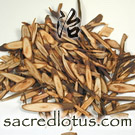 Gui Zhi9 gWarm, Spicy Herbs that Release the Exterior
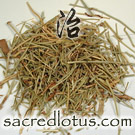 Ma Huang9 gWarm, Spicy Herbs that Release the Exterior
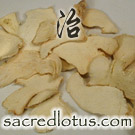 Gan Jiang9 gWarm the Interior and Expel Cold
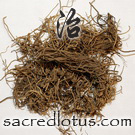 Xi Xin9 gWarm, Spicy Herbs that Release the Exterior
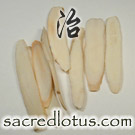 Bai Shao9 gTonify Blood
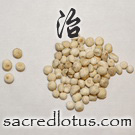 Ban Xia9 gWarm Herbs that Transform Phlegm-Cold
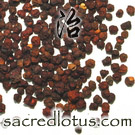 Wu Wei Zi9 gAstringe, Stabilize, Bind
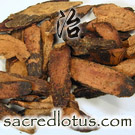 Zhi Gan Cao9 gTonify Qi
Preparation & dosage
How is Xiao Qing Long Tang prepared?
Xiao Qing Long Tang is a classical decoction (tang): the eight herbs are simmered together in water and the strained liquid is taken warm, traditionally in divided doses over the day.
- In the Shang Han Lun method, Ma Huang is classically decocted first and any surface foam skimmed off, before the remaining herbs are added and simmered together.
- Gan Jiang here refers to the dried (not fresh) ginger rhizome, chosen specifically for its interior-warming action rather than fresh ginger's exterior-releasing effect.
- Zhi Gan Cao is honey-fried licorice root, used for its harmonizing and Middle-Qi-supporting action.
- The strained decoction is conventionally taken warm; classical instructions describe stopping once sweating and symptom relief are achieved rather than completing a fixed course.
Source: Shang Han Lun (Zhang Zhongjing); Bensky & Barolet, Formulas & Strategies; cross-referenced against multiple online sources.
Safety — read before use
What are the cautions for Xiao Qing Long Tang?
Xiao Qing Long Tang is a strongly warming, dispersing formula and is traditionally reserved for cold-type patterns with clear, thin, watery sputum — not for heat or dryness patterns, and not for extended, uninterrupted use.
- Not appropriate for a dry cough, a cough with little or no sputum, or cough with yellow, sticky/thick sputum — these indicate heat or dryness rather than the cold-fluid pattern this formula addresses.
- Not appropriate for cough with blood.
- Not intended for long-term or open-ended use; because the formula strongly disperses and can consume Qi and fluids over time, practitioners traditionally limit its use to short courses with reassessment.
- Caution in pregnancy and in patients with cardiovascular disease or hypertension, given the diaphoretic, qi-circulating action of Ma Huang and Gui Zhi.
- Two ingredients carry public-safety notes independent of this formula: Ma Huang (Ephedra) contains ephedrine-type alkaloids and is a controlled or restricted substance in a number of jurisdictions; Xi Xin (Asarum) is subject to dose- and duration-limits in modern pharmacopoeias because of safety reviews affecting plants in the broader Aristolochiaceae family. These notes are general public-safety reference, not administration guidance.
Source: Bensky & Barolet, Formulas & Strategies; cross-referenced against multiple online sources.
Originally Appeared In:
- On Cold Damage (Shang Han Lun)
Notes:
How does Xiao Qing Long Tang differ from related formulas?
Xiao Qing Long Tang is distinguished from related cough/wheeze and fluid-accumulation formulas by its combined exterior-releasing and interior-warming action for a cold-type, thin-fluid pattern.
- Vs. Ling Gui Zhu Gan Tang — also addresses fluid (yin) accumulation, but is a tonifying formula for Spleen-yang deficiency with fluid retention and no exterior wind-cold signs; it does not release the exterior.
- Vs. She Gan Ma Huang Tang (Belamcanda and Ephedra Decoction) — treats a similar wheeze with a rattling, phlegm-obstruction sound in the throat, but leans toward phlegm turbidity obstructing the Lungs rather than a fresh exterior wind-cold, and uses She Gan, Zi Wan and Kuan Dong Hua in place of Gui Zhi and Bai Shao.
- Vs. Da Qing Long Tang (Major Bluegreen Dragon Decoction) — a more forceful exterior-releasing formula from the same classical source, adding Shi Gao (Gypsum) for a wind-cold pattern complicated by interior heat and restlessness, rather than interior cold-fluid.
Classical source and lineage: Xiao Qing Long Tang originates in the Shang Han Lun (Treatise on Cold Damage), attributed to Zhang Zhongjing (c. 200 CE), and also appears in the companion text Jin Gui Yao Lue (Essentials from the Golden Cabinet). A well-known classical modification is Xiao Qing Long Jia Shi Gao Tang, which adds Shi Gao (Gypsum) for cases where the underlying cold-fluid pattern is complicated by irritability or heat signs.
Source: Shang Han Lun; Jin Gui Yao Lue; Bensky & Barolet, Formulas & Strategies; cross-referenced against multiple online sources.
Clinical Studies & Research:
Is there modern research on Xiao Qing Long Tang?
Modern research has focused mainly on allergic rhinitis, where a systematic review of randomized controlled trials found supportive evidence for efficacy and an acceptable safety profile, alongside mechanistic studies proposing how the formula modulates allergic inflammation.
- A 2022 systematic review and meta-analysis of 24 randomized controlled trials evaluated the efficacy and safety of Xiao Qing Long Tang for allergic rhinitis.
- An animal-model study reported that Xiao Qing Long Tang reduced allergic rhinitis symptoms by inhibiting group 2 innate lymphoid cells (ILC2s) via the IL-33/ST2 and JAK/STAT signaling pathways in an ovalbumin-induced model.
- Research on the identically-composed Japanese Kampo formulation Shoseiryuto (Sho-seiryu-to) found it suppressed IL-33 release from nasal epithelial cells in a chemically-induced allergic rhinitis model, offering a complementary mechanistic angle from the same herb combination under a different name.
These findings describe laboratory and clinical research context; they are not a therapeutic claim for any individual.
Sources: PMID 35257842, PMID 37586158, PMID 36297517.
Sources & References
Compiled and edited by Thomas Dehli, Founder & Editor, Sacred Lotus Updated
The information here is referenced from numerous sources — teachers, practitioners, class notes from Five Branches University, the books below, and the published research literature, with citations given as resolvable PubMed identifiers. Where sources disagree, I have flagged the discrepancies directly. If facts couldn't be verified, I have left them out. How we source our content.
Reference information for students and practitioners — not medical advice. Consult a qualified practitioner. Terms of use.
Chinese Formulas Books & References
 https://amzn.to/4fYI3f8
 https://amzn.to/4j55NRA
 https://amzn.to/4gMROyv
 https://amzn.to/4h7msSK