

Hai Zao Yu Hu Tang (Sargassum Decoction for the Jade Flask)
Hai Zao Yu Hu Tang
Sargassum Decoction for the Jade Flask
- Category
- Formulas that Treat Phlegm
- Ingredients
- 12 herbs
Actions
What does Hai Zao Yu Hu Tang do?
Hai Zao Yu Hu Tang (Sargassum Decoction for the Jade Flask) transforms phlegm, softens hardness, and dissipates goiter and nodules, while gently invigorating qi and blood in the affected area. It is a classic phlegm-nodule formula built around two iodine-rich seaweeds, supported by phlegm-transforming, qi-regulating, and blood-invigorating herbs.
The eleven ingredients divide by role:
- Chief: Hai Zao (Sargassum) and Kun Bu (Kelp) — salty, phlegm-softening seaweeds that are the formula’s signature herbs for dissolving goiter (“stone goiter”) and scrofula.
- Deputies: Zhe Bei Mu clears heat and disperses nodules; Ban Xia dries damp and transforms phlegm — together reinforcing the chief herbs’ work on phlegm binding into masses.
- Assistants: Dang Gui and Chuan Xiong invigorate the blood, since long-standing nodules involve blood stasis as well as phlegm; Qing Pi and Chen Pi move qi and break up the stagnation that let phlegm accumulate in the first place; Du Huo helps unblock the affected channels.
- Envoys: Lian Qiao clears heat and guides the formula to swellings; Gan Cao harmonizes the other herbs — notably, it is paired here with Hai Zao despite the two being listed among the classical “Eighteen Incompatible Medicaments” (shi ba fan), a deliberate, time-honored combination discussed further under Cautions.
Source: Sacred Lotus sources & references + Bensky & Barolet, Formulas & Strategies (chief/deputy/assistant/envoy analysis for phlegm-nodule formulas). Traditional-use framing; not medical advice.
Indications
What is Hai Zao Yu Hu Tang used for?
Hai Zao Yu Hu Tang treats goiter and scrofula arising from phlegm binding with qi and blood stagnation in the neck — swellings and nodules that traditional texts describe as “stone goiter” (ying) or scrofula (luoli) when they are hard, painless, and slow-growing rather than acutely inflamed.
- Classic presentation: firm, generally painless swelling or nodules of the neck/thyroid region that enlarge gradually over time.
- Underlying pattern: phlegm-damp accumulating together with qi stagnation and, in longer-standing cases, blood stasis.
Tongue and pulse: a thin, greasy tongue coating (reflecting phlegm-damp) with a wiry, slippery pulse (reflecting qi constraint and phlegm).
Source: Sacred Lotus sources & references on pattern/tongue/pulse + Bensky & Barolet, Formulas & Strategies. Traditional-use framing; not medical advice.
Western Uses:
What is Hai Zao Yu Hu Tang used for in modern practice?
In modern practice, Hai Zao Yu Hu Tang is referenced in the context of goiter and benign thyroid nodules — conditions that overlap with the formula’s classical description of phlegm-and-stagnation masses in the neck. Laboratory studies in rats and gene-expression models have examined how the formula, and specifically its debated Sargassum/licorice pairing, act on thyroid hormone synthesis in iodine-deficient goiter (see Research).
These biomedical correlates are offered as a reference to the formula’s traditional use, not as a claim that it treats any diagnosed thyroid disease. Because Hai Zao and Kun Bu are iodine-rich seaweeds, any modern use near thyroid conditions belongs with a qualified practitioner monitoring thyroid function.
Source: traditional-use correlates summarized from Bensky & Barolet, Formulas & Strategies, and the studies cited under Research; reference only, not a treatment claim.
Ingredients
12 substances in Hai Zao Yu Hu Tang — each links to its full herb monograph.
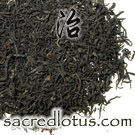 Hai Zao9 gCool and Transform Phlegm-Heat
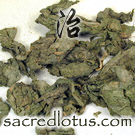 Kun Bu9 gCool and Transform Phlegm-Heat
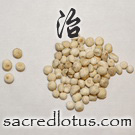 Ban Xia9 gWarm Herbs that Transform Phlegm-Cold
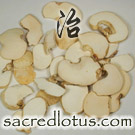 Zhe Bei Mu9 gCool and Transform Phlegm-Heat
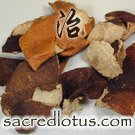 Chen Pi4.5 gRegulate the Qi
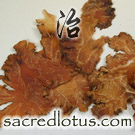 Chuan Xiong9 gInvigorate Blood and Remove Stagnation
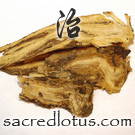 Dang Gui9 gTonify Blood
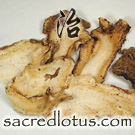 Du Huo9 gDispel Wind-Dampness
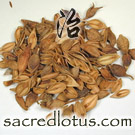 Lian Qiao9 gClear Heat and Eliminate Toxins
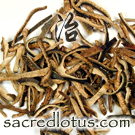 Qing Pi6 gRegulate the Qi
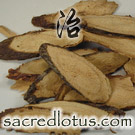 Gan Cao3 gTonify Qi
Preparation & dosage
How is Hai Zao Yu Hu Tang prepared?
Hai Zao Yu Hu Tang is prepared as a standard water decoction (tang) of the eleven herbs, taken as directed by a qualified practitioner; dosing is typically adjusted to the size and duration of the nodules being addressed.
Source: Bensky & Barolet, Formulas & Strategies (standard decoction preparation for tang-form formulas).
Decoction. Reference relative amounts: Hai Zao, Kun Bu, Zhe Bei Mu, Ban Xia, Du Huo, Chuan Xiong, Dang Gui, Lian Qiao 9 g each; Qing Pi 6 g; Chen Pi 4.5 g; Gan Cao 3 g. Reference only.
Safety — read before use
What are the cautions for Hai Zao Yu Hu Tang?
Hai Zao Yu Hu Tang is a textbook example in TCM education of pairing Hai Zao (Sargassum) with Gan Cao (Licorice) — two herbs listed among the classical “Eighteen Incompatible Medicaments” (shi ba fan), a set of herb pairs traditionally held to counteract or harm each other. This formula deliberately combines them rather than avoiding the pairing; the traditional rationale is that Gan Cao’s harmonizing action helps direct the seaweeds’ phlegm-softening effect, though the combination remains a point of study and some debate in the literature (see Research).
- Reference fact, not usage guidance: this note documents the classical incompatibility for teaching/study purposes. It is not a recommendation for or against combining these two herbs outside a formula prescribed by a qualified practitioner.
- Pregnancy: contains blood-invigorating herbs (Chuan Xiong, Dang Gui) — use only under professional guidance.
- Digestive/Spleen caution: the seaweeds and Ban Xia can be heavy, cooling, or drying; Spleen-deficient or Cold-damp presentations are usually modified rather than treated with the base formula.
Source: Bensky & Barolet, Formulas & Strategies (Eighteen Incompatible Medicaments) + PubMed research on the Hai Zao/Gan Cao pair (see Research). Traditional-use framing; not medical advice.
Originally Appeared In:
- True Lineage of External Medicine (Wai Ke Zheng Zong)
Notes:
Where does Hai Zao Yu Hu Tang come from, and how does it compare to other phlegm-nodule formulas?
Hai Zao Yu Hu Tang comes from Chen Shigong’s Ming-dynasty surgical text Wai Ke Zheng Zong (True Lineage of External Medicine), where it appears among treatments for goiter and external masses. It is one of several classical formulas built to transform phlegm and dissipate goiter/scrofula (ying-luo), distinguished from its peers by its seaweed-based chief herbs and its deliberate use of the Hai Zao/Gan Cao pair.
- vs Xiao Luo Wan (Reduce Scrofula Pill): Xiao Luo Wan centers on Xuan Shen, Mu Li, and Zhe Bei Mu to nourish yin while softening hardness, and suits scrofula with yin-deficient heat; Hai Zao Yu Hu Tang leans more on the seaweeds plus qi- and blood-moving herbs for phlegm-and-stagnation goiter.
Source: Sacred Lotus sources & references + Bensky & Barolet, Formulas & Strategies.
Clinical Studies & Research:
Is there modern research on Hai Zao Yu Hu Tang?
Yes — mostly rat and gene-expression studies of goiter models, several of which specifically investigate the classically “incompatible” Hai Zao/Gan Cao pair. A gene-expression and network-analysis study in iodine-deficient goiter rats found the formula regulated genes involved in thyroid hormone synthesis, and reported that the Sargassum/licorice pairing was functionally relevant to that effect in the model tested, rather than simply harmful. Follow-up studies compared how different species of Sargassum and different varieties of licorice perform within the formula.
- Mechanism (iodine-deficient goiter, gene-expression model): Haizao Yuhu Decoction regulated thyroid-hormone-synthesis genes; the Sargassum/licorice pair was functionally relevant to the effect (PMID 27384475).
- Species comparison (PTU-induced goiter rats): Sargassum fusiforme and Sargassum pallidum showed comparable anti-goiter effect and safety within the formula (PMID 28713435).
- Licorice-variety comparison (goiter rats): different Glycyrrhiza species/varieties used in the formula showed differing anti-goiter effectiveness (PMID 34567211).
Sources: PubMed 27384475; PubMed 28713435; PubMed 34567211. Research context on the formula and its classically “incompatible” herb pair, not a therapeutic claim.
Sources & References
Compiled and edited by Thomas Dehli, Founder & Editor, Sacred Lotus Updated
The information here is referenced from numerous sources — teachers, practitioners, class notes from Five Branches University, the books below, and the published research literature, with citations given as resolvable PubMed identifiers. Where sources disagree, I have flagged the discrepancies directly. If facts couldn't be verified, I have left them out. How we source our content.
Reference information for students and practitioners — not medical advice. Consult a qualified practitioner. Terms of use.
Chinese Formulas Books & References
 https://amzn.to/4fYI3f8
 https://amzn.to/4j55NRA
 https://amzn.to/4gMROyv
 https://amzn.to/4h7msSK