

Si Mo Tang (Four Milled Herb Decoction)
Si Mo Tang
Four Milled Herb Decoction
- Category
- Formulas that Regulate the Qi
- Subcategory
- Formulas that Direct Rebellious Qi Downward
- Ingredients
- 4 herbs
Actions
What does Si Mo Tang do?
Si Mo Tang (Four Milled-Herb Decoction) courses Liver qi, directs rebellious qi downward, and dissolves qi-and-food stagnation, while quietly protecting the qi it disperses. It is built for a specific pattern: strong emotion knotting the Liver's qi, which then rebels upward and crosses over into the Lung and Stomach, producing tight breathing and a blocked, full sensation in the chest and epigastrium.
The four ingredients divide by role:
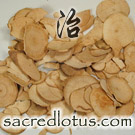
- Chief: Wu Yao (Lindera Root) courses the Liver, rectifies qi, and warms and disperses cold-qi stagnation — the core qi-moving action of the formula.
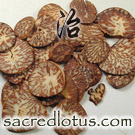
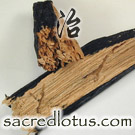
- Deputies: Chen Xiang (Aloeswood) and Bing Lang (Betel Nut) both direct rebellious qi downward and break up stagnation — Chen Xiang leaning toward calming labored breathing, Bing Lang toward clearing fullness and food stagnation in the middle burner.
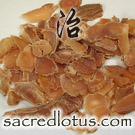
- Assistant: Ren Shen (Ginseng Root) tonifies the qi that the other three herbs disperse, so the formula moves qi without depleting the correct qi — useful when the patient's constitution is not robust.
Source: Sacred Lotus sources & references + Bensky & Barolet, Formulas & Strategies (chief/deputy/assistant analysis, "Formulas that Direct Rebellious Qi Downward").
Indications
What is Si Mo Tang used for?
Si Mo Tang treats Liver qi stagnation from emotional constraint that rebels upward and crosses over into the Lung and Stomach. The classic presentation has a sudden onset tied to a strong emotional trigger, in a person whose underlying constitution is not markedly deficient.
- Chest/Lung signs: fullness and oppression in the chest and diaphragm, labored breathing or shortness of breath, a sensation as if the qi is about to expire.
- Stomach signs: epigastric and abdominal fullness or pain, reduced appetite, occasional vomiting after eating.
Tongue and pulse: a normal-to-white tongue coating; a wiry pulse, reflecting Liver qi stagnation.
Source: Bensky & Barolet, Formulas & Strategies, cross-checked against established TCM formula references. Traditional-use framing; not medical advice.
Western Uses:
What is Si Mo Tang used for in modern practice?
In modern practice, Si Mo Tang's qi-moving, rebellious-qi-descending pattern is referenced for stress-triggered chest tightness, shortness of breath, and epigastric fullness with reduced appetite — presentations that overlap with what Western medicine might describe as functional dyspepsia or anxiety-related dyspnea. Because it pairs three brisk qi-moving herbs with a single qi tonic (Ren Shen), it is traditionally reserved for acute stagnation in a patient who is not severely deficient.
These are traditional-use correlates only, not disease-treatment claims. Direct modern clinical research on this exact classical composition is limited — see Discrepancies under research.
Source: traditional-use correlates summarized from Bensky & Barolet, Formulas & Strategies; reference only, not a treatment claim.
Ingredients
4 substances in Si Mo Tang — each links to its full herb monograph.
Preparation & dosage
How is Si Mo Tang prepared?
Si Mo Tang is traditionally prepared by grinding each of the four herbs individually with water into a thick liquid — the "milling" that gives the formula its name — then combining and briefly decocting them together. Modern practice typically substitutes a standard water decoction, with Chen Xiang (Aloeswood) added near the end of cooking to preserve its aromatic, qi-descending action.
Source: Bensky & Barolet, Formulas & Strategies (preparation note); cross-checked against established TCM formula references.
Decoction. Reference relative amounts (per Sacred Lotus sources & references): Wu Yao (Lindera Root) 9 g; Bing Lang (Betel Nut) 9 g; Ren Shen (Ginseng Root) 3 g; Chen Xiang (Aloeswood) 3 g. Chen Xiang traditionally added near the end of cooking. Reference only.
Safety — read before use
What are the cautions for Si Mo Tang?
Si Mo Tang is a briskly qi-moving formula built around three dispersing herbs, so it is not meant for long-term use or for patients whose main problem is qi deficiency rather than qi stagnation. Bing Lang and Chen Xiang can be harsh on weak digestion, and the formula's downward-directing action is inappropriate once true deficiency (marked fatigue, weak pulse) dominates the picture.
- Avoid or modify in significant qi deficiency without stagnation, and use cautiously in frail or elderly patients unless the balance is shifted toward tonification.
- Pregnancy: Bing Lang (Betel Nut) is a brisk, qi-breaking, downward-directing herb — use only under professional guidance.
- Not for prolonged use: intended for acute stagnation; once the rebellious-qi pattern resolves, the formula is normally stopped or modified toward tonification.
Source: Bensky & Barolet, Formulas & Strategies (cautions for qi-moving/rebellious-qi formulas). Traditional-use framing; not medical advice.
Originally Appeared In:
- Formulas to Aid the Living (Ji Sheng Fang)
Notes:
How is Si Mo Tang modified, and how does it compare to related formulas?
A classical formula mnemonic notes that Si Mo Tang addresses stagnation from strong emotion, and that Zhi Ke (Fructus Aurantii) can stand in for Ren Shen when the patient is robust and not underlying-deficient — keeping the formula purely qi-moving rather than qi-moving-plus-tonifying.
- Robust constitution, no deficiency: substitute Zhi Ke for Ren Shen to avoid tonifying qi that isn't deficient.
- With constipation from qi stagnation: add Zhi Shi and Da Huang — traditionally distinguished as the six-herb Liu Mo Tang (Six Milled-Herb Decoction).
- Pronounced Liver-qi stagnation: add Chai Hu and extra Zhi Ke to strengthen the Liver-coursing action.
Source: classical formula mnemonic and modification pattern, cross-checked against Bensky & Barolet, Formulas & Strategies and established TCM formula references.
Clinical Studies & Research:
Is there modern research on Si Mo Tang?
Direct modern clinical or pharmacological research on this classical four-herb composition (Ren Shen, Bing Lang, Chen Xiang, Wu Yao) could not be verified. Most PubMed/PMC-indexed studies published under the names "Si Mo Tang," "Simo Decoction," or "Simotang" investigate a different, commercially produced oral-liquid formula (Fructus Aurantii, Radix Aucklandiae, Semen Arecae, Radix Linderae) first recorded in 1519 — it shares Bing Lang and Wu Yao with the classical formula but replaces Ren Shen and Chen Xiang with Zhi Ke (Fructus Aurantii) and Mu Xiang (Radix Aucklandiae).
Discrepancy: readers researching "Si Mo Tang" will mostly find studies on this differently-composed commercial variant — including randomized trials on postoperative-ileus recovery after hepatectomy and colorectal resection, and pharmacology work on gastric smooth-muscle contraction. These findings describe that other product, not the Song-dynasty Ren Shen/Chen Xiang composition documented in this entry, so they are omitted here rather than cited as evidence for this formula.
Source: PubMed/PMC search; no verified trials located for the exact classical composition. Variant-composition studies were identified and their ingredient lists confirmed from primary sources before being excluded as inapplicable to this entry.
Sources & References
Compiled and edited by Thomas Dehli, Founder & Editor, Sacred Lotus Updated
The information here is referenced from numerous sources — teachers, practitioners, class notes from Five Branches University, the books below, and the published research literature, with citations given as resolvable PubMed identifiers. Where sources disagree, I have flagged the discrepancies directly. If facts couldn't be verified, I have left them out. How we source our content.
Reference information for students and practitioners — not medical advice. Consult a qualified practitioner. Terms of use.
Chinese Formulas Books & References
 https://amzn.to/4fYI3f8
 https://amzn.to/4j55NRA
 https://amzn.to/4gMROyv
 https://amzn.to/4h7msSK