

Si Sheng Wan (Four Fresh Pill)
Si Sheng Wan
Four Fresh Pill
- Category
- Formulas that Stop Bleeding
- Subcategory
- Formulas that Clear Heat and Stop Bleeding
- Ingredients
- 4 herbs
Actions
What does Si Sheng Wan do?
Si Sheng Wan (Four Fresh Pill) clears heat, cools the blood, and stops bleeding for excess heat that forces blood recklessly out of the vessels, especially in the upper body. It is built from just four herbs, classically used fresh (sheng) because fresh preparation is considered to strengthen their blood-cooling, hemostatic action.
- Ce Bai Ye (bitter, astringent, slightly cold) cools the blood and stops bleeding through an astringent action; classical Chinese formula texts (per multiple online sources, drawing on the Fu Ren Liang Fang fangjixue tradition) name it the principal (chief) herb.
- Sheng Di Huang (sweet, bitter, cold), used at the formula's highest dose, clears heat and cools the blood while nourishing yin and fluids depleted by heat and blood loss — a deputy that reinforces the chief's cooling action.
- He Ye (bitter, slightly sweet, neutral) stops bleeding and resolves stasis, with a light, rising quality some sources describe as guiding the formula's effect upward.
- Ai Ye (bitter, spicy, warm) is the formula's one warm herb — included as an assistant specifically to keep the three cold, astringent hemostatics from congealing the blood into stasis, warming gently without vigorously moving blood.
Discrepancy: sources vary in which herb they foreground. a fangjixue-derived summary from multiple online sources designates Ce Bai Ye as the principal (jun) herb; several Western Bensky-tradition compendia instead foreground Sheng Di Huang, the most heavily dosed and yin-nourishing ingredient, as functionally central to the pattern. Both readings agree on the four herbs' individual functions and overall synergy — only the chief/deputy emphasis differs, so both are presented here rather than asserting one without a primary-source page citation.
Source: this site’s own composition record + multiple online sources (Sisheng Wan, Fu Ren Liang Fang tradition; Bensky & Barolet-tradition summaries). Traditional-use framing; not medical advice.
Indications
What is Si Sheng Wan used for?
Si Sheng Wan treats heat in the blood in the upper jiao that forces blood out of the vessels — bright-red bleeding from the upper body, occurring acutely and often abundantly, alongside signs of heat consuming fluids.
- Bleeding presentation: hemoptysis (coughing or spitting blood), hematemesis (vomiting blood), epistaxis (nosebleed), and bleeding gums, characteristically bright or deep red and copious.
- Accompanying heat signs: dry mouth and throat, thirst.
Tongue and pulse: a red or deep-red tongue; a wiry, rapid, and/or forceful pulse.
Source: this site’s own pattern/tongue/pulse record + multiple online sources (Sisheng Wan; Bensky & Barolet-tradition summary). Traditional-use framing; not medical advice.
Western Uses:
What is Si Sheng Wan used for in modern practice?
In modern practice Si Sheng Wan's blood-heat pattern has traditionally been correlated with conditions involving acute, bright-red upper-body bleeding. Practitioner sources describe traditional application to pulmonary tuberculosis and bronchiectasis with hemoptysis, peptic ulcer or acute gastritis with hematemesis, gingivitis and periodontitis with bleeding gums, and epistaxis, with some sources also noting functional uterine bleeding as a modified application.
These are offered as a reference to the formula's traditional use, not as a claim that it treats any diagnosed disease. Direct clinical research on the combined formula is essentially absent (see research); any bleeding disorder warrants prompt evaluation by a qualified clinician.
Source: traditional-use correlates summarized from multiple online sources (Sisheng Wan; Bensky & Barolet-tradition summary); reference only, not a treatment claim.
Ingredients
4 substances in Si Sheng Wan — each links to its full herb monograph.
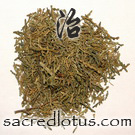 Ce Bai Ye12 gfreshStop Bleeding
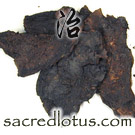 Sheng Di Huang15-24 gfreshCool the Blood
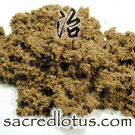 Ai Ye6-9 gfreshStop Bleeding
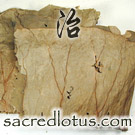 He Ye9-12 gfreshClear and Relieve Summerheat
Preparation & dosage
How is Si Sheng Wan prepared?
Classically, Si Sheng Wan is made by pounding the four fresh herbs into a paste and forming pills, or by decocting them fresh (sometimes taken as fresh-herb juice). Fresh preparation is specifically called for because fresh Ce Bai Ye, Sheng Di Huang, and He Ye are considered to have a stronger blood-cooling, hemostatic effect than their dried counterparts. In contemporary practice the formula is most often taken as a decoction of the (sometimes dried, sometimes fresh) four herbs, generally twice daily.
Source: multiple online sources (Sisheng Wan; Bensky & Barolet-tradition summary). Traditional-use framing; not medical advice.
Reference relative amounts (fresh herbs): Ce Bai Ye 12 g; Sheng Di Huang 15-24 g; He Ye 9-12 g; Ai Ye 6-9 g. Prepared as a decoction (or pounded fresh-herb paste formed into pills), traditionally taken twice daily and only for as long as active bleeding continues. Reference only.
Safety — read before use
What are the cautions for Si Sheng Wan?
Si Sheng Wan is a cold, astringent formula for acute, excess-heat bleeding only — it is not appropriate for bleeding from blood or qi deficiency, or from cold, where the blood is typically pale or dark rather than bright red and the correct approach is warming and tonifying, not cooling and astringing.
- Short-term use: multiple sources caution that the formula should be used acutely and discontinued once bleeding stops; prolonged use of its cold, astringent hemostatics (Ce Bai Ye, Sheng Di Huang) risks generating blood stasis.
- Fresh vs. dried herbs: the formula is classically made from fresh (sheng) herbs for stronger blood-cooling effect; substituting dried herbs is common in practice but may reduce potency.
- Any active or unexplained bleeding warrants prompt evaluation by a qualified practitioner rather than self-treatment.
Source: multiple online sources (Bensky & Barolet-tradition cautions for cold/astringent hemostatic formulas). Traditional-use framing; not medical advice.
Originally Appeared In:
- Fine Formulas for Women (Fu Ren Liang Fang)
Notes:
How does Si Sheng Wan compare to other formulas that clear heat and stop bleeding?
Within its own category (Formulas that Clear Heat and Stop Bleeding), Si Sheng Wan is distinguished by its location — the upper jiao — and its simple, four-fresh-herb, cooling-and-astringing approach.
- vs Huai Hua San: Huai Hua San targets wind-heat/damp-heat bleeding in the large intestine (intestinal bleeding, bleeding hemorrhoids) — a lower-jiao pattern, versus Si Sheng Wan's upper-jiao heat in the blood.
- vs Xiao Ji Yin Zi: Xiao Ji Yin Zi addresses heat in the blood in the lower burner (blood lin/hematuria) and combines blood-cooling herbs with damp-draining, urinary herbs — a different location and a more complex strategy than Si Sheng Wan's four plain hemostatics.
- vs Shi Hui San: Shi Hui San (Ten Partially Charred Substances Powder) treats a broader, more severe presentation of reckless upper-body hemorrhage due to heat/fire, using ten charred (tan-processed) herbs for stronger astringent hemostasis; Si Sheng Wan is comparatively simple and milder.
Reported modifications (per Bensky & Barolet-tradition sources): combined with elements of Huang Tu Tang (Yellow Earth Decoction) for bleeding peptic ulcer; combined with Jiao Ai Tang for functional uterine bleeding; additional blood-cooling herbs added for severe hemoptysis.
Source: this site’s own category record + multiple online sources (Bensky & Barolet-tradition summaries).
Clinical Studies & Research:
Is there modern research on Si Sheng Wan?
No clinical trials of the combined four-herb formula were found in PubMed/PMC searches; available evidence sits at the level of its individual ingredients' hemostatic pharmacology. Two of the formula's herbs have documented, mechanistic hemostatic research.
- Ce Bai Ye (Platycladus orientalis leaves): heat-processing of the flavonoid extract generates a novel benzofuran compound named cecarbon, which dose-dependently shortened clotting times (APTT, PT) and promoted collagen-induced platelet aggregation in laboratory assays, offering a mechanistic basis for the herb's classical blood-cooling, hemostatic use (PMID 26393545 / PMC 6332512). A broader phytochemistry and pharmacology review situates this within the plant's known diterpene and flavonoid constituents (PMID 24871649).
- Ai Ye (carbonized Artemisia argyi, "Folium Artemisiae Argyi Carbonisatum"): chemical analysis identified rutin, quercetin, and octacosanol as key constituents; zebrafish assays showed an enhanced hemostatic effect at moderate and high concentrations, alongside dose-related developmental and cardiac toxicity at higher concentrations (PMID 35693441).
Sources: PubMed 26393545 (PMC 6332512); PubMed 24871649; PubMed 35693441. Herb-level mechanistic research; not a formula-level clinical claim, and not medical advice.
Sources & References
Compiled and edited by Thomas Dehli, Founder & Editor, Sacred Lotus Updated
The information here is referenced from numerous sources — teachers, practitioners, class notes from Five Branches University, the books below, and the published research literature, with citations given as resolvable PubMed identifiers. Where sources disagree, I have flagged the discrepancies directly. If facts couldn't be verified, I have left them out. How we source our content.
Reference information for students and practitioners — not medical advice. Consult a qualified practitioner. Terms of use.
Chinese Formulas Books & References
 https://amzn.to/4fYI3f8
 https://amzn.to/4j55NRA
 https://amzn.to/4gMROyv
 https://amzn.to/4h7msSK