

Tong Guan San (Open the Gate Powder)
Tong Guan San
Open the Gate Powder
- Category
- Formulas that Open the Orifices
- Subcategory
- Formulas that Scour Phlegm and Open the Orifices
- Ingredients
- 2 herbs
Actions
What does Tong Guan San do?
Tong Guan San (“Open the Gate Powder”) is an emergency, external-use sneezing powder that forces open the nasal orifices to rouse consciousness — it is not an internally dosed decoction or pill. The two ingredients are ground to a fine powder in equal quantities and a minute pinch is insufflated (blown) into a nostril by a practitioner to provoke sneezing, which traditionally signals that Lung qi still responds and the case is treatable.
- Zao Jiao (Fructus Gleditsiae, Chinese Honeylocust Fruit): pungent, warm, and slightly toxic (per our own herb properties); it forcefully scours and dissolves stubborn phlegm and opens the orifices, dispersing the phlegm-turbidity that is misting the patient’s consciousness.
- Xi Xin (Herba Asari, Chinese Wild Ginger/Asarum): pungent and warm; its intensely dispersing, penetrating action opens the nasal passage and triggers the sneeze reflex that “shocks” the closed orifices open.
in our records the formula sits in the “Formulas that Scour Phlegm and Open the Orifices” group, alongside Gun Tan Wan and Di Tan Tang — consistent with its phlegm-scouring, orifice-opening action.
Source: Sacred Lotus sources & references and subcategory + cross-referenced formula compendia (Bensky & Barolet-consistent secondary sources). Traditional-use framing; not medical advice.
Indications
What is Tong Guan San used for?
Tong Guan San is reserved for acute, sudden loss of consciousness presenting as a “closed” (excess, bi zheng) collapse — classically from wind-stroke, phlegm-turbidity misting the orifices, or epilepsy — where the jaw and fists are tightly clenched, breathing is loud and phlegm-rattling, and urine/stool are retained rather than incontinent.
- Closed (excess) signs it targets: clenched jaw and fists, coarse or rattling breath, a pale-to-ashen complexion, and (per cross-referenced sources) a strong or wiry pulse.
- Classical prognostic sign: if the powder provokes a sneeze, Lung qi still responds and the case is treatable; absence of a sneeze traditionally signals exhausted Lung qi and a poor prognosis.
- Important distinction: this pattern is the opposite of “desertion” (tuo zheng) collapse — open mouth and hands, incontinence, profuse sweating, and a faint/weak pulse — where orifice-opening formulas like this one are contraindicated and tonifying rescue formulas are required instead.
Sacred Lotus does not carry separate tongue/pulse field values for this formula (both are empty), so no Sacred Lotus-sourced tongue/pulse data is presented here.
Source: cross-referenced formula compendia (Bensky & Barolet-consistent secondary sources, checked across multiple independent references for convergence). Traditional-use framing; not medical advice.
Western Uses:
What is Tong Guan San used for in modern practice?
Tong Guan San has no modern biomedical indication of its own — it is a historical first-aid measure, and it is not a substitute for emergency medical care. Anyone found unconscious needs emergency medical evaluation (call emergency services); this formula is referenced only as a traditional practice applied, where used at all, by trained practitioners alongside — never instead of — standard emergency response.
Its Western biomedical correlate is limited to the mechanism of its sneeze-inducing action: pharmacology research has identified aristolochic acid and methyl eugenol, both present in Asarum (Xi Xin) species, as agonists of the TRPA1 sensory-nerve channel, a plausible modern explanation for centuries of use as a sternutatory (see research). This is offered as reference to the formula’s traditional mechanism, not as a treatment claim for any condition.
Source: traditional-use context + PubMed 33804078 (TRPA1 mechanism of sternutatory herbs including Asarum). Reference only, not a treatment claim.
Ingredients
2 substances in Tong Guan San — each links to its full herb monograph.
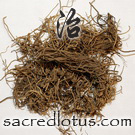 Xi XinEqual QuantitiesWarm, Spicy Herbs that Release the Exterior
Preparation & dosage
How is Tong Guan San prepared?
Traditionally, Zao Jiao and Xi Xin are ground in equal quantities to a fine powder and mixed evenly; a minute pinch is blown into a nostril, often through a thin tube, to provoke a sneeze. This is described here as historical/reference preparation information only — it is an emergency measure applied by a trained practitioner, not a home remedy or self-care instruction.
Source: cross-referenced formula compendia (Bensky & Barolet-consistent secondary sources, converged across multiple independent references).
External use only (nasal insufflation) — this is not an oral/internal formula. Traditional description: a minute pinch of the equal-parts Zao Jiao/Xi Xin powder blown into one nostril, repeated only as needed to elicit a sneeze, by a practitioner in an emergency context. Reference information only; not a self-administration or dosing instruction.
Safety — read before use
What are the cautions for Tong Guan San?
Tong Guan San is an emergency, professional-use-only external powder — it is not for self-administration, home use, or internal/oral dosing. It is appropriate only for the “closed” excess collapse pattern described above; it is contraindicated in “desertion” (deficiency) collapse, marked by an open mouth and hands, incontinence, profuse sweating, and a faint pulse, where opening the orifices further can worsen a patient who instead needs urgent tonification/rescue treatment.
- Emergency use only: intended for brief use to revive consciousness; once the patient is roused (or sneezing is achieved), use is discontinued and the underlying cause is diagnosed and treated separately by qualified medical/practitioner care.
- Zao Jiao is classified slightly toxic in our own herb record; general cautions for this herb note that excess or inappropriate use can cause gastrointestinal irritation (nausea, vomiting).
- Pregnancy: cross-referenced formula sources consistently note caution/avoidance in pregnancy for this formula.
Discrepancy flag (Xi Xin / aristolochic acid): Sacred Lotus currently marks Xi Xin’s toxic/endangered flag as false, but published toxicology has detected aristolochic-acid analogues in Asarum heterotropoides (Xi Xin) root material and in patent medicines containing it (PubMed 34899315 / PMC 8662950), and Switzerland and Germany banned medicinal Asarum use in 2010 over aristolochic-acid content. That study also concluded that controlled, short-duration, low-dose use appears comparatively low-risk, which may be why Sacred Lotus flag differs — but given the known aristolochic-acid family concern, this is flagged for owner review rather than silently resolved. This is background public-safety context, not administration guidance.
Sources: Sacred Lotus sources & references for Zao Jiao and Xi Xin + PubMed 34899315 / PMC 8662950 (aristolochic-acid analogues in Asarum heterotropoides). Traditional-use framing; not medical advice.
Originally Appeared In:
- Additions to the Teachings of Dan Xi (Dan Xi Xin Fa fu)
Notes:
How does Tong Guan San differ from other orifice-opening formulas?
Tong Guan San is a “cold”/mechanical orifice opener — a sneeze-inducing external powder — distinct from the internally administered aromatic orifice-opening formulas such as An Gong Niu Huang Wan or Su He Xiang Wan, which are swallowed or dissolved and act through aromatic, penetrating herbs rather than nasal insufflation and sneezing.
- Within our own “Formulas that Scour Phlegm and Open the Orifices” group, Tong Guan San is grouped with Gun Tan Wan and Di Tan Tang, which scour phlegm through oral administration rather than nasal insufflation — Tong Guan San is the group’s emergency, externally applied member.
- vs. aromatic orifice-opening formulas: those are chosen for phlegm-heat or phlegm-cold patterns with more sustained loss of consciousness needing internal treatment; Tong Guan San is a brief, first-response measure to elicit an immediate reflex response.
Source: cross-referenced formula compendia (Bensky & Barolet-consistent secondary sources) + Sacred Lotus sources & references grouping.
Clinical Studies & Research:
Is there modern research on Tong Guan San?
No clinical trials of the combined Tong Guan San formula were found in PubMed/PMC; available modern research addresses its two ingredients individually. Mechanistic pharmacology work on historical sternutatory (sneeze-inducing) remedies identifies aristolochic acid and methyl eugenol — both present in Asarum (Xi Xin) species — as agonists of the TRPA1 sensory-nerve channel, offering a plausible modern explanation for the plant’s centuries-long use to provoke sneezing.
- Mechanism of sneeze induction: a review of historical sternutatory remedies found Asarum’s aristolochic acid and methyl eugenol act as TRPA1 channel agonists, consistent with its traditional sneeze-inducing use (PMID 33804078).
- Aristolochic-acid content and safety: quantitative analysis of Asarum heterotropoides (Xi Xin) root and related patent medicines detected trace aristolochic-acid analogues and concluded that controlled, short-duration, low-dose use appears comparatively low-risk in laboratory/animal toxicity models, while recommending continued caution (PMID 34899315 / PMC 8662950).
Sources: PubMed 33804078; PubMed 34899315 / PMC 8662950. Research context, not a therapeutic claim; no direct clinical-trial evidence exists for this formula.
Sources & References
Compiled and edited by Thomas Dehli, Founder & Editor, Sacred Lotus Updated
The information here is referenced from numerous sources — teachers, practitioners, class notes from Five Branches University, the books below, and the published research literature, with citations given as resolvable PubMed identifiers. Where sources disagree, I have flagged the discrepancies directly. If facts couldn't be verified, I have left them out. How we source our content.
Reference information for students and practitioners — not medical advice. Consult a qualified practitioner. Terms of use.
Chinese Formulas Books & References
 https://amzn.to/4fYI3f8
 https://amzn.to/4j55NRA
 https://amzn.to/4gMROyv
 https://amzn.to/4h7msSK