

Xiang Ru San (Elsholtzia Powder)
Xiang Ru San
Elsholtzia Powder
- Category
- Formulas that Release the Exterior
- Subcategory
- Formulas that Release Exterior Cold
- Ingredients
- 3 herbs
Actions
What does Xiang Ru San do?
Xiang Ru San releases the exterior and scatters cold while transforming dampness and harmonizing the Middle Burner. It is the classic formula for "summertime damage from cold" (yin shu) — external wind-cold locking the surface while damp-cold obstructs the Spleen and Stomach beneath it. Its three ingredients divide by role:
- Chief: Xiang Ru (acrid, aromatic, slightly warm; enters Lung and Stomach) — releases exterior wind-cold through mild diaphoresis and its aromatic quality transforms turbid dampness and promotes urination. It is traditionally nicknamed "summer's Ma Huang" for its ability to open sweat-locked pores in the very season people expect to be sweating freely.
- Deputy: Hou Po (bitter, acrid, warm, aromatic; enters Lung, Large Intestine, Spleen, Stomach) — dries dampness and moves qi downward, relieving the oppressive fullness in the chest and epigastrium and settling the vomiting and diarrhea that follow when damp obstructs the qi mechanism.
- Assistant/envoy: Bai Bian Dou (sweet, neutral; enters Spleen and Stomach) — harmonizes the Middle, strengthens the Spleen, and gently transforms dampness while moderating the acrid, drying, dispersing action of Xiang Ru and Hou Po so the formula does not further injure fluids.
Source: Sacred Lotus sources & references + Bensky & Barolet, Formulas & Strategies (chief/deputy/assistant analysis). Traditional-use framing; not medical advice.
Indications
What is Xiang Ru San used for?
Xiang Ru San treats "summertime damage from cold" (yin shu) — contracting external wind-cold during hot weather, classically from sleeping in a draft, cold food and drink, or (in modern terms) air conditioning while sweating, so that cold seals the exterior just as damp-cold accumulates in the Middle. This is distinguished from true summerheat (yang shu, a heat-predominant pattern addressed by formulas such as Liu Yi San or Qing Shu Yi Qi Tang); Xiang Ru San is specifically for the cold-type presentation.
Its classic clinical presentation:
- Exterior wind-cold signs: chills and fever with no sweating, headache, and a heavy, aching sensation in the head and body.
- Interior damp-cold signs: oppression and fullness in the chest and epigastrium, abdominal pain, vomiting, and diarrhea.
Tongue and pulse: the tongue coating is thick and white (greasy); the pulse is floating, sometimes floating and soggy.
Source: Sacred Lotus sources & references on pattern + Bensky & Barolet, Formulas & Strategies. Traditional-use framing; not medical advice.
Western Uses:
What is Xiang Ru San used for in modern practice?
In modern practice Xiang Ru San is referenced for the seasonal, cold-triggered gastrointestinal upset sometimes called "summer flu" — chills, fever, headache, and vomiting/diarrhea that follow cold-drink or air-conditioning exposure during hot weather. This biomedical correlate is offered as a reference to the formula’s traditional use, not as a claim that it treats gastroenteritis, influenza, or any diagnosed condition.
Laboratory research on the individual ingredients — antimicrobial and anti-inflammatory activity from Xiang Ru, antispasmodic activity from Hou Po’s magnolol and honokiol, and anti-inflammatory GI activity from Bai Bian Dou — offers plausible mechanistic context for the formula’s traditional exterior-releasing and digestive-settling actions (see research), but no PubMed-indexed trial has tested Xiang Ru San as a combined formula. Any use for a diagnosed condition belongs with a qualified practitioner and appropriate medical care.
Source: traditional-use correlate summarized from Bensky & Barolet, Formulas & Strategies; reference only, not a treatment claim.
Ingredients
3 substances in Xiang Ru San — each links to its full herb monograph.
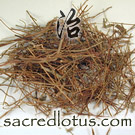 Xiang Ru9-12 gWarm, Spicy Herbs that Release the Exterior
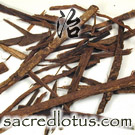 Hou Po6-9 gAromatic Herbs that Transform and Dissolve Dampness
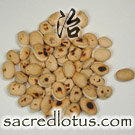 Bai Bian Dou6-9 gClear and Relieve Summerheat
Preparation & dosage
How is Xiang Ru San prepared?
Classically prepared as a coarse powder (san) taken as a draft, or decocted as a beverage (yin) — and, distinctively, administered cold rather than hot. The traditional method briefly soaks the herbs in cold water, decocts them with a small amount of wine to help distribute the acrid, dispersing action, and has the patient drink the strained liquid cold.
- Why cold: an acrid-warm, exterior-releasing decoction taken hot can itself provoke vomiting in a patient whose Stomach qi is already disrupted by damp obstruction and nausea; taking it cold lets it reach the Stomach without triggering that reflex — a classic example of the "cold administration of a warm formula" principle.
- Why brief decoction: Xiang Ru’s therapeutic activity depends on heat-labile volatile oils, so it is not simmered for long, consistent with other aromatic exterior-releasing herbs.
Source: Bensky & Barolet, Formulas & Strategies (traditional preparation method for Xiang Ru San).
Traditionally a coarse powder or brief decoction with a small amount of wine, strained and taken cold. Reference relative amounts (per Sacred Lotus sources & references): Xiang Ru 9-12 g; Hou Po, Bai Bian Dou 6-9 g each. Short-course, acute use. Reference only; not a prescription.
Safety — read before use
What are the cautions for Xiang Ru San?
Xiang Ru San is an acrid, dispersing formula for a cold-type exterior-interior pattern, so it is inappropriate wherever sweating is already profuse or where heat, rather than cold, predominates. Using it in true summerheat (fever, thirst, and sweating without chills) or in exterior-deficient patients who already sweat spontaneously would push dispersal further and risk depleting fluids and qi.
- Not for heat-predominant summerheat: reserve for the cold/damp presentation described above; a heat-predominant case calls for a different formula (e.g., Liu Yi San, Xin Jia Xiang Ru Yin).
- Avoid with profuse sweating or exterior deficiency — the formula’s job is to open, not to consolidate, the exterior.
- Short-course, acute use: classically dosed for a brief period to resolve the acute presentation; not intended for prolonged or repeated use without professional guidance.
- Preparation matters: Xiang Ru’s volatile aromatic oils are heat-labile, so the herb is traditionally not decocted for long; over-boiling reduces its exterior-releasing effect (see preparation).
Source: Bensky & Barolet, Formulas & Strategies (cautions for acrid, dispersing summer formulas). Traditional-use framing; not medical advice.
Originally Appeared In:
- Imperial Grace Formulary of the Tai Ping Era (Tai Ping Hui Min He Ji Ju Fang)
Notes:
How is Xiang Ru San different from related formulas?
Xiang Ru San is the base formula for cold-type summer disorders; several classic variants and neighboring formulas adjust it for heat or for weaker digestion.
- vs Xin Jia Xiang Ru Yin (Newly Augmented Elsholtzia Beverage, from the Wen Bing Tiao Bian): adds heat-clearing, exterior-venting herbs such as Jin Yin Hua and Lian Qiao to the Xiang Ru San base when damp-heat signs (more pronounced fever, thirst, or a yellowish tongue coating) accompany or exceed the cold.
- vs Liu Yi San / Qing Shu Yi Qi Tang: those formulas address true summerheat (yang shu) — a heat-predominant pattern with sweating, thirst, and possible qi/fluid damage — rather than the cold-locked-exterior pattern Xiang Ru San targets.
- vs Huo Xiang Zheng Qi San: a broader, more commonly reached-for modern formula (including its patent form, Huo Xiang Zheng Qi Shui/Wan) for the same seasonal external-cold-with-internal-damp pattern, but with more ingredients supporting Spleen qi and a stronger, more sustained damp-transforming action — often preferred when digestive disruption is more pronounced or the case is not purely acute.
Processing note: Hou Po is sometimes ginger-processed (jiang zhi Hou Po) to soften its drying quality and strengthen its anti-nausea action; Bai Bian Dou is sometimes dry-fried (chao Bai Bian Dou) to enhance its Spleen-strengthening effect.
Source: Bensky & Barolet, Formulas & Strategies (related-formula and modification analysis).
Clinical Studies & Research:
Is there modern research on Xiang Ru San?
No PubMed-indexed clinical trial has tested Xiang Ru San as a combined formula; available evidence sits at the level of its individual ingredients, each mapping onto one of the formula’s traditional roles.
- Xiang Ru (chief, exterior-releasing): a pharmacognostic review of Elsholtzia ciliata documents anti-inflammatory, antinociceptive, antioxidant, and antimicrobial activity, with ursolic acid and oroxylin A identified as active compounds (PMID 34832934).
- Hou Po (deputy, qi-moving): magnolol and honokiol were shown to account for Magnolia officinalis’s antispasmodic effect in isolated guinea-pig ileum, inhibiting acetylcholine-induced contraction (PMID 18484527).
- Bai Bian Dou (assistant, Spleen-harmonizing): dry-frying processing of Dolichos lablab seeds was found to enhance anti-ulcerative-colitis activity via phytochemical transformation and PI3K/AKT pathway inhibition, reducing IL-6 and TNF-alpha in a colitis model — also lending support to the traditional dry-fried (chao) preparation of this herb (PMID 41270913).
Sources: PubMed 34832934; PubMed 18484527; PubMed 41270913. Research context on individual ingredients, not a formula-level clinical or therapeutic claim.
Sources & References
Compiled and edited by Thomas Dehli, Founder & Editor, Sacred Lotus Updated
The information here is referenced from numerous sources — teachers, practitioners, class notes from Five Branches University, the books below, and the published research literature, with citations given as resolvable PubMed identifiers. Where sources disagree, I have flagged the discrepancies directly. If facts couldn't be verified, I have left them out. How we source our content.
Reference information for students and practitioners — not medical advice. Consult a qualified practitioner. Terms of use.
Chinese Formulas Books & References
 https://amzn.to/4fYI3f8
 https://amzn.to/4j55NRA
 https://amzn.to/4gMROyv
 https://amzn.to/4h7msSK