

Xiao Xu Ming Tang (Minor Prolong Life Decoction)
Xiao Xu Ming Tang
Minor Prolong Life Decoction
- Category
- Formulas that Expel Wind
- Ingredients
- 12 herbs
Actions
What does Xiao Xu Ming Tang do?
Xiao Xu Ming Tang (Minor Prolong Life Decoction) expels wind invading the channels while simultaneously supporting the body’s deficient underlying qi, yang, and blood. It is one of the oldest formulas for windstroke (zhòngfēng), combining a wind-releasing strategy with warming, qi-tonifying, and blood-nourishing herbs so that the exterior pathogen is expelled without further depleting an already-weakened constitution.
The twelve ingredients divide by role:
- Chief: Ma Huang opens the pores, releases the exterior, and disperses wind invading the channels and collaterals.
- Deputies: Fang Feng and Guang Fang Ji assist Ma Huang in dispelling wind (and, for Fang Ji, wind-damp) from the channels; Xing Ren directs qi downward and complements Ma Huang’s action on the Lung; Fu Zi and Rou Gui warm and unblock yang through the channels; Ren Shen tonifies the Source qi that the formula’s dispersing herbs would otherwise tax.
- Assistants: Chuan Xiong and Bai Shao nourish and invigorate the blood — reflecting the classical principle that treating wind first requires treating the blood (“治風先治血,血行風自滅”) — while Huang Qin clears heat that can arise from the formula’s warming, acrid herbs and Sheng Jiang assists the release of the exterior.
- Envoy: Gan Cao harmonizes the other eleven herbs.
Source: Sacred Lotus sources & references + Bensky & Barolet, Formulas & Strategies (chief/deputy/assistant/envoy framework; individual herb functions). Chuan Xiong/Bai Shao role reflects the classical TCM principle that invigorating and nourishing the blood helps extinguish wind, discussed in Bensky & Barolet’s treatment of wind formulas. Traditional-use framing; not medical advice.
Indications
What is Xiao Xu Ming Tang used for?
Xiao Xu Ming Tang traditionally treats windstroke (zhòngfēng) from an external wind invasion striking the channels and collaterals of a person with an underlying qi/yang/blood deficiency. It originates in Sun Simiao’s Tang-dynasty emergency formulary Beiji Qianjin Yaofang (“Essential Prescriptions Worth a Thousand Gold, for Emergencies”), where it was used for sudden collapse with body rigidity or weakness.
Its classic clinical presentation:
- Windstroke of the channels/collaterals: sudden onset of hemiplegia or one-sided weakness, facial asymmetry (deviated mouth and eyes), stiffness of the body or limbs, difficulty speaking or a rigid tongue, and mild disorientation.
- Underlying deficiency: a constitution already weak in qi, yang, or blood, which allowed the external wind to lodge in the channels.
Tongue and pulse: a pale tongue with a thin, white coat, and a deficient, floating pulse.
Source: Sacred Lotus sources & references on pattern/tongue/pulse + Bensky & Barolet, Formulas & Strategies; historical origin per Sun Simiao, Beiji Qianjin Yaofang. Traditional-use framing; not medical advice.
Western Uses:
What is Xiao Xu Ming Tang used for in modern practice?
In modern practice, Xiao Xu Ming Tang (often romanized Xiaoxuming Decoction, XXMD) is referenced in Chinese clinical research as an adjunct herbal treatment alongside conventional care for ischemic stroke, at both the acute and chronic/sequelae stages. Practitioners have traditionally applied its wind-channel pattern to conditions Western medicine recognizes as stroke and post-stroke motor/speech impairment.
This biomedical correlate is offered as a reference to the formula’s traditional use, not as a claim that it treats any disease. Because it contains Ma Huang (ephedra) and prepared Fu Zi (aconite), it requires professional preparation and supervision, and any use for a diagnosed stroke belongs with emergency medical care and a qualified practitioner — not as a substitute for either.
Source: traditional-use correlate summarized from Bensky & Barolet, Formulas & Strategies, cross-checked against Zhang et al., Frontiers in Pharmacology 2021 (PMID 34970152 / PMC 8712731); reference only, not a treatment claim.
Ingredients
12 substances in Xiao Xu Ming Tang — each links to its full herb monograph.
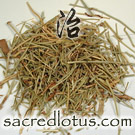 Ma Huang3-6 gWarm, Spicy Herbs that Release the Exterior
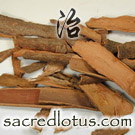 Rou Gui3-6 gWarm the Interior and Expel Cold
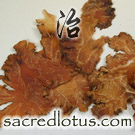 Chuan Xiong3-6 gInvigorate Blood and Remove Stagnation
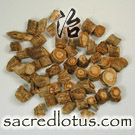 Fang Feng9-12 gWarm, Spicy Herbs that Release the Exterior
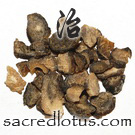 Fu Zi3-9 gWarm the Interior and Expel Cold
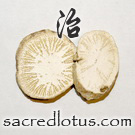 Han Fang Ji6-12 gRegulate Water and Drain Dampness
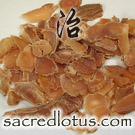 Ren Shen3-6 gTonify Qi
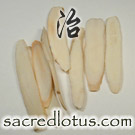 Bai Shao6-12 gTonify Blood
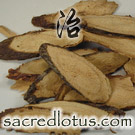 Gan Cao3-6 gTonify Qi
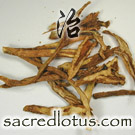 Huang Qin4.5-9 gClear Heat and Dry Dampness
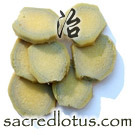 Sheng Jiang9-12 piecesWarm, Spicy Herbs that Release the Exterior
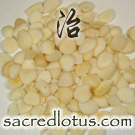 Xing Ren9-12 gRelieve Coughing and Wheezing
Preparation & dosage
How is Xiao Xu Ming Tang prepared?
Xiao Xu Ming Tang is traditionally prepared as a decoction (tāng), with Fu Zi requiring proper processing and adequate decoction time to reduce its toxicity before the other herbs are added. As with any formula containing Ma Huang and Fu Zi, preparation and dosing should be supervised by a qualified practitioner.
Source: Bensky & Barolet, Formulas & Strategies (standard preparation notes for Fu Zi-containing decoctions). Traditional-use framing; not medical advice.
Decoction. Reference relative amounts per Sacred Lotus sources & references: Xing Ren, Fang Feng 9-12 g; Guang Fang Ji 6-12 g; Bai Shao, Sheng Jiang 6-12 g (Sheng Jiang by piece); Huang Qin 4.5-9 g; Ma Huang, Chuan Xiong, Ren Shen, Rou Gui, Gan Cao 3-6 g; Fu Zi (prepared) 3-9 g. Reference only; Fu Zi requires proper processing and supervised dosing.
Safety — read before use
What are the cautions for Xiao Xu Ming Tang?
Xiao Xu Ming Tang treats windstroke from an external wind invasion of the channels on a deficient base — it is not for windstroke arising from internal Liver wind (e.g., ascendant Liver yang/wind patterns with marked heat signs), where its warming, dispersing herbs would aggravate the condition. It also contains two herbs with well-documented, clinically significant safety profiles that require professional preparation and dosing.
- Ma Huang (Ephedra, Herba Ephedrae): contains ephedrine-type alkaloids; contraindicated with hypertension, cardiac arrhythmia, and in cases of spontaneous sweating or yin-deficient heat; regulated or restricted in a number of jurisdictions.
- Fu Zi (prepared Aconite, processed Radix Aconiti): toxic in its raw form (aconitine cardiotoxicity/neurotoxicity); only properly processed (“prepared”) Fu Zi, correctly dosed and decocted, should be used, and it is contraindicated in pregnancy.
- Guang Fang Ji (Radix Aristolochiae Fangchi): this species of Aristolochia contains aristolochic acid, a nephrotoxin and carcinogen linked to aristolochic acid nephropathy and urothelial cancer; it was removed from the Chinese Pharmacopoeia in 2004, and modern formulations substitute Han Fang Ji (Stephania tetrandra) instead.
- Pregnancy and hypertension: avoid or use only under close professional guidance given the Ma Huang, Fu Zi, and Rou Gui content.
Discrepancy: some modern commercial reformulations omit Ma Huang entirely (as a restricted substance) and substitute Han Fang Ji for Guang Fang Ji and Dang Shen for Ren Shen; Sacred Lotus sources & references here reflects the classical formula as recorded in Bensky & Barolet, not a modern substituted variant.
Source: Sacred Lotus sources & references + Bensky & Barolet, Formulas & Strategies (pattern differentiation, herb cautions); aristolochic acid safety per Yang et al., BioMed Research International 2014 (PMC 4241283). Traditional-use framing; not medical advice.
Originally Appeared In:
- Thousand Ducat Formulas (Qian Jin Yao Fang)
Notes:
Is Xiao Xu Ming Tang still used today, and how does it compare to other windstroke formulas?
Xiao Xu Ming Tang was the leading formula for windstroke through the Tang and Song dynasties, but its use narrowed after Jin-Yuan physicians (from roughly the 12th–13th centuries onward) increasingly attributed stroke to internal factors — Liver wind, phlegm-fire, and qi/blood disorder — rather than external wind invasion, favoring formulas that address internal wind instead. It remains referenced today specifically for the external-wind-invading-the-channels presentation.
- vs formulas for internal Liver wind (e.g., Zhen Gan Xi Feng Tang-type strategies): those anchor treatment in subduing ascendant Liver yang and internal wind with heavy, cooling, anchoring herbs; Xiao Xu Ming Tang instead releases an external pathogen from a deficient body and is inappropriate where heat/yang-rising signs dominate.
- vs Da Qin Jiao Tang: a related, later windstroke formula for the channels that omits Ma Huang and Fu Zi and leans more toward nourishing blood and clearing heat — often preferred where the aggressive warming/dispersing action of Xiao Xu Ming Tang is not desired.
Source: Bensky & Barolet, Formulas & Strategies (historical context, comparison of windstroke formulas).
Which "Fang Ji" does this formula use — and why the substitution?
Modern practice substitutes Han Fang Ji (Stephania tetrandra) for the "Fang Ji" in this classical formula. Older texts used Guang Fang Ji (Aristolochia fangchi), but that species contains aristolochic acid — a potent nephrotoxin and IARC Group 1 carcinogen implicated in the 1990s outbreak of aristolochic-acid nephropathy ("Chinese-herb nephropathy") and urothelial cancer. Guang Fang Ji was removed from the Chinese Pharmacopoeia in 2005 and is restricted internationally. Han Fang Ji (Radix Stephaniae Tetrandrae), free of aristolochic acid, is the standard safe substitute and provides the wind-damp–dispelling, water-draining action the formula calls for.
Sources: aristolochic-acid nephropathy review (PMID 28146082); IARC Group 1 classification of aristolochic acids; 2005 Chinese Pharmacopoeia removal of Guang Fang Ji.
Clinical Studies & Research:
Is there modern research on Xiao Xu Ming Tang?
Yes — Xiaoxuming Decoction (XXMD) has been studied in clinical and mechanistic research on ischemic stroke, though the evidence base remains limited by trial quality. A 2013 systematic review and meta-analysis of eight randomized controlled trials (601 participants, 1992–2012) comparing XXMD (usually combined with conventional treatment) to conventional treatment alone found improvements in clinical effective rate and NIHSS neurological scores in several trials, but concluded the evidence was “positive but weak” due to poor methodological quality and small trial sizes. A 2021 narrative review summarized emerging pharmacological mechanisms (vasodilation, antiplatelet/anticoagulant effects, antioxidant and anti-inflammatory activity, blood-brain-barrier protection) identified from more than 60 isolated compounds, while noting that large, high-quality RCTs and the specific active constituents responsible for clinical effects are still lacking.
- Acute ischemic stroke (clinical, systematic review): 8 RCTs, positive but methodologically weak evidence for XXMD plus conventional care over conventional care alone (PMID 23583540).
- Mechanisms and clinical use across stages (review): XXMD referenced as beneficial at both acute-subacute and chronic post-stroke stages in Chinese clinical studies; multiple candidate mechanisms identified but not yet confirmed clinically (PMID 34970152 / PMC 8712731).
Sources: PubMed 23583540 (Fu et al., Journal of Ethnopharmacology, 2013); PubMed 34970152 / PMC 8712731 (Zhang et al., Frontiers in Pharmacology, 2021). Research context, not a therapeutic claim; direct high-quality clinical trial evidence remains limited.
Sources & References
Compiled and edited by Thomas Dehli, Founder & Editor, Sacred Lotus Updated
The information here is referenced from numerous sources — teachers, practitioners, class notes from Five Branches University, the books below, and the published research literature, with citations given as resolvable PubMed identifiers. Where sources disagree, I have flagged the discrepancies directly. If facts couldn't be verified, I have left them out. How we source our content.
Reference information for students and practitioners — not medical advice. Consult a qualified practitioner. Terms of use.
Chinese Formulas Books & References
 https://amzn.to/4fYI3f8
 https://amzn.to/4j55NRA
 https://amzn.to/4gMROyv
 https://amzn.to/4h7msSK