

Xiao Feng San (Eliminate Wind Powder from True Lineage)
Xiao Feng San
Eliminate Wind Powder from True Lineage
- Category
- Formulas that Expel Wind
- Ingredients
- 13 herbs
Actions
What does Xiao Feng San do?
Xiao Feng San ("Eliminate Wind Powder") disperses wind from the skin, clears heat, drains damp-heat, and cools and nourishes the blood — a four-strand strategy built for red, weeping, intensely itchy skin eruptions caused by wind-heat or wind-damp battling with damp-heat underneath. It is the standard reference formula in the classical dermatology (waike) literature for this exact combined pattern.
The thirteen ingredients divide into four coordinated groups (functions per Bensky & Barolet):
- Dispel wind from the skin surface — Jing Jie, Fang Feng, Niu Bang Zi, Chan Tui: four wind-expelling, itch-relieving herbs that vent wind out through the exterior; Chan Tui (cicada moulting) is particularly valued for calming intense, sudden itch.
- Clear heat — Shi Gao, Zhi Mu: this pair, echoing the heat-clearing classic Bai Hu Tang, drains excess heat and protects the fluids so the eruption's redness and burning sensation ease.
- Drain damp — Cang Zhu, Ku Shen, Chuan Mu Tong: dry dampness and lead damp-heat downward and out through the urine, addressing the oozing, weeping quality and the greasy tongue coat that mark the damp component.
- Cool and nourish the blood — Sheng Di Huang, Dang Gui, Hei Zhi Ma (black sesame seed, classically Hu Ma Ren): cool blood-level heat and replenish blood and yin, so the many drying, dispersing, and draining herbs above do not exhaust the patient's own reserves.
- Envoy — Gan Cao: harmonizes the whole prescription.
Source: Bensky & Barolet, Chinese Herbal Medicine: Formulas & Strategies (2nd ed.); Chen & Chen, Chinese Herbal Formulas and Applications; composition confirmed against the Sacred Lotus formula database. Traditional-use framing; not medical advice.
Indications
What is Xiao Feng San used for?
Xiao Feng San is used for acute or subacute skin eruptions driven by wind-heat or wind-damp battling with interior damp-heat — the hallmark picture is red, intensely itchy skin that oozes or weeps once scratched or broken. It is one of the most frequently referenced classical formulas for this presentation, which is why skin-condition searches keep leading back to it.
- Weeping, oozing eruptions — red papules, vesicles, or plaques that ooze, crust, or weep when scratched or ruptured.
- Intense, unrelenting itch — itching that is often the presenting complaint, sometimes worsened by heat, sweating, or scratching.
- Urticaria-type wheals — sudden, migratory, raised, itchy welts that come and go, consistent with a wind-heat pattern.
- Flares tied to heat, wind, or diet — classically noted to worsen with wind, heat, or certain foods (fish/shellfish) in the source text's discussion of externally-triggered skin disorders.
Tongue: red body with a yellow or white greasy coating. Pulse: floating and rapid — floating reflecting the exterior wind component, the greasy coating reflecting the damp-heat underneath (both per the Sacred Lotus formula database).
Source: Bensky & Barolet, Formulas & Strategies (2nd ed.); tongue/pulse per the Sacred Lotus formula database. Traditional-use framing; not medical advice.
Western Uses:
What is Xiao Feng San used for in modern practice?
In modern practice, Xiao Feng San is reached for when a presentation fits its wind-damp-heat skin pattern — most often atopic dermatitis/eczema and urticaria (hives) during an active, weeping, intensely itchy flare, and sometimes contact dermatitis showing a similar damp-heat picture.
These are pattern-based reference framings: the formula is selected because the presentation matches its wind-damp-heat pattern, not on the strength of the Western diagnostic label alone, and a qualified practitioner or dermatologist should confirm any diagnosis.
Source: Bensky & Barolet, Formulas & Strategies (2nd ed.); reported uses corroborated by clinical-trial literature (PMID 21196758). Reference framing only; not a medical claim.
Ingredients
13 substances in Xiao Feng San — each links to its full herb monograph.
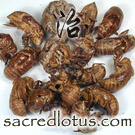 Chan Tui3 gCool, Spicy Herbs that Release the Exterior
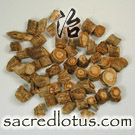 Fang Feng3 gWarm, Spicy Herbs that Release the Exterior
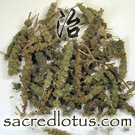 Jing Jie3 gWarm, Spicy Herbs that Release the Exterior
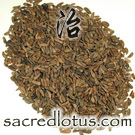 Niu Bang Zi3 gCool, Spicy Herbs that Release the Exterior
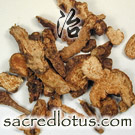 Cang Zhu3 gAromatic Herbs that Transform and Dissolve Dampness
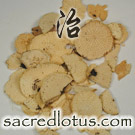 Chuan Mu Tong1.5 gRegulate Water and Drain Dampness
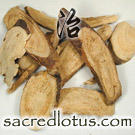 Ku Shen3 gClear Heat and Dry Dampness
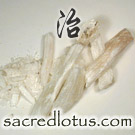 Shi Gao3 gDrain Fire
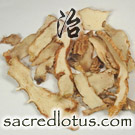 Zhi Mu3 gDrain Fire
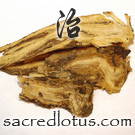 Dang Gui3 gTonify Blood
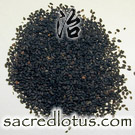 Hei Zhi Ma3 gTonify Yin
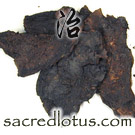 Sheng Di Huang3 gCool the Blood
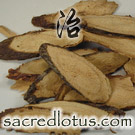 Gan Cao1.5 gTonify Qi
Preparation & dosage
How is Xiao Feng San prepared?
Despite its name (san = "powder"), Xiao Feng San is most commonly prepared today as a water decoction, with all the herbs simmered together and the strained liquid taken warm, typically in two divided daily doses; ready-made granule or powder extracts are also produced for convenience.
- Shi Gao (Gypsum), a mineral substance, is conventionally added to the pot and decocted first (xian jian), ahead of the other herbs, since mineral ingredients need a longer cooking time to release their properties — the same convention used for Shi Gao in other formulas such as Bai Hu Tang.
- Because its bitter, cold, and drying herbs are meant for an active excess pattern, it is classically used for a defined course while the weeping, redness, and itch are acute, then stopped or adjusted once those signs settle (see Cautions).
Source: Bensky & Barolet, Formulas & Strategies (2nd ed.), preparation and processing conventions for mineral ingredients and short-course excess-pattern formulas.
Taken as a water decoction, traditionally in two divided daily doses. Typical proportions per the Sacred Lotus formula database: Jing Jie, Fang Feng, Niu Bang Zi, Chan Tui, Cang Zhu, Ku Shen, Shi Gao, Zhi Mu, Sheng Di Huang, Dang Gui, and Hei Zhi Ma (black sesame seed) 3 g each; Chuan Mu Tong and Gan Cao 1.5 g each. Reference only, not a prescription.
Safety — read before use
What are the cautions for Xiao Feng San?
Xiao Feng San is a cold, drying, and draining formula meant for an active wind-damp-heat skin eruption — not for the chronic, dry, blood-deficient stage of skin disease. Its bitter, cold, damp-draining herbs are chosen for an excess pattern and are not a fit once that pattern has shifted.
- Not for chronic, dry, non-weeping eczema: once an eruption becomes dry, scaly, thickened, or lichenified rather than oozing, the picture has usually shifted toward blood-deficiency/wind-dryness, which this formula's drying, draining herbs would aggravate (see Notes for the contrasting pattern).
- Spleen/Stomach deficiency and cold: use cautiously — the multiple bitter, cold herbs (Shi Gao, Zhi Mu, Ku Shen) can weaken digestion, causing loose stools or poor appetite.
- Pregnancy: use only under professional guidance, given Dang Gui's blood-moving action and Chuan Mu Tong's diuretic effect.
- Short-course design: intended for the active acute/subacute phase, not as a long-term maintenance formula.
Source: Bensky & Barolet, Formulas & Strategies (2nd ed.), cautions and contraindications. Not a substitute for professional advice.
Species note: the Sacred Lotus formula database records this formula's Mu Tong ingredient as Chuan Mu Tong (Caulis Clematidis Armandii) — the non-toxic Clematis-derived source plant. It should not be confused with or substituted by Guan Mu Tong (Aristolochia manshuriensis), a botanically distinct "Mu Tong" containing aristolochic acid, a confirmed carcinogen and nephrotoxin linked to documented cases of kidney injury. This is offered as a neutral public-safety identity reference, not administration guidance; the botanical source of any "Mu Tong" ingredient should be confirmed before dispensing.
Originally Appeared In:
- True Lineage of External Medicine (Wai Ke Zheng Zong)
Notes:
How does Xiao Feng San differ from other wind-skin formulas, and how is it modified?
Xiao Feng San is the reference formula for an active, weeping, damp-heat-type skin eruption; its defining contrast is with formulas for the chronic, dry, blood-deficient stage of the same skin diseases.
- vs Dang Gui Yin Zi (Tangkuei Drink): Dang Gui Yin Zi treats chronic, longstanding itchy skin driven by blood deficiency generating internal wind — dry, scaly, thickened skin without weeping, often in older or more depleted patients — and leans on blood-nourishing herbs (Dang Gui, Bai Shao, Shu Di Huang, He Shou Wu) rather than wind-dispersing/damp-draining ones. Xiao Feng San sits at the opposite, acute, damp-heat-heavy, weeping end of the same clinical spectrum.
- vs Fang Feng Tong Sheng San: shares Fang Feng and Shi Gao and likewise addresses wind-heat with interior excess, but Fang Feng Tong Sheng San is built to simultaneously release the exterior and purge interior heat/constipation through the stool, for a broader systemic excess-heat presentation. Xiao Feng San is targeted specifically at the skin, with dedicated damp-draining and blood-nourishing herbs that Fang Feng Tong Sheng San does not include.
Classical source: Wai Ke Zheng Zong ("True Lineage of External Medicine," also translated "Orthodox Manual of External Diseases"), the influential Ming-dynasty surgery and dermatology text by Chen Shi-Gong (1617) — matching the origin already recorded in the Sacred Lotus formula database. The generic title "Xiao Feng San" ("eliminate wind powder") has been used for more than one herb combination across the wider TCM formulary literature over the centuries; the version described here is specifically the Wai Ke Zheng Zong formula.
Common modifications:
- For more severe, unrelenting itch, Bai Xian Pi (Cortex Dictamni) or Di Fu Zi (Kochia fruit) are commonly added.
- For pronounced redness and blood-level heat, Mu Dan Pi or Zi Cao may be added to strengthen the blood-cooling action.
- For more prominent oozing/weeping, Che Qian Zi or Huang Qin may be added to reinforce damp-draining.
Source: Bensky & Barolet, Formulas & Strategies (2nd ed.), comparisons, classical source, and modifications; cross-referenced against multiple online sources. Reference only.
Clinical Studies & Research:
Is there modern research on Xiao Feng San?
Yes — Xiao Feng San has a real clinical-trial literature specifically for atopic dermatitis, which is unusual for a classical formula. A randomized, double-blind, placebo-controlled trial in patients with refractory (treatment-resistant) atopic dermatitis found a substantially greater reduction in lesion-severity scores with Xiao Feng San than with placebo over eight weeks of treatment, with the improvement still present four weeks after stopping; no treatment-related adverse effects were reported, though some participants found the taste unpalatable. A more recent randomized trial combined Xiao Feng San with auricular acupuncture in adults with non-severe atopic dermatitis and found significantly greater improvement in SCORAD severity scores when acupuncture was added to the herbal formula, compared with the herbal formula plus sham acupuncture, over four weeks; adverse events in that trial were mild.
Both trials evaluated atopic dermatitis specifically, against standardized severity scales (lesion scores, SCORAD). This is reported as research context on the formula's studied use, not as a treatment claim or a substitute for a dermatologist's evaluation.
Sources: PMID 21196758 (Int Arch Allergy Immunol, 2011); PMID 41104111 (Integr Med Res, 2026). Research context, not a therapeutic claim.
Sources & References
Compiled and edited by Thomas Dehli, Founder & Editor, Sacred Lotus Updated
The information here is referenced from numerous sources — teachers, practitioners, class notes from Five Branches University, the books below, and the published research literature, with citations given as resolvable PubMed identifiers. Where sources disagree, I have flagged the discrepancies directly. If facts couldn't be verified, I have left them out. How we source our content.
Reference information for students and practitioners — not medical advice. Consult a qualified practitioner. Terms of use.
Chinese Formulas Books & References
 https://amzn.to/4fYI3f8
 https://amzn.to/4j55NRA
 https://amzn.to/4gMROyv
 https://amzn.to/4h7msSK