

Yang Yin Qing Fei Tang (Nourish the Yin and Clear the Lungs Decoction)
Yang Yin Qing Fei Tang
Nourish the Yin and Clear the Lungs Decoction
- Category
- Formulas that Treat Dryness
- Subcategory
- Formulas that Enrich the Yin and Moisten Dryness
- Ingredients
- 8 herbs
Actions
What does Yang Yin Qing Fei Tang do?
Yang Yin Qing Fei Tang (Nourish the Yin and Clear the Lungs Decoction) nourishes Lung and Kidney yin while clearing heat and resolving toxin from the throat. It is the classic formula for a dry, sore, swollen throat arising from yin deficiency compounded by toxic heat — historically the lead formula for diphtheria (bai hou, “white throat”).
The eight ingredients divide by role:
- Chief: Sheng Di Huang nourishes yin, cools the blood, and clears heat — the formula’s core.
- Deputies: Xuan Shen nourishes yin, drains fire, and resolves toxin; Mai Men Dong nourishes Lung yin and moistens dryness. Sheng Di Huang, Xuan Shen, and Mai Men Dong together form Zeng Ye Tang (Increase the Fluids Decoction), the yin-nourishing core this formula is built on.
- Assistants: Bai Shao preserves yin and softens; Mu Dan Pi clears heat and cools the blood; Chuan Bei Mu clears heat, transforms phlegm, and disperses nodules; Bo He disperses wind-heat and guides the formula’s action to the throat.
- Envoy: Gan Cao clears heat toxin, benefits the throat, and harmonizes the other herbs.
Source: Sacred Lotus sources & references + Bensky & Barolet, Formulas & Strategies (chief/deputy/assistant/envoy analysis). Traditional-use framing; not medical advice.
Indications
What is Yang Yin Qing Fei Tang used for?
Yang Yin Qing Fei Tang treats Lung and Kidney yin deficiency with toxic heat scorching the throat. Its classical indication is bai hou (diphtheria, “white throat”): a throat with a white, curd-like membrane that is difficult to scrape off, together with signs of underlying yin deficiency and heat.
Its classic clinical presentation:
- Throat signs: dry, sore, swollen throat; a white or grayish membrane over the tonsils/pharynx that resists scraping; hoarseness.
- Yin-deficient heat signs: dry mouth and nose, low-grade or afternoon fever, malar flush, dry cough with scant phlegm.
Tongue and pulse: the tongue is red and dry; the pulse is thin and rapid.
Source: Sacred Lotus sources & references on pattern/tongue/pulse + Bensky & Barolet, Formulas & Strategies. Traditional-use framing; not medical advice.
Western Uses:
What is Yang Yin Qing Fei Tang used for in modern practice?
In modern practice Yang Yin Qing Fei Tang is referenced for chronic or recurrent sore, dry throat conditions fitting a yin-deficiency-with-heat pattern — contexts such as chronic pharyngitis, tonsillitis, laryngitis, and persistent dry cough with throat dryness. Historically it was a primary Chinese-medicine formula for diphtheria before antibiotics; that use is a matter of historical record, not a contemporary treatment claim.
These biomedical correlates are offered as a reference to the formula’s traditional use, not as a claim that it treats any disease. Modern laboratory research on the formula is preclinical (see research). Any use for a diagnosed throat or respiratory condition belongs with a qualified practitioner and appropriate medical care.
Source: traditional-use correlates summarized from Bensky & Barolet, Formulas & Strategies, and contemporary TCM clinical references; reference only, not a treatment claim.
Ingredients
8 substances in Yang Yin Qing Fei Tang — each links to its full herb monograph.
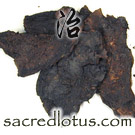 Sheng Di Huang6 gCool the Blood
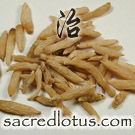 Mai Men Dong3.6 gTonify Yin
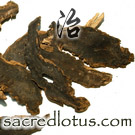 Xuan Shen4.5 gCool the Blood
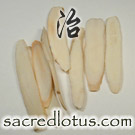 Bai Shao2.4 gDry-FriedTonify Blood
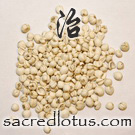 Chuan Bei Mu2.4 gCool and Transform Phlegm-Heat
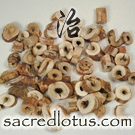 Mu Dan Pi2.4 gCool the Blood
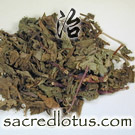 Bo He1.5 gCool, Spicy Herbs that Release the Exterior
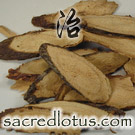 Gan Cao1.5 gTonify Qi
Preparation & dosage
How is Yang Yin Qing Fei Tang prepared?
Yang Yin Qing Fei Tang is prepared as a water decoction, with the aromatic Bo He added near the end of cooking to preserve its volatile oils. The other seven herbs are decocted first; Bo He is added only for the final few minutes so its dispersing, throat-benefiting action is not driven off by prolonged heat — the same handling used for Bo He in other decoctions.
Source: Bensky & Barolet, Formulas & Strategies (standard handling of aromatic herbs such as Bo He in decoction). Traditional-use framing; not medical advice.
Decoction; Bo He added near the end of cooking. Reference relative amounts (per Sacred Lotus sources & references): Sheng Di Huang 6 g; Xuan Shen 4.5 g; Mai Men Dong 3.6 g; Bai Shao (dry-fried) 2.4 g; Mu Dan Pi 2.4 g; Chuan Bei Mu 2.4 g; Bo He 1.5 g; Gan Cao 1.5 g. Reference only.
Safety — read before use
What are the cautions for Yang Yin Qing Fei Tang?
Yang Yin Qing Fei Tang is a cooling, yin-nourishing formula and is not appropriate for cold, damp, or purely excess presentations. Its rich, moistening herbs (especially Sheng Di Huang) can burden a weak Spleen, and several ingredients are cooling and blood-moving, so the formula is reserved for genuine yin-deficient heat rather than early-stage exterior illness.
- Avoid with Spleen deficiency and loose stools, and with Phlegm-Damp obstruction (copious, thick, easily expectorated phlegm) — the rich yin tonics can worsen digestion and dampness.
- Avoid in early-stage exterior Wind-Cold invasion and in pure excess fire-toxin without an underlying yin-deficiency component.
- Pregnancy: contains Mu Dan Pi, a blood-invigorating herb — use only under professional guidance.
Source: Bensky & Barolet, Formulas & Strategies (cautions for yin-nourishing, heat-clearing formulas). Traditional-use framing; not medical advice.
Originally Appeared In:
- Jade Key to Many Towers (Chong Lou Yu Yao)
Notes:
How is Yang Yin Qing Fei Tang related to Zeng Ye Tang, and how does it differ from Qing Zao Jiu Fei Tang and Bai He Gu Jin Tang?
Yang Yin Qing Fei Tang is built on Zeng Ye Tang (Sheng Di Huang, Xuan Shen, Mai Men Dong) — it adds Bai Shao, Mu Dan Pi, Chuan Bei Mu, Bo He, and Gan Cao to cool the blood, transform phlegm, disperse pathogens, and direct the formula’s action to the throat.
- vs Qing Zao Jiu Fei Tang: that formula treats external warm-dryness invading the Lungs with combined qi-and-yin damage (wheezing, marked thirst, a large deficient pulse) and includes Ren Shen; Yang Yin Qing Fei Tang instead targets throat inflammation and toxin with yin deficiency, without a qi-tonifying component.
- vs Bai He Gu Jin Tang: that formula addresses deeper, more chronic Lung-and-Kidney yin deficiency with deficiency-fire signs such as blood-streaked sputum; Yang Yin Qing Fei Tang is weighted more toward acute throat toxin and swelling.
Common modifications: add Lian Qiao for more pronounced heat/toxin (often removing Bai Shao); add Shu Di Huang for deeper constitutional yin deficiency; add Tian Men Dong and Fu Ling for pronounced dryness and constipation; add Gua Lou and Sang Bai Pi for sticky phlegm and cough; add Bai Mao Gen and Ce Bai Ye for blood-streaked sputum.
Source: Bensky & Barolet, Formulas & Strategies (formula relationships and modifications).
Clinical Studies & Research:
Is there modern research on Yang Yin Qing Fei Tang?
Yes, but it is limited and preclinical — no randomized clinical trials of the base formula were located; the available work is laboratory and animal research. One study identified quercetin as a key active component of Yang-Yin-Qing-Fei-Tang and found it induced apoptosis in non-small cell lung cancer cells in vitro and reduced tumor volume in a mouse xenograft model without affecting body weight, via upregulation of p53, Bax, and Fas and an increased Bax/Bcl-2 ratio. A separate study examined a related, modified ten-herb formula — “Yangyin Qingfei Decoction Plus,” the classic eight herbs plus Jin Yin Hua and Lian Qiao — for its metabolic effects in a mouse model of severe Mycoplasma pneumoniae pneumonia; because it adds two herbs, it is not direct evidence for the base formula.
- Non-small cell lung cancer (preclinical): quercetin from Yang-Yin-Qing-Fei-Tang induced apoptosis in lung cancer cells and reduced xenograft tumor volume in mice (PMID 31179723).
- Mycoplasma pneumonia, modified formula (preclinical): a ten-herb “Plus” variant (base eight herbs + Jin Yin Hua + Lian Qiao) altered lung-tissue metabolites in a mouse pneumonia model (PMID 38694915).
Sources: PubMed 31179723 (Am J Chin Med. 2019;47(4):879-893); PubMed 38694915 (Front Pharmacol. 2024;15:1376812). Research context, not a therapeutic claim; direct clinical trial evidence for this formula is lacking.
Sources & References
Compiled and edited by Thomas Dehli, Founder & Editor, Sacred Lotus Updated
The information here is referenced from numerous sources — teachers, practitioners, class notes from Five Branches University, the books below, and the published research literature, with citations given as resolvable PubMed identifiers. Where sources disagree, I have flagged the discrepancies directly. If facts couldn't be verified, I have left them out. How we source our content.
Reference information for students and practitioners — not medical advice. Consult a qualified practitioner. Terms of use.
Chinese Formulas Books & References
 https://amzn.to/4fYI3f8
 https://amzn.to/4j55NRA
 https://amzn.to/4gMROyv
 https://amzn.to/4h7msSK