

Mai Men Dong Tang (Ophiopogonis Decoction)
Mai Men Dong Tang
Ophiopogonis Decoction
- Category
- Formulas that Treat Dryness
- Subcategory
- Formulas that Enrich the Yin and Moisten Dryness
- Ingredients
- 6 herbs
Actions
What does Mai Men Dong Tang do?
Mai Men Dong Tang (Ophiopogonis Decoction) nourishes Stomach and Lung yin, generates fluids, and directs rebellious (counterflow) qi downward — the representative formula for Lung and Stomach yin deficiency with qi rushing upward. It moistens dryness while gently redirecting the qi dynamic down, so cough or wheezing settles.
How the ingredients work together:
- Chief — Mai Men Dong (in a large dose) enriches Lung and Stomach yin, generates fluids, and clears heat from deficiency.
- Deputy — Ban Xia (a small dose) directs counterflow qi downward and transforms phlegm; its warm-drying nature is restrained by the much larger dose of Mai Men Dong, so it moves qi without injuring the yin.
- Assistants — Ren Shen, Geng Mi (non-glutinous rice), Da Zao tonify Stomach qi and augment fluids, because a strong Middle Burner generates yin and body fluids.
- Envoy — Gan Cao harmonizes and, with the sweet herbs, benefits the throat.
Source: Bensky, Chinese Herbal Medicine: Formulas & Strategies; Sacred Lotus formula record (6 substances; from Jin Gui Yao Lue). Traditional-use framing; not medical advice.
Indications
What is Mai Men Dong Tang used for?
Mai Men Dong Tang is used for Lung and Stomach yin deficiency with counterflow qi rising. The fluids are depleted and qi rebels upward, so there is coughing or wheezing with qi rushing up, a dry throat, and sticky sputum that is hard to expectorate.
Typical presentation:
- Cough or wheezing with qi ascending; scanty, sticky sputum difficult to expectorate.
- Coughing up foamy saliva or spittle (Stomach-yin-deficient counterflow).
- Dry, uncomfortable mouth and throat, with thirst.
- A dry red tongue with little coat, and a deficient, rapid pulse.
Source: Sacred Lotus formula record (tongue: dry red with little coat; pulse: deficient, rapid); Bensky, Formulas & Strategies. Reference only, not a diagnosis.
Western Uses:
What is Mai Men Dong Tang used for in modern practice?
In modern Chinese medicine practice, Mai Men Dong Tang is applied to yin-deficient, dryness-and-counterflow presentations of the respiratory and upper digestive tracts — for example chronic bronchitis, chronic pharyngitis or laryngitis, bronchiectasis, post-infectious or drug-related dry cough, and atrophic gastritis or reflux with a dry, yin-deficient picture. These biomedical labels only describe presentations; the formula is still chosen on the Lung/Stomach yin-deficiency-with-counterflow pattern, not on the Western name.
Source: Bensky, Formulas & Strategies (reported biomedical correlations). Framed by TCM pattern; not a treatment claim or medical advice.
Ingredients
6 substances in Mai Men Dong Tang — each links to its full herb monograph.
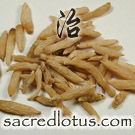 Mai Men Dong15-18 gTonify Yin
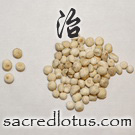 Ban Xia4.5-9 gWarm Herbs that Transform Phlegm-Cold
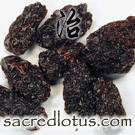 Da Zao12 piecesTonify QiNo specimen photographGeng Mi9-15 gTonify Qi
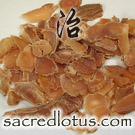 Ren Shen6 gTonify Qi
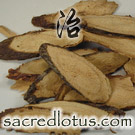 Gan Cao6 gTonify Qi
Preparation & dosage
How is Mai Men Dong Tang prepared?
Mai Men Dong Tang is prepared as a water decoction (tang) of Mai Men Dong (in a notably large proportion), Ren Shen, Gan Cao, Ban Xia and, distinctively, Geng Mi (non-glutinous rice) and Da Zao cooked into the brew to protect and nourish the Stomach.
The rice and jujube are integral, not garnish — they soften the drying Ban Xia and generate fluids. A common modern adjustment is Da Zao at about 4 pieces. Available as granules.
Source: Sacred Lotus sources & references (composition and preparation note) + Bensky & Barolet, Formulas & Strategies.
Decoction. Mai Men Dong 15-18 g; Ban Xia 4.5-9 g; Ren Shen 6 g; Gan Cao 6 g; Geng Mi (non-glutinous rice) 9-15 g; Da Zao 12 pieces (modern practice often 4). The large Mai Men Dong-to-Ban Xia ratio (originally about 7:1) defines the formula.
Safety — read before use
What are the cautions for Mai Men Dong Tang?
Mai Men Dong Tang is for yin deficiency with counterflow, not for excess or damp coughs. Its moistening, tonifying base is wrong for — and can worsen — the following:
- Not for wind-cold, phlegm-damp, or phlegm-heat cough/wheezing — where there is an active pathogen or copious sputum, the cloying, enriching herbs trap it.
- Use care with Spleen-damp or weak digestion — the rich, fluid-generating ingredients can be hard to move.
- Contains Ban Xia — standard pregnancy caution; use the appropriately processed form, and observe the classical Ban Xia–aconite (Wu Tou/Fu Zi) incompatibility.
Source: Bensky, Formulas & Strategies (cautions & contraindications); classical incompatibility lists. Practitioner reference, not medical advice.
Originally Appeared In:
- Essentials from the Golden Cabinet (Jin Gui Yao Lue)
Notes:
How does Mai Men Dong Tang compare to related formulas, and how is it modified?
Its defining feature is the large Mai Men Dong-to-Ban Xia ratio (about 7:1 in the original text). This is the teaching point: a warm, drying, qi-descending herb (Ban Xia) is safely used inside a yin-nourishing formula because the dominant dose of Mai Men Dong offsets its dryness, leaving only its downward-directing action.
- vs Sha Shen Mai Men Dong Tang — that formula more purely enriches Lung and Stomach yin and moistens dryness; Mai Men Dong Tang is chosen when rebellious qi (cough/wheeze rushing upward) dominates and must be directed down.
- vs Bai He Gu Jin Tang — treats Lung and Kidney yin deficiency with more heat (dry throat, blood-streaked sputum) and does more clearing, rather than redirecting counterflow qi.
Common modifications: for pronounced Stomach-yin deficiency and thirst, add Sha Shen, Yu Zhu, or Shi Hu; for thick sputum that is hard to expectorate, add Chuan Bei Mu and Gua Lou Pi.
Source: Bensky, Formulas & Strategies (comparisons & modifications).
Clinical Studies & Research:
Is there modern research on Mai Men Dong Tang?
Yes, mostly on the Japanese Kampo version, Bakumondoto (TJ-29), for cough. A controlled clinical pilot found an early antitussive effect and good safety in post-infectious prolonged cough, and separate work showed the formula raises the cough threshold to inhaled capsaicin in both asthmatic and non-asthmatic patients. A systematic review and meta-analysis, however, judged the overall evidence inconclusive and called for rigorous placebo-controlled trials. We report this as research context, not a therapeutic claim.
Sources: PubMed 21514123 (Phytomedicine, 2011, controlled pilot, post-infectious cough); PubMed 14768364 (cough sensitivity to capsaicin); PubMed 26666732 (systematic review & meta-analysis — evidence inconclusive).
Sources & References
Compiled and edited by Thomas Dehli, Founder & Editor, Sacred Lotus Updated
The information here is referenced from numerous sources — teachers, practitioners, class notes from Five Branches University, the books below, and the published research literature, with citations given as resolvable PubMed identifiers. Where sources disagree, I have flagged the discrepancies directly. If facts couldn't be verified, I have left them out. How we source our content.
Reference information for students and practitioners — not medical advice. Consult a qualified practitioner. Terms of use.
Chinese Formulas Books & References
 https://amzn.to/4fYI3f8
 https://amzn.to/4j55NRA
 https://amzn.to/4gMROyv
 https://amzn.to/4h7msSK