

Yu Zhen San (True Jade Powder)
Actions
What does Yu Zhen San do?
Yu Zhen San (True Jade Powder) dispels wind, transforms phlegm, stops spasm and tetany, and relieves pain. It is a classical “traumatic wind” formula: in TCM theory, wind-toxin enters the body through an open wound and travels along the channels, producing rigidity and spasm rather than the fever and chills of an ordinary external wind invasion.
The six ingredients (equal quantities, per Sacred Lotus sources & references) divide by role:
- Chief: Zhi Tian Nan Xing and Bai Fu Zi together dry dampness, transform phlegm, dispel wind, and stop spasm — the core anti-convulsive, anti-tetany pair, with a particular affinity for the head, face, and muscles.
- Deputies: Fang Feng, Qiang Huo, and Bai Zhi release wind from the exterior and the channels, guiding the chief herbs’ action outward — Bai Zhi toward the face and Yangming channel, Qiang Huo toward the neck, back, and Taiyang channel, Fang Feng more generally.
- Assistant: Tian Ma extinguishes internal wind and stops tremor and spasm, reinforcing the formula’s anti-convulsive action.
Source: Sacred Lotus sources & references + Bensky & Barolet, Formulas & Strategies (chief/deputy/assistant analysis). Traditional-use framing; not medical advice.
Indications
What is Yu Zhen San used for?
Yu Zhen San is the classical formula for “wind due to incised wounds” — traditional Chinese medicine’s term for traumatic tetanus (lockjaw) following a cut, puncture, or other open wound. The pattern is wind-toxin lodging in the channels after the skin is broken, producing progressive rigidity and spasm rather than a surface cold/fever presentation.
Its classic presentation:
- Jaw and face: trismus (locked jaw), lip spasm, and deviation of the eyes.
- Trunk and limbs: stiffness of the neck and back progressing to opisthotonos (arching, board-like rigidity), with spasm of the extremities.
- History: onset follows an external wound — a cut, puncture, or other break in the skin — consistent with the traditional wind-toxin-through-a-wound mechanism.
Pulse: wiry and tight, per the Sacred Lotus sources & references on pulse. Tongue presentation is not specified in Bensky & Barolet for this formula and is omitted here rather than guessed.
Source: Sacred Lotus sources & references on pattern/pulse + Bensky & Barolet, Formulas & Strategies. Traditional-use framing; not medical advice.
Western Uses:
What is Yu Zhen San used for in modern practice?
Yu Zhen San is a historical formula for tetanus, the disease caused by the bacterium Clostridium tetani entering through a wound — the same clinical picture (lockjaw, rigidity, spasm) the traditional pattern describes. This is offered as a reference to the formula’s traditional target, not a treatment claim.
Tetanus is a modern medical emergency: standard care is immediate wound cleaning/debridement, tetanus immunoglobulin or antitoxin, antibiotics, muscle relaxants and airway/respiratory support, plus vaccination to prevent it in the first place — which is why tetanus is now rare in countries with routine immunization. Historical and encyclopedic sources describing continued use of this formula in Chinese hospital settings describe it strictly as an adjunct alongside conventional emergency treatment, never as a substitute for it.
Source: traditional-use correlate summarized from Bensky & Barolet, Formulas & Strategies; reference only, not a treatment claim or medical guidance.
Ingredients
6 substances in Yu Zhen San — each links to its full herb monograph.
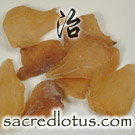 Bai Fu ZiEqual Quantityuntreated herb is usedWarm Herbs that Transform Phlegm-Cold
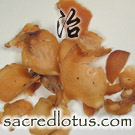 Zhi Tian Nan XingEqual Quantityuntreated herb is usedWarm Herbs that Transform Phlegm-Cold
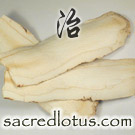 Bai ZhiEqual QuantityWarm, Spicy Herbs that Release the Exterior
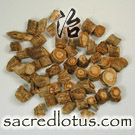 Fang FengEqual QuantityWarm, Spicy Herbs that Release the Exterior
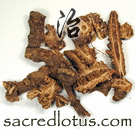 Qiang HuoEqual QuantityWarm, Spicy Herbs that Release the Exterior
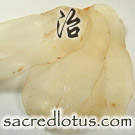 Tian MaEqual QuantityExtinguish Wind and Stop Tremors
Preparation & dosage
How was Yu Zhen San traditionally prepared?
Classically the six herbs, in equal proportions, were ground together into a fine powder (“san”) rather than decocted. This is a historical/reference description of the formula’s traditional form, not a preparation instruction for self-administration — two of its ingredients are classically toxic and processing/dosing was the province of a trained practitioner.
Sources describe the powder as classically taken in a small measured dose with warm rice wine (to help move the formula’s action through the channels), and note it could alternatively be applied topically to the wound site or prepared as a decoction.
Source: Bensky & Barolet, Formulas & Strategies. Historical/reference description, not administration guidance.
Historical/reference form only — not administration guidance. Classical preparation: equal parts of all six herbs ground into a fine powder; sources describe a reference dose of roughly 3 g per administration, traditionally taken with warm rice wine, or applied topically to the wound / prepared as a decoction. Contains two classically toxic ingredients (Bai Fu Zi, Zhi Tian Nan Xing); any real use is a matter for a qualified practitioner, not self-dosing.
Safety — read before use
What are the cautions for Yu Zhen San?
Yu Zhen San historically contains two herbs the Chinese pharmacopoeia classifies as toxic: Bai Fu Zi (Rhizoma Typhonii) and Tian Nan Xing (Rhizoma Arisaematis, used here as Zhi Tian Nan Xing, the processed form). This is a public-safety reference fact about the formula’s traditional materials, not administration or dosing guidance.
- Toxic ingredients: both are used only in processed (zhi) form to reduce raw toxicity, and classical sources direct that quantities be carefully controlled, that use not be prolonged, and that the formula be avoided in pregnancy.
- Emergency condition, not self-treatment: the pattern this formula addresses — traumatic tetanus — is a medical emergency in modern terms; any suspected tetanus requires immediate professional medical care, not herbal self-treatment.
- General fit: as a warm, wind-dispersing formula for a specific toxin-in-the-channels pattern, it is not a general-purpose remedy for spasm or stiffness outside that context.
Source: Bensky & Barolet, Formulas & Strategies (toxicity/pregnancy cautions for Bai Fu Zi and Tian Nan Xing); Sacred Lotus sources & references. Reference/safety framing, not medical advice.
Originally Appeared In:
- True Lineage of External Medicine (Wai Ke Zheng Zong)
Notes:
Where does Yu Zhen San come from, and how does it compare to Qian Zheng San?
Yu Zhen San is recorded in the Ming-dynasty surgical text Wai Ke Zheng Zong (“Correct Lineage of External Medicine”), reflecting its origin as a formula for wound-related emergencies treated by external-medicine (surgical) specialists rather than internal-medicine physicians.
- vs Qian Zheng San (Bai Fu Zi, Jiang Can, Quan Xie): the two formulas share Bai Fu Zi and the wind-extinguishing strategy, but target different pictures. Qian Zheng San treats wind-stroke facial paralysis (deviated mouth/eye) arising internally, using animal wind-extinguishing herbs (silkworm, scorpion). Yu Zhen San treats traumatic tetanus following an external wound, using an equal-weighted set of plant-based wind-dispelling and phlegm-transforming herbs.
Source: Bensky & Barolet, Formulas & Strategies (source text attribution; Qian Zheng San comparison).
Clinical Studies & Research:
Is there modern research on Yu Zhen San?
No direct clinical trials of Yu Zhen San as a formula were found; modern research instead supports the pharmacological plausibility of its individual herbs’ classical anti-spasmodic and anticonvulsant roles. Tetanus itself is now rare where vaccination is routine and is treated with antitoxin/antibiotics rather than herbal medicine, which likely explains the lack of formula-level clinical study.
- Bai Fu Zi (processed Typhonii Rhizoma), preclinical: animal studies found sedative, anticonvulsant (prolonged seizure latency), analgesic, and anti-inflammatory effects, varying by processing method (PMID 30204379).
- Tian Nan Xing (genus Arisaema), review: a comprehensive pharmacology/toxicity review reports anticonvulsant and sedative activity among isolated compounds, and notes tetanus among the genus’s traditional uses (PMID 34780984).
- Tian Ma (Gastrodia elata), review: a review of Gastrodia elata and epilepsy summarizes anticonvulsant activity of the rhizome and its main compound gastrodin across preclinical models (PMID 27765372).
Sources: PubMed 30204379; PubMed 34780984; PubMed 27765372. Research context on component herbs, not a therapeutic claim for the formula; no clinical trials of Yu Zhen San itself were located.
Sources & References
Compiled and edited by Thomas Dehli, Founder & Editor, Sacred Lotus Updated
The information here is referenced from numerous sources — teachers, practitioners, class notes from Five Branches University, the books below, and the published research literature, with citations given as resolvable PubMed identifiers. Where sources disagree, I have flagged the discrepancies directly. If facts couldn't be verified, I have left them out. How we source our content.
Reference information for students and practitioners — not medical advice. Consult a qualified practitioner. Terms of use.
Chinese Formulas Books & References
 https://amzn.to/4fYI3f8
 https://amzn.to/4j55NRA
 https://amzn.to/4gMROyv
 https://amzn.to/4h7msSK