

Zhu Jing Wan (Preserve Vistas Pill)
Zhu Jing Wan
Preserve Vistas Pill
- Category
- Formulas that Tonify
- Subcategory
- Formulas that Nourish and Tonify the Yin
- Ingredients
- 3 herbs
Actions
What does Zhu Jing Wan do?
Zhu Jing Wan (Preserve Vistas Pill) nourishes the Liver and Kidneys, supplements Jing (essence), and nourishes the Blood to restore and preserve eyesight. It is a small, tightly focused three-herb formula built around a single strategy: refill the Liver-Blood and Kidney-Jing that the eyes depend on, while keeping the rich tonics from stagnating.
The three ingredients divide by role:
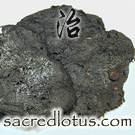
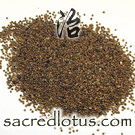
- Chief: Tu Si Zi (fills essence, supplements marrow, and is classically regarded as a gentle Liver/Kidney tonic that brightens the eyes without being overly warming or cloying) and Shu Di Huang (richly nourishes Blood and enriches Kidney Yin, filling essence and marrow) — the essence-and-blood pair at the formula’s core.
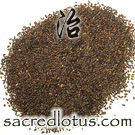
- Deputy: Che Qian Zi clears mild heat, drains dampness, and is traditionally credited with brightening the eyes in its own right — its light, draining nature keeps Tu Si Zi and Shu Di Huang from becoming stagnant, the same “tonify without cloying” role Ze Xie plays in Liu Wei Di Huang Wan.
Source: this site’s own composition record + chief/deputy analysis cross-referenced against Bensky & Barolet, Formulas & Strategies, and multiple online sources. Traditional-use framing; not medical advice.
Indications
What is Zhu Jing Wan used for?
Zhu Jing Wan treats blurred or failing vision from combined Liver-Blood and Kidney-Jing deficiency — the classical picture of eyes that have run out of the essence and blood needed to see clearly, typically arising gradually with age or long-term depletion rather than from an acute cause.
Its classic clinical presentation:
- Visual signs: dim or blurred vision (distance vision often more affected than near), floaters or “black flowers” before the eyes, and a sensation of flashing or dancing spots.
- Associated Liver/Kidney-deficiency signs: dizziness, tinnitus, and soreness or weakness of the low back and knees.
- Tongue and pulse: a pale tongue with a thin, white coating, and a thin, frail pulse.
Source: this site’s own pattern/pulse record + multiple online sources + Bensky & Barolet, Formulas & Strategies. Traditional-use framing; not medical advice.
Western Uses:
What is Zhu Jing Wan used for in modern practice?
In modern practice, Zhu Jing Wan’s Liver-Kidney-nourishing pattern is traditionally applied to age-related visual decline and eye fatigue — the kind of gradually dimming, easily tired vision that accompanies Kidney-Jing depletion. This exact three-herb composition has also been studied in a preclinical model for its protective effect on the retina (see research).
These biomedical correlates are offered as reference to the formula’s traditional use, not as a claim that it treats any diagnosed eye disease. Direct clinical-trial evidence on this specific three-herb formula is limited (see research); any use for a diagnosed visual or retinal condition belongs with a qualified eye-care professional and practitioner.
Source: traditional-use correlates summarized from cross-referenced formula literature; preclinical correlate from PubMed (see research). Reference only, not a treatment claim.
Ingredients
3 substances in Zhu Jing Wan — each links to its full herb monograph.
Preparation & dosage
How is Zhu Jing Wan prepared?
Classically, Zhu Jing Wan is prepared as honey pills: the three herbs are ground to powder and bound with honey into pills the size of a tung-tree seed (梧桐子大), with about thirty pills taken per dose in warm wine, on an empty stomach, twice daily.
In current practice the same three herbs are more often prepared as a decoction at the gram dosages given here, adjusted to the individual case; Bensky & Barolet note a decoction-form modification with reduced dosages as a common contemporary adaptation of the original pill.
Source: historical preparation per Tai Ping Hui Min He Ji Ju Fang (via multiple online sources); modern decoction adaptation per Bensky & Barolet, Formulas & Strategies. Traditional-use framing; not medical advice.
Reference amounts (decoction): Tu Si Zi 15 g (range 15–20 g); Shu Di Huang 12 g (range 10–12 g); Che Qian Zi 6 g (range 6–10 g). Classical pill form: equal-batch powder bound with honey into tung-seed-size pills, ~30 pills per dose with warm wine, twice daily. Reference only; adjust to the individual case under a qualified practitioner.
Safety — read before use
What are the cautions for Zhu Jing Wan?
Zhu Jing Wan is a rich tonic for deficiency, so it is not appropriate where there are clear signs of excess, exterior illness, or damp-heat. Shu Di Huang in particular is cloying and can burden a weak Spleen, causing bloating, reduced appetite, or loose stools in people whose digestion is already weak or damp — a common caution for Shu Di Huang-based tonics generally.
- Avoid or modify in active exterior conditions and where there are signs of excess heat or damp-heat rather than underlying deficiency.
- Digestive fit matters: if the rich tonics cause fullness, bloating, or poor appetite, the formula is typically modified (e.g., with Spleen-supporting or aromatic herbs) rather than pushed.
- As with any tonifying formula aimed at a specific visual complaint, professional evaluation of the underlying eye condition is advised before use.
Source: general cautions for Shu Di Huang-based tonifying formulas per Bensky & Barolet, Formulas & Strategies. Traditional-use framing; not medical advice.
Originally Appeared In:
- Standards of Patterns and Treatments (Zheng Zhi Zhun Sheng)
Notes:
Are there different versions of Zhu Jing Wan, and how does it compare to related eye formulas?
Yes — more than one formula circulates under the name “Zhu Jing Wan,” and the differences matter. This entry documents the classical three-herb version (Tu Si Zi, Shu Di Huang, Che Qian Zi) that matches this site’s formula database.
Discrepancy — source text: sources disagree on this formula’s origin. Chinese-language formula-history scholarship traces the three-herb Zhu Jing Wan to the Song-dynasty Tai Ping Sheng Hui Fang, later standardized (at a roughly 5:3:3 herb ratio) in the Tai Ping Hui Min He Ji Ju Fang. Some Western formula references (including this site’s prior content) instead cite the Ming-dynasty Zheng Zhi Zhun Sheng (Standards of Patterns and Treatments). Both attributions are kept here rather than guessed away; readers researching primary-source lineage should be aware of the conflict.
Discrepancy — other formulas that share the name: a larger, modified “Jia Jian Zhu Jing Wan” (加减驻景丸) exists with 8–10 herbs (adding, in various sources, Gou Qi Zi, Wu Wei Zi, Chu Shi Zi, Dang Gui, Hua Jiao, and others). Several modern pharmacology papers published under the English name “Zhujing Pill” study this larger, modified composition rather than the classical three-herb formula — see the research field for which studies do and do not match this page’s composition.
vs Qi Ju Di Huang Wan: both nourish Liver/Kidney Yin for the eyes, but Qi Ju Di Huang Wan is the eight-herb Liu Wei Di Huang Wan base plus Gou Qi Zi and Ju Hua — a broader Yin-tonic with more attention to the Kidney-Yin foundation, whereas Zhu Jing Wan is smaller and more narrowly focused on essence-and-blood replenishment for the eyes specifically.
vs Shi Hu Ye Guang Wan: Shi Hu Ye Guang Wan is a much larger (about twenty-five herb) formula that nourishes Liver/Kidney Yin while also clearing Liver Heat and dispelling Wind — appropriate when deficiency is complicated by heat or wind signs. Zhu Jing Wan is smaller and stays with essence-filling alone, without the heat-clearing or wind-calming components.
Source: cross-referenced formula literature (multiple online sources commentary on Tai Ping Hui Min He Ji Ju Fang, academic historical review of Zhu Jing Wan, and multiple online sources) + Bensky & Barolet, Formulas & Strategies.
Clinical Studies & Research:
Is there modern research on Zhu Jing Wan?
Limited, but there is one preclinical study on this exact three-herb composition, plus several studies on a larger, modified formula that also goes by “Zhujing Pill” and should not be conflated with it.
- Matches this formula’s composition (Tu Si Zi, Che Qian Zi, Shu Di Huang): a 2018 study in streptozotocin-induced diabetic rats found a Zhujing Pill extract of this three-herb formula reduced oxidative-stress markers and inflammatory cytokines (IL-6, TNF-α, CRP) and lessened blood-retinal-barrier breakdown, attenuating retinal changes in the diabetic model (PMID 29289839).
- Do NOT match this formula — expanded/modified “Zhujing Pill” composition (8–9 herbs, adds Gou Qi Zi, Wu Wei Zi, Dang Gui, and others): network-pharmacology and animal studies under the same English name reported effects on diabetic retinopathy via an oleanolic acid/PKC-α mechanism (PMID 36714956) and on myopia progression in guinea pigs via NOS2/LPCAT1/CHRNA7 targets (PMID 39625993). These describe a different, larger formula and are noted here only to prevent misattribution.
Sources: PubMed 29289839 (matches this formula); PubMed 36714956 and PubMed 39625993 (different, modified formula — flagged, not applied as evidence for this page). Research context, not a therapeutic claim; direct clinical-trial evidence on the three-herb formula is lacking.
Sources & References
Compiled and edited by Thomas Dehli, Founder & Editor, Sacred Lotus Updated
The information here is referenced from numerous sources — teachers, practitioners, class notes from Five Branches University, the books below, and the published research literature, with citations given as resolvable PubMed identifiers. Where sources disagree, I have flagged the discrepancies directly. If facts couldn't be verified, I have left them out. How we source our content.
Reference information for students and practitioners — not medical advice. Consult a qualified practitioner. Terms of use.
Chinese Formulas Books & References
 https://amzn.to/4fYI3f8
 https://amzn.to/4j55NRA
 https://amzn.to/4gMROyv
 https://amzn.to/4h7msSK