

Suo Quan Wan (Shut the Sluice Pill)
Suo Quan Wan
Shut the Sluice Pill
- Category
- Formulas that Stabilize and Bind
- Subcategory
- Formulas that Stabilize the Kidneys
- Ingredients
- 3 herbs
Actions
What does Suo Quan Wan do?
Suo Quan Wan (Shut the Sluice Pill) warms the Kidney and Bladder and reduces (secures) urination. Its name — “shut the sluice” — describes closing a floodgate that cold has left open: when Kidney yang is too weak to warm the Bladder, the Bladder cannot properly store and transform fluid, so urine passes frequently, clear, and in large volume.
Just three herbs, each carrying real weight:
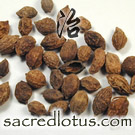
- Chief: Yi Zhi Ren (Alpinia oxyphylla fruit) warms Kidney yang and astringes, directly reducing the frequency and volume of urination.
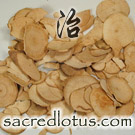
- Deputy: Wu Yao (Lindera root) warms the Kidney and Bladder and disperses cold, restoring the Bladder’s qi transformation so Yi Zhi Ren’s warmth does not simply sit and stagnate.
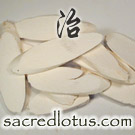
- Assistant: Shan Yao (Chinese yam) tonifies the Spleen and Kidney and helps bind essence; traditionally it is cooked with wine into a paste that literally binds the powdered Yi Zhi Ren and Wu Yao into pills (wan).
Source: Sacred Lotus sources & references + Bensky & Barolet, Formulas & Strategies (chief/deputy/assistant analysis; Sacred Lotus does not flag individual chief/deputy/assistant roles). Traditional-use framing; not medical advice.
Indications
What is Suo Quan Wan used for?
Suo Quan Wan treats Kidney and Bladder cold-deficiency in which the Bladder loses its ability to store and transform urine. The classic presentation is frequent, clear, and copious urination that is difficult to control, worse with cold exposure, and often accompanied by other signs of Kidney yang decline.
Its classic clinical presentation:
- Frequent, clear, profuse urination with a reduced ability to hold or restrain it.
- Enuresis (bedwetting) in children arising from Kidney deficiency cold.
- Urinary incontinence or dribbling, especially in older adults with declining Kidney yang.
- Often with a cold body or limbs and low-back soreness, and symptoms that worsen in cold weather.
Tongue and pulse: pale tongue with a white coat; a submerged (deep), frail pulse.
Source: Sacred Lotus sources & references on pattern/tongue/pulse + Bensky & Barolet, Formulas & Strategies. Traditional-use framing; not medical advice.
Western Uses:
What is Suo Quan Wan used for in modern practice?
In modern practice Suo Quan Wan is referenced for nocturnal enuresis in children, urinary frequency/overactive-bladder patterns, and urinary incontinence or nocturia in older adults — contexts where Western medicine describes impaired bladder storage or detrusor overactivity. Laboratory studies in aging and diabetic rodent models report the formula supporting bladder storage and contraction function, offering a mechanistic frame for its traditional “warm and secure” action.
These biomedical correlates are offered as a reference to the formula’s traditional use, not as a claim that it treats any diagnosed condition. Direct clinical-trial evidence in humans remains limited (see research). Any use for enuresis, incontinence, or a diagnosed urinary condition belongs with a qualified practitioner and appropriate medical evaluation, particularly to rule out structural or neurological causes.
Source: traditional-use correlates summarized from Bensky & Barolet, Formulas & Strategies, cross-checked against the animal-model research below; reference only, not a treatment claim.
Ingredients
3 substances in Suo Quan Wan — each links to its full herb monograph.
Preparation & dosage
How is Suo Quan Wan prepared?
Traditionally, Yi Zhi Ren and Wu Yao are ground to a fine powder in equal parts, while Shan Yao is cooked with wine into a paste that binds the powder into small pills (wan) — the origin of the formula’s name. This paste-binding role is why Shan Yao carries a wider reference dosage range in practice: enough is used to bind the pills, not only to tonify.
In contemporary practice the same three herbs are also combined as a decoction (tea) rather than formed into pills, and prepared/patent pill versions are commercially available and generally taken before meals with warm water.
Source: Sacred Lotus sources & references + Bensky & Barolet, Formulas & Strategies, cross-checked against published formula references for the traditional paste-binding method. Reference only.
Reference relative amounts (decoction or as the basis for pills): Yi Zhi Ren 9-12 g; Wu Yao 6-12 g; Shan Yao 9-15 g (traditionally cooked into a wine paste that binds the pills). As a prepared pill (wan): roughly 3-6 g, two to three times daily with warm water, generally before meals. Amounts vary by preparation and practitioner; reference only, not a prescription.
Safety — read before use
What are the cautions for Suo Quan Wan?
Suo Quan Wan is a warming, astringent formula for cold-deficiency, so it is inappropriate for damp-heat or heat-type urinary patterns. Using it where urination is scanty, dark, urgent, or burning (a Bladder damp-heat / heat-strangury picture) would add warmth to heat and aggravate the condition — that pattern calls for a clearing formula instead, not a securing one.
- Avoid in Bladder damp-heat or other heat-type urinary patterns (burning, urgent, dark, scanty urination).
- Use cautiously with yin deficiency and heat signs, where warming astringents are generally poorly tolerated.
- Avoid during active exterior (surface) conditions.
- Pregnancy: Wu Yao has a mild qi-moving action — use only under professional guidance.
- Frequent urination or incontinence from other causes (e.g., Spleen/Lung qi sinking alone, or a structural/neurological cause) may need a different formula, a modification, or medical evaluation rather than Suo Quan Wan by itself.
Source: Bensky & Barolet, Formulas & Strategies (cautions for warming, astringent stabilize-and-bind formulas). Traditional-use framing; not medical advice.
Originally Appeared In:
- Fine Formulas for Women (Fu Ren Liang Fang)
Notes:
How is Suo Quan Wan different from Sang Piao Xiao San, Jin Suo Gu Jing Wan, and Bu Zhong Yi Qi Tang?
Suo Quan Wan is the simplest of the “stabilize the Kidneys” formulas — three herbs, purely warming and astringent, for Kidney/Bladder cold-deficiency alone. The related formulas add scope for patterns Suo Quan Wan does not cover.
- vs Sang Piao Xiao San: Sang Piao Xiao San addresses a broader Heart-Kidney disconnection, adding Heart-calming and Shen-settling herbs for enuresis or frequent, cloudy urination accompanied by forgetfulness or unsettled spirit — Suo Quan Wan is narrower, treating the cold-deficiency mechanism alone.
- vs Jin Suo Gu Jing Wan: Jin Suo Gu Jing Wan secures leaking essence (jing) — seminal emission or vaginal discharge — rather than urination itself.
- vs Bu Zhong Yi Qi Tang: Bu Zhong Yi Qi Tang raises sunken Spleen/Lung qi, a different mechanism (qi sinking rather than Kidney/Bladder failure to secure); the two are sometimes combined when both patterns are present.
Common modification: for more stubborn enuresis or incontinence, Suo Quan Wan is often used as a base with additions such as Sang Piao Xiao, Long Gu, or Mu Li to strengthen the astringent, securing effect.
Source: Bensky & Barolet, Formulas & Strategies (comparison formulas within Formulas that Stabilize the Kidneys) + general clinical-formula literature on base-formula modification for enuresis.
Clinical Studies & Research:
Is there modern research on Suo Quan Wan?
Yes, but it is mostly mechanistic animal-model research on bladder function, with clinical evidence for enuresis still limited. Rodent studies report that Suo Quan Wan supports bladder storage and voiding function through specific receptor and transporter pathways, and a systematic-review protocol was registered to evaluate its clinical evidence for nocturnal enuresis, though a completed review with pooled results was not located.
- Aging rat bladder function (preclinical): Suo Quan Wan improved urine storage and voiding by increasing β3-adrenoceptor sensitivity and expression in the bladder (PMID 28587421, Experimental and Therapeutic Medicine).
- Diabetic mouse bladder dysfunction (preclinical): Suo Quan Wan reduced overactive-bladder-type symptoms by downregulating the motor protein myosin Va and transporter protein SLC17A9, independent of blood-glucose control (PMID 31178730, Frontiers in Pharmacology).
- Nocturnal enuresis (clinical, protocol only): a registered systematic-review protocol (PROSPERO CRD42018087900) set out to evaluate randomized controlled trials of Suoquan-based herbal medicine for nocturnal enuresis using Cochrane risk-of-bias methodology (PMID 29702985, Medicine [Baltimore]) — this is a study protocol, not completed results, so pooled clinical evidence should be treated as not yet established.
Sources: PubMed 28587421; PubMed 31178730; PubMed 29702985 (protocol). Research context, not a therapeutic claim; direct human clinical-trial evidence remains limited.
Sources & References
Compiled and edited by Thomas Dehli, Founder & Editor, Sacred Lotus Updated
The information here is referenced from numerous sources — teachers, practitioners, class notes from Five Branches University, the books below, and the published research literature, with citations given as resolvable PubMed identifiers. Where sources disagree, I have flagged the discrepancies directly. If facts couldn't be verified, I have left them out. How we source our content.
Reference information for students and practitioners — not medical advice. Consult a qualified practitioner. Terms of use.
Chinese Formulas Books & References
 https://amzn.to/4fYI3f8
 https://amzn.to/4j55NRA
 https://amzn.to/4gMROyv
 https://amzn.to/4h7msSK