

Bai Hu Tang (White Tiger Decoction)
Bai Hu Tang Bái Hú Tāng
White Tiger Decoction
- Category
- Formulas that Clear Heat
- Subcategory
- Formulas that Clear Heat from the Qi Level
- Ingredients
- 4 herbs
Actions
What does Bai Hu Tang do?
Bai Hu Tang (White Tiger Decoction) clears intense excess heat blazing at the Qi level/Yang-Ming channel, generates fluids, and stops thirst — the classic Shang Han Lun formula for the “four bigs” (si da): big fever, big thirst, big sweating, and a big (flooding) pulse, occurring once cold-damage heat has moved from the exterior into the interior without exterior symptoms remaining.
- Clears Qi-level/Yang-Ming heat: Shi Gao (Gypsum) and Zhi Mu together drain the intense, blazing heat that has advanced into the Yang-Ming channel/Qi level.
- Generates fluids and stops thirst: replaces fluids that profuse sweating and high fever have already consumed.
- Drains Stomach (and Lung) fire: targets the Yang-Ming/Stomach organ-heat driving the fever, thirst, and sweating.
Source: Sacred Lotus sources & references/identity + Bensky & Barolet, Formulas & Strategies. Traditional-use framing; not medical advice.
Indications
What is Bai Hu Tang used for?
Bai Hu Tang treats intense, excess heat blazing through the Yang-Ming channel/Qi level — the archetypal “four bigs” presentation of the Shang Han Lun, arising once cold-damage heat has left the exterior and turned into unresolved interior excess heat.
- High fever without chills, and aversion to heat rather than cold.
- Profuse sweating.
- Intense thirst with a strong desire for cold fluids.
- Irritability and restlessness (vexation/agitation, “fan re”).
- Flushed (red) face.
- Dry mouth, with a dry tongue coating.
- A flooding (Hong), forceful, rapid, or slippery pulse — the “big pulse” of the four-bigs mnemonic.
Source: Sacred Lotus sources & references on pattern/tongue/pulse + Bensky & Barolet, Formulas & Strategies; classical presentation traced to the Shang Han Lun (Zhang Zhongjing, Yang-Ming chapter). Traditional-use framing; not medical advice.
Ingredients
4 substances in Bai Hu Tang — each links to its full herb monograph.
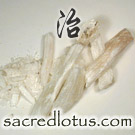 Shi Gao30 gDrain Fire
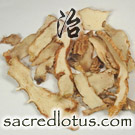 Zhi Mu9 gDrain Fire
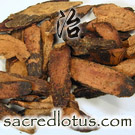 Zhi Gan Cao3 gTonify QiNo specimen photographGeng Mi9-15 gTonify Qi
Preparation & dosage
How is Bai Hu Tang prepared?
Bai Hu Tang is a decoction in which raw rice is cooked directly with the other three herbs until the rice is fully done, then the liquid is strained off and taken warm — a method described in the Shang Han Lun and still followed in modern practice.
- Cooking method: Shi Gao is typically crushed or broken into pieces before decocting so its heat-clearing minerals extract fully into the water; Zhi Mu, Zhi Gan Cao, and Geng Mi (uncooked rice) are added and the whole is simmered together until the rice grains are cooked through — a traditional cue that the decoction is ready.
- Straining and dosing: the dregs and cooked rice are strained out and the liquid taken warm, traditionally in divided doses over the day rather than as a single draught.
- Herb processing: Zhi Gan Cao is honey-fried (mix-fried) licorice, which moderates the raw herb and adds a mild Spleen-qi-tonic, harmonizing action; Geng Mi is plain non-glutinous (polished) rice, used here as a medicinal rather than a food staple.
- Reference amounts (from Sacred Lotus sources & references): Shi Gao 30 g; Zhi Mu 9 g; Zhi Gan Cao 3 g; Geng Mi 9–15 g. Reference only, not a prescription.
Source: Sacred Lotus sources & references/processing notes + Bensky & Barolet, Formulas & Strategies (classical preparation method traced to the Shang Han Lun).
Safety — read before use
What are the cautions for Bai Hu Tang?
Bai Hu Tang is a very cold, mineral-heavy formula reserved for genuine, vigorous excess heat — it is traditionally contraindicated whenever the pulse is deficient/floating-weak rather than flooding and forceful, or when heat signs are not truly of the excess type. Because the whole strategy depends on strongly draining real excess fire, using it against the wrong pattern risks damaging Spleen-Stomach yang and worsening the underlying condition.
- Not for a deficient or floating-weak pulse: classical commentary (following Li Dong-yuan) warns against this formula whenever the pulse is deficient rather than flooding/forceful, since this usually signals Spleen-Stomach qi deficiency with spontaneous sweating, aversion to wind, and fatigue — a pattern this very-cold formula would aggravate.
- Not for true cold with false heat: where apparent heat signs mask an underlying cold/yang-deficient state, Bai Hu Tang’s cold, draining nature is inappropriate and potentially harmful.
- Not while exterior symptoms remain unresolved: Bai Hu Tang addresses interior Qi-level heat; it is not used for fevers still accompanied by chills, body aches, or other signs that cold damage remains at the exterior.
- Caution in Spleen-Stomach deficiency generally: the cold, heavy nature of Shi Gao and Zhi Mu can injure digestion in anyone with an already weak, cold-type Stomach, even where some heat signs are present; the rice and licorice offset but do not eliminate this risk.
Source: Bensky & Barolet, Formulas & Strategies, and Chen & Chen, Chinese Medical Herbology and Pharmacology (classical contraindications for Qi-level heat-clearing formulas). Presented as neutral safety reference, not administration guidance.
Originally Appeared In:
- On Cold Damage (Shang Han Lun)
Notes:
How does Bai Hu Tang differ from its variants and related formulas?
Bai Hu Tang is the base “four bigs” formula for pure excess Qi-level heat; its two best-known classical variants add ingredients for heat complicated by qi/fluid exhaustion or by concurrent joint pain. Both share the Shi Gao/Zhi Mu core and Han-dynasty lineage.
- Bai Hu Jia Ren Shen Tang (White Tiger plus Ginseng Decoction): adds Ren Shen (ginseng) to the base formula for the same Qi-level heat pattern when profuse sweating and high fever have gone on to exhaust qi and fluids as well — marked by a big but feeble/empty pulse, more severe thirst, and signs of qi depletion alongside the heat.
- Bai Hu Jia Gui Zhi Tang (White Tiger plus Cinnamon Twig Decoction): adds Gui Zhi (cinnamon twig) to address “heat bi” (febrile joint) patterns — high fever and irritability from the same Qi-level heat, together with joint pain and swelling — using Gui Zhi to unblock the channels/joints while Shi Gao and Zhi Mu clear the underlying heat. This variant traces to the Jin Gui Yao Lue rather than the Shang Han Lun.
- vs Zhu Ye Shi Gao Tang (Lophatherus and Gypsum Decoction): that formula is used later in a febrile illness, once acute excess heat has waned and left residual heat with more pronounced qi and fluid damage; it adds qi- and yin-tonifying herbs (Ren Shen, Mai Men Dong) and is gentler than Bai Hu Tang, which is reserved for the acute, vigorous excess-heat stage.
Classical source: Shang Han Lun (Treatise on Cold Damage), attributed to Zhang Zhongjing, circa 200 CE — the founding formula for Yang-Ming channel/Qi-level excess heat, widely remembered by the “four bigs” (si da) mnemonic: big fever, big thirst, big sweating, big (flooding) pulse.
Source: Sacred Lotus sources & references/origin + Bensky & Barolet, Formulas & Strategies (formula comparisons, variant compositions, classical/lineage attribution).
Clinical Studies & Research:
Is there modern research on Bai Hu Tang?
Yes, but it is preclinical and analytical — animal-model and chemistry studies, not human clinical trials — and it centers on confirming the formula’s traditional antipyretic (fever-reducing) action and characterizing its chemical makeup.
- Antipyretic mechanism (preclinical, rat model): a network-pharmacology and metabolomics study found Bai Hu Tang reduced LPS-induced fever in rats, with predicted targets in immune/inflammatory signaling (including MAPK, PI3K/AKT, and NF-kB pathways) and metabolomic shifts in fatty-acid, bile-acid, and amino-acid metabolism — L-arginine and glycyrrhetinic acid (a Gan Cao constituent) were among the key differential metabolites (PMC 12114418; DOI 10.3390/ph18050610).
- Chemical characterization (analytical): UPLC-QTOF-MS/UPLC-PDA analysis of Bai Hu Tang decoctions identified 42 secondary metabolites and quantified 10 major marker compounds, providing a chemical basis for standardizing and quality-testing the formula (PMC 9328867).
Sources: PMC 12114418 (DOI 10.3390/ph18050610); PMC 9328867. Research context only, not a therapeutic claim; both cited studies are preclinical/analytical, and neither establishes efficacy for any human disease.
Sources & References
Compiled and edited by Thomas Dehli, Founder & Editor, Sacred Lotus Updated
The information here is referenced from numerous sources — teachers, practitioners, class notes from Five Branches University, the books below, and the published research literature, with citations given as resolvable PubMed identifiers. Where sources disagree, I have flagged the discrepancies directly. If facts couldn't be verified, I have left them out. How we source our content.
Reference information for students and practitioners — not medical advice. Consult a qualified practitioner. Terms of use.
Chinese Formulas Books & References
 https://amzn.to/4fYI3f8
 https://amzn.to/4j55NRA
 https://amzn.to/4gMROyv
 https://amzn.to/4h7msSK