

Cong Bai Qi Wei Yin (Scallion Decoction with Seven Ingredients)
Cong Bai Qi Wei Yin
Scallion Decoction with Seven Ingredients
- Category
- Formulas that Release the Exterior
- Ingredients
- 6 herbs
Actions
What does Cong Bai Qi Wei Yin do?
Cong Bai Qi Wei Yin releases an exterior Wind-Cold invasion while nourishing Yin and Blood at the same time, so that a depleted patient can mount a mild, sustainable sweat instead of a sweat strong enough to injure already-short reserves. It pairs classic diaphoretic (sweat-inducing) herbs with Yin/Blood tonics rather than treating the two problems in sequence.
The six recorded herbs divide by function:
- Release the exterior: Cong Bai (scallion bulb) and Dan Dou Chi (fermented soybean) are the traditional diaphoretic pair for this formula — gentle, warm/neutral herbs that induce sweating without the harshness of stronger Wind-Cold releasers. Ge Gen (kudzu root) supports them, relaxing the muscle layer and generating fluid, and Sheng Jiang (fresh ginger) adds a light warming, dispersing push.
- Nourish Yin and Blood: Sheng Di Huang (fresh Rehmannia) and Mai Men Dong (Ophiopogon) rebuild the Blood/fluid foundation the sweating herbs draw on, protecting against further depletion.
Formula references disagree on which herbs are the formal chief: several published formula references name Cong Bai and Dan Dou Chi as the principal (chief) pair with Sheng Di Huang/Mai Men Dong as supporting assistants — the reading followed above, consistent with the formula being named for Cong Bai. At least one other reputable formula database instead names Sheng Di Huang and Mai Men Dong as chief, treating the exterior-releasing herbs as deputies that carry out the chief tonics' strategy. Both are defensible interpretations of a "release the exterior with underlying deficiency" formula; this site’s own chief/deputy/assistant flags are unset, so no source is authoritative here.
Source: this site’s own composition record + Bensky & Barolet, Formulas & Strategies (release-exterior-with-deficiency category analysis). Traditional-use framing; not medical advice.
Indications
What is Cong Bai Qi Wei Yin used for?
Cong Bai Qi Wei Yin treats a Wind-Cold exterior invasion occurring on top of underlying Yin/Blood deficiency — classically after significant blood loss (childbirth, heavy menstruation, nosebleed) or a long depleting illness leaves the body without enough Blood and fluid to sweat effectively against a fresh cold.
Its classic presentation:
- Exterior Wind-Cold signs: headache, fever with chills, body aches, and — the key diagnostic marker — little or no sweating despite the fever, because deficient fluids can't fuel a normal sweating response.
- Underlying deficiency signs: pale or sallow complexion, dry mouth/throat, and general depletion consistent with recent blood loss or convalescence.
Tongue and pulse: classically a relatively unremarkable, pale-ish tongue (not heavily coated) and a pulse that is thin or floating-thin, reflecting Blood/Yin deficiency rather than a robust excess pattern.
This site’s own on-file pattern text read “Invasion of Wind-Cold with existing Qi and Yang Deficiency,” but the formula's own composition doesn't support a Qi/Yang reading: there is no Huang Qi, Ren Shen, or Fu Zi (the herbs that would signal Qi/Yang tonification) — instead Sheng Di Huang and Mai Men Dong are classic Yin/Blood tonics. Bensky & Barolet and independent formula references consistently describe this pattern as Wind-Cold with Yin/Blood deficiency, so the pattern field has been corrected accordingly.
Source: this site’s own composition record + Bensky & Barolet, Formulas & Strategies (release-exterior-with-deficiency category). Traditional-use framing; not medical advice.
Western Uses:
What is Cong Bai Qi Wei Yin used for in modern practice?
In modern practice this pattern is most often referenced for a common cold or flu-like illness arriving in someone already run down by blood loss or a depleting illness — classic examples cited in the formula literature are a cold caught postpartum, perimenstrually, or during recovery from surgery or a prior illness, where fatigue, a pale complexion, and dry mouth accompany the usual cold symptoms.
This biomedical framing is offered only as a reference to the formula's traditional use — a Wind-Cold-with-deficiency presentation — not as a claim that it treats anemia, postpartum recovery, or any diagnosed condition. It is a lesser-used classical formula with essentially no dedicated modern clinical study (see research); any use for an actual illness belongs with a qualified practitioner.
Source: traditional-use correlates summarized from Bensky & Barolet, Formulas & Strategies; reference only, not a treatment claim.
Ingredients
6 substances in Cong Bai Qi Wei Yin — each links to its full herb monograph.
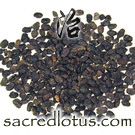 Dan Dou Chi6-9 gCool, Spicy Herbs that Release the Exterior
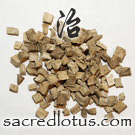 Ge Gen9-12 gCool, Spicy Herbs that Release the Exterior
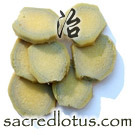 Sheng Jiang6-9 gWarm, Spicy Herbs that Release the Exterior
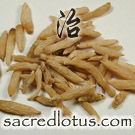 Mai Men Dong9-12 gTonify Yin
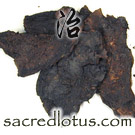 Sheng Di Huang9-15 gCool the Blood
Preparation & dosage
How is Cong Bai Qi Wei Yin prepared?
Cong Bai Qi Wei Yin is taken as a decoction, classically simmered in "aerated" water (water repeatedly ladled/poured to introduce air, called lao shui in some formula references) rather than plain water — a traditional preparation detail associated with formulas meant to nourish and support a depleted patient rather than force a strong reaction. It is typically divided into two to three warm doses.
Source: Bensky & Barolet, Formulas & Strategies (preparation notes for this formula). Reference only.
Decoction. Reference relative amounts (per this site’s own composition record): Cong Bai 9-12 g; Ge Gen 9-12 g; Dan Dou Chi 6-9 g; Sheng Jiang 6-9 g; Mai Men Dong 9-12 g; Sheng Di Huang 9-15 g. Taken warm, divided into 2-3 doses. Reference only.
Safety — read before use
What are the cautions for Cong Bai Qi Wei Yin?
Cong Bai Qi Wei Yin is built for a deficient patient who needs only a mild sweat, so it is inappropriate wherever a stronger release is called for or deficiency is absent. Formula references are consistent that only a light, sustainable sweat is the goal — pushing for a heavier sweat risks further depleting an already-short Blood/Yin reserve.
- Not for Wind-Heat or exterior-excess patterns without underlying deficiency — the gentle warm diaphoretics and Yin tonics are matched specifically to a deficient Wind-Cold presentation.
- Avoid once sweating has already started or where spontaneous sweating is present; the formula is meant to induce a first, controlled sweat, not to be layered onto one already occurring.
- Pregnancy/nursing: use only under a qualified practitioner's guidance.
Source: Bensky & Barolet, Formulas & Strategies (cautions for release-exterior-with-deficiency formulas). Traditional-use framing; not medical advice.
Originally Appeared In:
- Arcane Essentials from the Imperial Library (Wai Tai Bi Yao)
Notes:
How does Cong Bai Qi Wei Yin compare to other formulas that release the exterior in a deficient patient?
Cong Bai Qi Wei Yin is Bensky & Barolet's representative formula for Wind-Cold with Yin/Blood deficiency within the broader "release exterior disorders with interior deficiency" strategy — the same strategy behind formulas built for other kinds of underlying deficiency.
- vs Jia Jian Wei Rui Tang (Modified Solomon's Seal Decoction): both nourish Yin while releasing the exterior, but Jia Jian Wei Rui Tang is built for Wind-Heat (with Bo He, Bai Wei) rather than Wind-Cold.
- vs Ren Shen Bai Du San (Ginseng Powder to Overcome Pathogenic Influence): addresses Qi deficiency (with Ren Shen) alongside Wind-Cold-Damp, rather than Blood/Yin deficiency.
- vs Zai Zao San (Renewal Powder): addresses Yang deficiency (with Huang Qi, Fu Zi) alongside Wind-Cold, for a more chronically cold, Yang-deficient patient.
- vs Cong Chi Tang (Scallion and Prepared Soybean Decoction): the simple two-herb parent formula (just Cong Bai and Dan Dou Chi) for mild Wind-Cold in an otherwise healthy patient, without the added Yin/Blood tonics.
Source: Bensky & Barolet, Formulas & Strategies (release-exterior-with-deficiency category comparisons).
Clinical Studies & Research:
Is there modern research on Cong Bai Qi Wei Yin?
No dedicated modern clinical research on this specific classical formula was found in PubMed/PMC or Chinese-language literature searches. Cong Bai Qi Wei Yin is an infrequently used classical formula (Tang dynasty, from Wai Tai Mi Yao / Wai Tai Bi Yao, 752 CE), and it does not appear to have been the subject of randomized trials, systematic reviews, or network-pharmacology studies as a whole formula.
This is stated plainly rather than substituted with citations for individual constituent herbs, which would misrepresent formula-level evidence that doesn't exist. If dedicated research on this formula is published, this section should be revisited.
Sources: PubMed/PMC and web literature searches (no matching studies found as of this review). Absence of evidence noted honestly; not a claim of efficacy or inefficacy.
Sources & References
Compiled and edited by Thomas Dehli, Founder & Editor, Sacred Lotus Updated
The information here is referenced from numerous sources — teachers, practitioners, class notes from Five Branches University, the books below, and the published research literature, with citations given as resolvable PubMed identifiers. Where sources disagree, I have flagged the discrepancies directly. If facts couldn't be verified, I have left them out. How we source our content.
Reference information for students and practitioners — not medical advice. Consult a qualified practitioner. Terms of use.
Chinese Formulas Books & References
 https://amzn.to/4fYI3f8
 https://amzn.to/4j55NRA
 https://amzn.to/4gMROyv
 https://amzn.to/4h7msSK