

Dang Gui Shao Yao San (Tangkuei and Peony Powder)
Dang Gui Shao Yao San
Tangkuei and Peony Powder
- Category
- Formulas that Tonify
- Subcategory
- Formulas that Tonify the Blood
- Ingredients
- 6 herbs
Actions
What does Dang Gui Shao Yao San do?
Dang Gui Shao Yao San nourishes and harmonizes the blood while strengthening the Spleen and draining dampness. It is built for a combined pattern — blood deficiency letting the Liver go under-nourished and lose its smooth, harmonious function, alongside a Spleen too weak to move fluids, so dampness accumulates. Six herbs divide by role:
- Chief: Bai Shao, used in a notably large dose (Sacred Lotus lists 16–24 g against 8–12 g for the other herbs) — nourishes blood, softens and harmonizes the Liver, and relaxes spasm to relieve cramping pain.
- Deputies: Dang Gui and Chuan Xiong nourish and gently invigorate the blood, supporting Bai Shao’s blood-nourishing action while easing the sluggish circulation that contributes to the pain.
- Assistants: Bai Zhu, Fu Ling, and Ze Xie strengthen Spleen qi and drain dampness — the same trio at the core of Wu Ling San — resolving the fluid retention and heaviness that accompany the blood deficiency.
Source: Sacred Lotus sources & references + Bensky & Barolet, Formulas & Strategies (chief/deputy/assistant analysis). Traditional-use framing; not medical advice.
Indications
What is Dang Gui Shao Yao San used for?
Dang Gui Shao Yao San treats disharmony between the Liver and Spleen arising from blood deficiency combined with dampness — producing dull, continuous or nagging lower-abdominal or menstrual cramping pain, classically described in pregnancy. It comes from the Jin Gui Yao Lue (Essentials from the Golden Cabinet), attributed to Zhang Zhongjing (Han dynasty, c. 3rd century CE), in the chapter on disorders of pregnant women, for “continuous mild abdominal pain in a pregnant woman.”
Its classic clinical presentation:
- Pain pattern: dull, dragging, or cramping lower-abdominal pain that tends to be continuous or intermittent rather than sharp and fixed — in pregnancy, in dysmenorrhea, or as chronic lower-abdominal discomfort.
- Dampness signs: heaviness of the body or limbs, dizziness, mild dependent edema (especially of the lower legs), and scanty urination.
- Blood-deficiency signs: pale or dull complexion, and a tendency toward the pain easing somewhat with pressure or warmth.
Tongue and pulse: the tongue is pale, sometimes with a thin white or slightly greasy coat; the pulse is wiry and fine, or deep and wiry.
Source: Sacred Lotus sources & references/identity + Bensky & Barolet, Formulas & Strategies (Jin Gui Yao Lue origin and classic presentation).
Western Uses:
What is Dang Gui Shao Yao San used for in modern practice?
In modern practice this formula — also known by its Japanese Kampo name Toki-shakuyaku-san (当归芝药散) — is referenced for primary dysmenorrhea, pregnancy-related discomfort, and menopausal symptoms occurring with a blood-deficiency pattern. It is one of the most widely prescribed Kampo formulas for women’s health in Japan, and clinical study has also explored it, in small studies, for cognitive symptoms in older adults.
These biomedical correlates describe contexts where the formula’s traditional blood-nourishing, dampness-draining pattern has been studied — they are not a claim that it treats any diagnosed disease (see research). Use in pregnancy or for a diagnosed condition belongs with a qualified practitioner and appropriate medical care.
Source: traditional-use correlates summarized from clinical literature cited in research; reference only, not a treatment claim.
Ingredients
6 substances in Dang Gui Shao Yao San — each links to its full herb monograph.
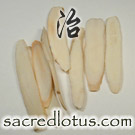 Bai Shao16-24 gTonify Blood
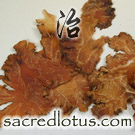 Chuan Xiong9 gInvigorate Blood and Remove Stagnation
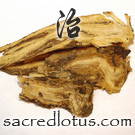 Dang Gui9 gTonify Blood
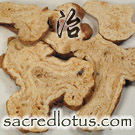 Bai Zhu12 gTonify Qi
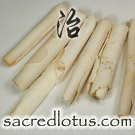 Fu Ling12 gRegulate Water and Drain Dampness
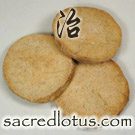 Ze Xie8-12 gRegulate Water and Drain Dampness
Preparation & dosage
How is Dang Gui Shao Yao San prepared?
Classically prepared as a fine powder (“san”), per its name and Jin Gui Yao Lue origin — the herbs are ground and a small dose taken with warm rice wine or warm water, several times a day. In contemporary practice it is most often decocted as a standard tang (all six herbs boiled together) for daily dosing convenience, and is also widely available as a granulated Kampo extract (Toki-shakuyaku-san, sometimes labeled TJ-23).
Source: Bensky & Barolet, Formulas & Strategies (preparation per Jin Gui Yao Lue) + Kampo formulary references (granulated-extract form).
Reference relative amounts: Bai Shao 16-24 g (chief, notably larger than the other five herbs); Dang Gui, Chuan Xiong 9 g each; Bai Zhu, Fu Ling 12 g each; Ze Xie 8-12 g. Classically prepared as a fine powder taken in small doses (roughly 2-6 g) with warm rice wine, several times daily; the gram amounts above reflect a modern one-day decoction dose. Reference only, not a prescription.
Safety — read before use
What are the cautions for Dang Gui Shao Yao San?
Although this formula’s classical purpose was abdominal pain in pregnancy, it contains blood-invigorating herbs (Dang Gui, Chuan Xiong) and should only be used in pregnancy under the guidance of a qualified TCM practitioner — never self-prescribed. It is built for deficiency-with-dampness and is not appropriate for pain from blood stasis, excess heat, or pure qi stagnation without an underlying deficient-damp pattern.
- Pregnancy: a classical pregnancy formula, but professional supervision is essential given the blood-invigorating herbs and the need to confirm the pattern actually fits.
- Pattern match matters: not for sharp, fixed, stabbing abdominal pain (suggesting blood stasis) or for pain with clear heat signs (thirst, red tongue, rapid pulse).
- Ze Xie’s draining action can be overly depleting if the formula is continued long-term once dampness has resolved.
Source: Bensky & Barolet, Formulas & Strategies (cautions for pregnancy-use and deficiency-damp formulas). Traditional-use framing; not medical advice.
Originally Appeared In:
- Essentials from the Golden Cabinet (Jin Gui Yao Lue)
Notes:
How is Dang Gui Shao Yao San different from Xiao Yao San, Si Wu Tang, and Wu Ling San?
Dang Gui Shao Yao San targets blood deficiency plus dampness, not Liver-qi stagnation — the feature that separates it from its better-known cousin, Xiao Yao San.
- vs Xiao Yao San: both harmonize the Liver and Spleen, but Xiao Yao San is built around Chai Hu and Bo He to move constrained Liver qi (irritability, distension, a wiry pulse from stagnation); Dang Gui Shao Yao San instead pairs blood nourishment with a dedicated dampness-draining trio (Bai Zhu, Fu Ling, Ze Xie), fitting a damper, more painful, less irritable presentation.
- vs Si Wu Tang: Dang Gui Shao Yao San is effectively a lighter blood-nourishing set — Dang Gui, a large dose of Bai Shao, and Chuan Xiong — built without Si Wu Tang’s rich Shu Di Huang, then combined with the Spleen/dampness trio; it suits blood deficiency where digestion is weak or dampness is present, since Shu Di Huang’s richness can burden a damp, deficient Spleen.
- vs Wu Ling San: the two share Bai Zhu, Fu Ling, and Ze Xie for draining dampness, but Wu Ling San adds Zhu Ling and warming, exterior-releasing Gui Zhi for water accumulation with exterior signs, and carries no blood-nourishing herbs at all.
Source: Bensky & Barolet, Formulas & Strategies (formula comparisons) + Sacred Lotus sources & references cross-reference.
Clinical Studies & Research:
Is there modern research on Dang Gui Shao Yao San?
Yes — clinical trial evidence concentrates on primary dysmenorrhea and menopausal blood-deficiency symptoms, with additional small exploratory work on cognitive function under the formula’s Japanese Kampo name, Toki-shakuyaku-san. Evidence quality is generally low-to-moderate, with small trial sizes and risk of bias flagged by reviewers.
- Primary dysmenorrhea (clinical, meta-analysis): a systematic review and meta-analysis of 4 randomized controlled trials found Danggui Shaoyao San superior to analgesics (risk ratio 1.31, 95% CI 1.06-1.63) for primary dysmenorrhea, though evidence quality was rated low-to-moderate due to high risk of bias in the underlying trials (PMID 26857875).
- Climacteric syndrome (clinical, RCT): a randomized, double-blind, placebo-controlled pilot trial of Danggwijagyaksan in peri/postmenopausal women with a blood-deficiency-dominant pattern reported improvement on the Menopause Rating Scale (PMID 33665100).
- Cognitive function (clinical, small SPECT study): eight weeks of Toki-shakuyaku-san increased regional cerebral blood flow in the posterior cingulate in patients with mild cognitive impairment or Alzheimer’s disease (n=8 completers), with a trend toward improved orientation on the MMSE (PMID 22454658).
Sources: PubMed 26857875; PubMed 33665100; PubMed 22454658. Research context, not a therapeutic claim; direct high-quality clinical trial evidence remains limited.
Sources & References
Compiled and edited by Thomas Dehli, Founder & Editor, Sacred Lotus Updated
The information here is referenced from numerous sources — teachers, practitioners, class notes from Five Branches University, the books below, and the published research literature, with citations given as resolvable PubMed identifiers. Where sources disagree, I have flagged the discrepancies directly. If facts couldn't be verified, I have left them out. How we source our content.
Reference information for students and practitioners — not medical advice. Consult a qualified practitioner. Terms of use.
Chinese Formulas Books & References
 https://amzn.to/4fYI3f8
 https://amzn.to/4j55NRA
 https://amzn.to/4gMROyv
 https://amzn.to/4h7msSK