

Ge Gen Huang Lian Huang Qin Tang (Kudzu, Coptis, and Scutellaria Decoction)
Ge Gen Huang Lian Huang Qin Tang
Kudzu, Coptis, and Scutellaria Decoction
- Category
- Formulas that Release the Exterior
- Subcategory
- Formulas that Release Exterior-Interior Excess
- Ingredients
- 4 herbs
Actions
What does Ge Gen Huang Lian Huang Qin Tang do?
Ge Gen Huang Lian Huang Qin Tang (also commonly ordered Ge Gen Huang Qin Huang Lian Tang, or “Ge Gen Qin Lian Tang”) releases a lingering exterior heat while clearing damp-heat from the interior to stop diarrhea. It is a classic Shang Han Lun (Treatise on Cold Damage) formula, originally written for a case where a Tai Yang (exterior) disorder was mistakenly purged, driving the pathogen inward to combine with heat in the Yangming/interior and produce diarrhea while fever and sweating persisted.
The four ingredients divide by role:
- Chief: Ge Gen (Radix Puerariae), used in a notably large dose — releases the exterior and relieves fever, raises clear yang to stop the diarrhea, and generates fluids for the accompanying thirst.
- Deputies: Huang Qin (Radix Scutellariae) and Huang Lian (Rhizoma Coptidis) — bitter and cold, they clear heat and dry the damp-heat lodged in the Large Intestine that is driving the diarrhea.
- Envoy: Zhi Gan Cao (honey-fried licorice) — harmonizes the bitter, cold deputies and protects the Stomach and Spleen.
Source: Sacred Lotus sources & references + Bensky & Barolet, Formulas & Strategies (chief/deputy/envoy analysis). Traditional-use framing; not medical advice.
Indications
What is Ge Gen Huang Lian Huang Qin Tang used for?
Ge Gen Huang Lian Huang Qin Tang treats diarrhea or a dysentery-like disorder caused by damp-heat in the intestines occurring together with a lingering exterior heat — fever and sweating that have not fully resolved, alongside diarrhea that is typically sudden, forceful, and foul-smelling.
Its classic clinical presentation:
- Persisting exterior heat: fever with sweating that continues despite the onset of diarrhea.
- Interior damp-heat signs: diarrhea or dysentery that is urgent and foul-smelling, thirst, and a sensation of fullness or focal distension below the chest (epigastrium).
- Tongue and pulse (per Bensky & Barolet): a red tongue with yellow coating; a rapid, forceful (or rapid and slippery) pulse.
Source: Sacred Lotus sources & references + Bensky & Barolet, Formulas & Strategies. Traditional-use framing; not medical advice.
Western Uses:
What is Ge Gen Huang Lian Huang Qin Tang used for in modern practice?
In modern practice, this formula (usually studied under the name Gegen Qinlian Decoction, GQD, sometimes modified with additional herbs) is researched mainly for ulcerative colitis and type 2 diabetes — conditions whose gut inflammation and heat-type presentations loosely correspond to the traditional damp-heat diarrhea pattern the formula was written for.
These biomedical correlates are offered as a reference to the formula’s traditional use, not as a claim that it treats any diagnosed disease. Much of the supporting clinical evidence comes from Chinese-language trials of variable methodological quality, and several trials used formulas modified beyond the classic four ingredients (see research). Any use for a diagnosed condition belongs with a qualified practitioner and appropriate medical care.
Source: traditional-use correlates summarized from Bensky & Barolet, Formulas & Strategies, and the research literature below; reference only, not a treatment claim.
Ingredients
4 substances in Ge Gen Huang Lian Huang Qin Tang — each links to its full herb monograph.
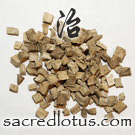 Ge Gen18-24 gCool, Spicy Herbs that Release the Exterior
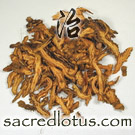 Huang Lian6 gClear Heat and Dry Dampness
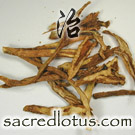 Huang Qin9 gClear Heat and Dry Dampness
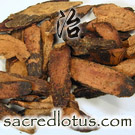 Zhi Gan Cao6 gTonify Qi
Preparation & dosage
How is Ge Gen Huang Lian Huang Qin Tang prepared?
Traditionally prepared as a decoction, with Ge Gen boiled first. The Shang Han Lun method decocts Ge Gen alone in water first, reducing the liquid, then adds the remaining three herbs (Huang Qin, Huang Lian, Zhi Gan Cao) and continues decocting before straining; the strained decoction is taken warm, traditionally in two divided doses.
Source: Bensky & Barolet, Formulas & Strategies (traditional decoction method). Reference only.
Decoction, Ge Gen decocted first. Reference relative amounts (per Sacred Lotus sources & references): Ge Gen 18-24 g; Huang Qin 9 g; Huang Lian 6 g; Zhi Gan Cao 6 g. Reference only.
Safety — read before use
What are the cautions for Ge Gen Huang Lian Huang Qin Tang?
This is a bitter, cold formula meant for heat-type diarrhea, so it is inappropriate for diarrhea caused by cold or deficiency of Spleen and Stomach yang (chronic loose stool, cold limbs, a pale tongue, or a weak/deep pulse) — using it there would further injure the digestive yang and worsen the diarrhea.
- Not for cold-type or deficiency diarrhea: reserve for diarrhea/dysentery with clear heat signs (fever, thirst, yellow tongue coating), not chronic or cold-aggravated loose stool.
- Digestive fit matters: the bitter-cold deputies (Huang Qin, Huang Lian) can irritate a sensitive Stomach if used beyond the acute presentation; the formula is a targeted, short-course decoction rather than a long-term tonic.
- Professional guidance: as with any formula addressing acute diarrhea/dysentery, persistent, bloody, or severe symptoms warrant evaluation by a qualified practitioner.
Source: Bensky & Barolet, Formulas & Strategies (cautions for bitter, cold heat-clearing formulas). Traditional-use framing; not medical advice.
Originally Appeared In:
- On Cold Damage (Shang Han Lun)
Notes:
How is Ge Gen Huang Lian Huang Qin Tang different from Huang Qin Tang and Bai Tou Weng Tang?
All three formulas clear damp-heat diarrhea/dysentery, but they differ by whether exterior symptoms remain and how severe the interior heat-toxin is.
- vs Huang Qin Tang: Huang Qin Tang treats damp-heat diarrhea without lingering exterior signs; Ge Gen Huang Lian Huang Qin Tang adds Ge Gen specifically because fever and sweating are still present, releasing the residual exterior while raising clear yang to stop the diarrhea.
- vs Bai Tou Weng Tang: Bai Tou Weng Tang is used for more severe damp-heat-toxin dysentery, with blood and pus in the stool and marked tenesmus — a deeper, more toxic presentation than the diarrhea this formula addresses.
Source: Bensky & Barolet, Formulas & Strategies (comparative formula analysis).
Clinical Studies & Research:
Is there modern research on Ge Gen Huang Lian Huang Qin Tang?
Yes — under the name Gegen Qinlian Decoction (GQD), it has a substantial clinical literature focused mainly on ulcerative colitis and type 2 diabetes, though trial quality is mixed and many studies use formulas modified beyond the classic four herbs.
- Ulcerative colitis (systematic review): a review of 22 RCTs (2,028 patients) found GQD alone or combined with western medicine improved clinical effective rate (RR 1.21) and reduced recurrence versus western medicine alone, with fewer adverse events, though the authors judged trial quality too poor for a definitive conclusion (PMID 31876740).
- Ulcerative colitis (meta-analysis, combined with mesalazine): a 2025 meta-analysis of 15 RCTs (1,428 patients) found GQD added to mesalazine improved total clinical effective rate versus mesalazine alone (RR 1.22, 95% CI 1.16–1.28) (PMID 40725879).
- Type 2 diabetes (double-blind RCT): a 120-participant double-blind trial of a modified, 7-herb GQD (adding Wuweizi, Zhimu, and Ganjiang to the classic four) found reduced HbA1c and fasting/postprandial glucose versus placebo over 12 weeks, associated with enrichment of the gut bacterium Faecalibacterium and increased short-chain fatty acids (PMID 38495337).
Sources: PubMed 31876740; PubMed 40725879; PubMed 38495337. Research context, not a therapeutic claim; note that several cited trials used the formula modified with additional herbs rather than the classic four-ingredient decoction.
Sources & References
Compiled and edited by Thomas Dehli, Founder & Editor, Sacred Lotus Updated
The information here is referenced from numerous sources — teachers, practitioners, class notes from Five Branches University, the books below, and the published research literature, with citations given as resolvable PubMed identifiers. Where sources disagree, I have flagged the discrepancies directly. If facts couldn't be verified, I have left them out. How we source our content.
Reference information for students and practitioners — not medical advice. Consult a qualified practitioner. Terms of use.
Chinese Formulas Books & References
 https://amzn.to/4fYI3f8
 https://amzn.to/4j55NRA
 https://amzn.to/4gMROyv
 https://amzn.to/4h7msSK