

Ge Gen Tang (Kudzu Decoction)
Actions
What does Ge Gen Tang do?
Ge Gen Tang (Kudzu Decoction) releases the exterior to expel wind-cold and, distinctively, raises fluids to relax the stiff, tight muscles of the neck and upper back that this pattern produces. It is built directly on Gui Zhi Tang (Cinnamon Twig Decoction), the Shang Han Lun’s harmonizing exterior formula, with Ma Huang added for a stronger, non-sweating-excess presentation and Ge Gen added specifically for the neck/upper-back rigidity.
- Releases the exterior and expels wind-cold: Ma Huang and Gui Zhi together open the pores and promote sweating to disperse an exterior wind-cold invasion.
- Raises fluids and relaxes the muscles: Ge Gen lifts fluids to the neck and upper back, easing the stiffness and rigidity characteristic of this pattern — its signature action within the formula.
- Harmonizes constructive and defensive qi: Gui Zhi and Bai Shao (inherited from Gui Zhi Tang) balance the sweating action so the exterior is released without excessive fluid loss.
- Harmonizes the Stomach and moderates the other herbs: Sheng Jiang, Da Zao, and Gan Cao support digestion and temper the more forceful, sweat-promoting herbs.
Source: Sacred Lotus sources & references (composition) + Bensky & Barolet, Formulas & Strategies; Chen & Chen, Chinese Medical Herbology and Pharmacology.
Indications
What is Ge Gen Tang used for?
Ge Gen Tang treats Taiyang-stage wind-cold with an excess presentation — chills and fever without sweating — distinguished from other exterior formulas by prominent stiffness and rigidity of the neck and upper back. The Shang Han Lun also describes it for early wind-cold invasion presenting with diarrhea, reflecting Ge Gen’s additional action of raising clear qi to the intestines.
- Chills and fever with an aversion to cold, and no sweating
- Marked stiffness or rigidity of the neck and upper back muscles
- Headache, and possible irritability or disturbed sleep, in a combined Taiyang/Yang Ming presentation
- Absence of sweating despite fever — the key excess marker distinguishing it from Gui Zhi Tang alone
- Early-stage wind-cold with diarrhea or loose stool (a classical secondary indication)
- Occasional nausea accompanying the exterior pattern
Source: Sacred Lotus sources & references (pattern/indications fields) + Bensky & Barolet, Formulas & Strategies.
Western Uses:
What conditions is Ge Gen Tang used for in modern practice?
Ge Gen Tang releases a wind-cold exterior with a stiff, tight neck and upper back (Tai-Yang/Yang-Ming), so it is referenced for early febrile illness and neck/shoulder tension: the common cold, influenza, "stomach flu" (gastroenteritis), acute neck-muscle inflammation (cervical myositis), headache, stiff neck, frozen shoulder, hives (urticaria), allergic rhinitis, and early-stage polio or encephalitis.
It is chosen for the exterior-cold-with-stiffness pattern, not for a diagnosis. A stiff neck together with fever, severe headache, drowsiness, or a rash is a red flag for meningitis or encephalitis and needs EMERGENCY assessment — do not self-treat that picture. Traditional-use correlates only, not a treatment claim.
Source: Sacred Lotus sources & references (pattern) + Bensky & Barolet, Formulas & Strategies; biomedical correlates as reference only. Not medical advice.
Ingredients
7 substances in Ge Gen Tang — each links to its full herb monograph.
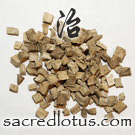 Ge Gen12 gCool, Spicy Herbs that Release the Exterior
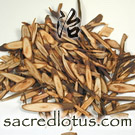 Gui Zhi6 gWarm, Spicy Herbs that Release the Exterior
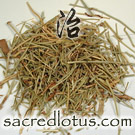 Ma Huang9 gWarm, Spicy Herbs that Release the Exterior
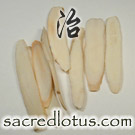 Bai Shao6 gTonify Blood
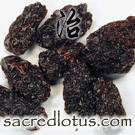 Da Zao12 piecesTonify Qi
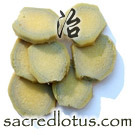 Sheng Jiang9 gWarm, Spicy Herbs that Release the Exterior
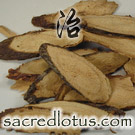 Gan Cao6 gTonify Qi
Preparation & dosage
How is Ge Gen Tang prepared?
Prepared as a decoction (tang), as its name states — the seven herbs are simmered together, classically with Ma Huang added after an initial boil and any resulting foam skimmed off, and the strained liquid taken warm, traditionally followed by a light gruel or rest under blankets to encourage a mild, even sweat.
- Reference decoction amounts (from Sacred Lotus composition data): Ge Gen 12 g; Ma Huang 9 g; Gui Zhi 6 g; Bai Shao 6 g; Sheng Jiang 9 g; Da Zao 12 pieces; Gan Cao 6 g.
- Classical cooking order: the Shang Han Lun instructs boiling Ma Huang and Ge Gen first and skimming the foam before adding the remaining herbs, a traditional step for reducing Ma Huang’s tendency to cause nausea.
- Post-dose care: as with Gui Zhi Tang, a light, easily digested meal afterward and avoidance of chilling support the intended mild sweat and exterior release.
Source: Sacred Lotus sources & references (composition/dosage) + Bensky & Barolet, Formulas & Strategies (classical preparation).
Safety — read before use
What are the cautions for Ge Gen Tang?
Ge Gen Tang is a strong, sweat-promoting exterior-releasing formula and is not appropriate once sweating has already occurred, in cases of exterior deficiency, or where cautious use of Ma Huang-containing formulas is otherwise indicated.
- Not for exterior-deficiency (spontaneous sweating) presentations: Gui Zhi Tang alone, without Ma Huang, is the formula for a case that already sweats; adding Ma Huang to a sweating exterior-deficiency pattern is a classical error.
- Use cautiously in hypertension and other conditions where stimulant-type exterior-releasing formulas are used carefully, per our existing caution.
- Ma Huang (Ephedra) is a regulated botanical in many jurisdictions because of its ephedrine-type alkaloid content and stimulant cardiovascular effects; it is included here strictly as neutral public-safety/regulatory reference, not as administration guidance, and any use belongs with a qualified practitioner.
- Not for prolonged or heat-transformed presentations: once an exterior wind-cold pattern has transformed into interior heat, a warm, sweat-promoting formula like this one is no longer appropriate.
Source: Sacred Lotus sources & references (cautions field) + Bensky & Barolet, Formulas & Strategies (pattern appropriateness; Ma Huang regulatory status as public reference).
Originally Appeared In:
- On Cold Damage (Shang Han Lun)
Notes:
How does Ge Gen Tang differ from Gui Zhi Tang and Ma Huang Tang?
Ge Gen Tang sits between Gui Zhi Tang and Ma Huang Tang in strength, and is distinguished from both by Ge Gen’s targeted relief of neck and upper-back stiffness. Comparing all three side by side clarifies why the Shang Han Lun treats them as a graded family rather than interchangeable exterior formulas.
- vs Gui Zhi Tang (Cinnamon Twig Decoction): Gui Zhi Tang is Ge Gen Tang’s base formula minus Ma Huang and Ge Gen — a milder, harmonizing formula for exterior wind-cold with spontaneous sweating (exterior deficiency). Ge Gen Tang is reserved for the stronger, no-sweating exterior-excess case with the added neck/upper-back rigidity Gui Zhi Tang does not address.
- vs Ma Huang Tang (Ephedra Decoction): Ma Huang Tang (Ma Huang, Gui Zhi, Xing Ren, Gan Cao) is a purer, more forceful wind-cold-expelling formula for exterior excess with wheezing or asthma-type breathing, built around Xing Ren’s Lung-directing action instead of Ge Gen Tang’s Bai Shao and Ge Gen. Ge Gen Tang keeps Gui Zhi Tang’s fluid-protecting Bai Shao and adds Ge Gen for neck/back rigidity, rather than targeting the chest and Lung the way Ma Huang Tang does.
Classical source and lineage: Ge Gen Tang comes from the Shang Han Lun (“Discussion of Cold-Induced Disorders”), attributed to Zhang Zhong-jing (circa 150–219 CE), where it is described for combined Taiyang and Yang Ming presentations, including the classic neck/upper-back stiffness (xiang bei qiang ji) that gives the formula its enduring clinical identity.
Source: Bensky & Barolet, Formulas & Strategies (formula comparisons, classical source, Shang Han Lun formula family).
Clinical Studies & Research:
Is there modern research on Ge Gen Tang?
Yes — under its Japanese Kampo name kakkonto, Ge Gen Tang is one of the more clinically studied classical formulas, particularly for the common cold and upper respiratory infections, though results for outright superiority over conventional cold medicine are mixed.
- Common cold, head-to-head RCT (clinical): a multicenter randomized controlled trial found kakkonto was not superior to a standard multi-ingredient Western cold medicine for preventing symptom aggravation, with similar aggravation rates in both groups (PMID 24785885).
- Rhinovirus infection (preclinical, cell culture): kakkonto inhibited cytokine production induced by rhinovirus infection in cultured human nasal epithelial cells, suggesting an anti-inflammatory mechanism relevant to cold symptoms (PMID 34531740).
- COVID-19, multicenter RCT (clinical): a Japanese multicenter trial (the IMJEDI study) evaluated kakkonto combined with sho-saiko-to-ka-kikyo-sekko as adjunctive Kampo treatment in mild-to-moderate COVID-19 (PMID 33008479).
- Anti-influenza mechanism (preclinical): network-analysis and spectrum-effect work identified candidate anti-influenza active constituents and mechanisms in Ge Gen decoction (PMID 37806538).
Sources: PMID 24785885; PMID 34531740; PMID 33008479; PMID 37806538. Research on the Japanese Kampo formulation (kakkonto) and its constituents, offered as context for this formula’s traditional use for external wind-cold — not a therapeutic claim.
Sources & References
Compiled and edited by Thomas Dehli, Founder & Editor, Sacred Lotus Updated
The information here is referenced from numerous sources — teachers, practitioners, class notes from Five Branches University, the books below, and the published research literature, with citations given as resolvable PubMed identifiers. Where sources disagree, I have flagged the discrepancies directly. If facts couldn't be verified, I have left them out. How we source our content.
Reference information for students and practitioners — not medical advice. Consult a qualified practitioner. Terms of use.
Chinese Formulas Books & References
 https://amzn.to/4fYI3f8
 https://amzn.to/4j55NRA
 https://amzn.to/4gMROyv
 https://amzn.to/4h7msSK