

Wei Jing Tang (Reed Decoction)
Wei Jing Tang
Reed Decoction
- Category
- Formulas that Clear Heat
- Subcategory
- Formulas that Clear Heat from the Organs
- Ingredients
- 4 herbs
Actions
What does Wei Jing Tang do?
Wei Jing Tang (Reed Decoction) clears heat from the Lung, transforms phlegm, expels pus, and dispels blood stasis. It is the classic formula for fei yong (Lung abscess) at the stage where pus has already formed, pairing a cooling, fluid-generating chief herb with pus-draining and blood-moving support.
The four ingredients divide by role:
- Chief: Wei Jing (fresh reed stem; recorded in this database as Lu Gen, dried reed rhizome — both come from the same plant) is sweet and cold; it clears heat from the Lung and generates fluids, addressing the heat driving the abscess.
- Deputy: Yi Yi Ren drains pus and clears damp-heat, supporting the chief herb in resolving the purulent phlegm.
- Assistant: Dong Gua Ren (winter melon seed) clears heat, transforms phlegm, and expels pus, working alongside Yi Yi Ren to resolve the damp-heat that has congealed into pus.
- Assistant: Tao Ren invigorates the blood and dispels stasis, moistens Lung dryness, and helps break up the stasis-and-pus at the root of the abscess.
Source: Sacred Lotus sources & references + Bensky & Barolet, Formulas & Strategies (chief/deputy/assistant analysis for Lung-abscess formulas). Traditional-use framing; not medical advice.
Indications
What is Wei Jing Tang used for?
Wei Jing Tang treats Lung abscess (fei yong) once phlegm-heat has congealed into pus and blood stasis is obstructing the Lung collaterals — it is reached for after purulent, foul material is already present, not for an early-stage exterior cough.
Its classic clinical presentation:
- Cough with copious, foul-smelling sputum that is purulent or streaked with blood, sometimes described as pus-like or resembling rice porridge.
- Chest pain, occasionally radiating toward the shoulder or back, worse with coughing.
- Low fever and chills, with thirst but little desire to drink, and a dry mouth and throat — heat with underlying phlegm and stasis rather than simple dryness.
Tongue and pulse: a red tongue with a yellow, greasy coating; a slippery, rapid pulse.
Source: Sacred Lotus sources & references on pattern/tongue/pulse + Bensky & Barolet, Formulas & Strategies. Traditional-use framing; not medical advice.
Western Uses:
What is Wei Jing Tang used for in modern practice?
In modern practice, Wei Jing Tang's phlegm-heat-and-pus pattern is referenced for conditions marked by purulent lung secretions — historically Lung abscess, and in contemporary integrative use for pneumonia, bronchiectasis, and acute exacerbations of chronic obstructive pulmonary disease (COPD), typically studied alongside conventional antibiotic and respiratory care rather than in place of it.
These biomedical correlates are offered as a reference to the formula’s traditional use, not as a claim that it treats any disease. A confirmed lung abscess or bacterial pneumonia is a serious infection requiring medical diagnosis and treatment; see cautions and research.
Source: traditional-use correlates summarized from Bensky & Barolet, Formulas & Strategies, cross-checked against modern clinical research (see research); reference only, not a treatment claim.
Ingredients
4 substances in Wei Jing Tang — each links to its full herb monograph.
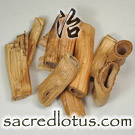 Lu Gen30 gDrain Fire
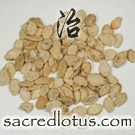 Dong Gua Zi24 gRegulate Water and Drain Dampness
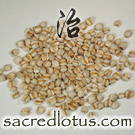 Yi Yi Ren30 gRegulate Water and Drain Dampness
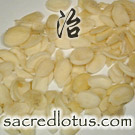 Tao Ren9 gInvigorate Blood and Remove Stagnation
Preparation & dosage
How is Wei Jing Tang prepared?
Wei Jing Tang is taken as a decoction. Classically the fresh reed stem (Wei Jing) is simmered first, with Tao Ren crushed into a paste and added toward the end of cooking; dried Lu Gen may substitute for fresh Wei Jing when it is unavailable.
Source: Bensky & Barolet, Formulas & Strategies (classical preparation for pus-expelling decoctions).
Decoction. Reference relative amounts (per Sacred Lotus sources & references): Wei Jing (Lu Gen) 30 g; Yi Yi Ren 30 g; Dong Gua Ren/Zi (winter melon seed) 24 g; Tao Ren 9 g. Fresh Wei Jing is traditionally preferred; dried Lu Gen substitutes. Reference only.
Safety — read before use
What are the cautions for Wei Jing Tang?
Wei Jing Tang is written for an active heat-phlegm-and-stasis pattern with pus already forming, so it is not appropriate for early-stage exterior cough, cold-natured phlegm, or Lung deficiency. Its cooling, blood-moving ingredients can aggravate a cold, weak, or deficient constitution.
- Not for early-stage or non-purulent cough: before pus has formed, or where the pattern is cold rather than heat, the formula is inappropriate.
- Pregnancy: contains Tao Ren, a blood-invigorating herb traditionally avoided or used cautiously in pregnancy — use only under professional guidance.
- Underlying deficiency or a weak, cold constitution: use cautiously; the formula’s cooling, draining action can be depleting if continued too long.
- Medical care: a genuine Lung abscess or severe pulmonary infection is a serious condition; this formula is traditionally used as an adjunct alongside, not a substitute for, proper diagnosis and medical treatment.
Source: Bensky & Barolet, Formulas & Strategies (cautions for heat-clearing, pus-expelling formulas; Tao Ren pregnancy caution). Traditional-use framing; not medical advice.
Originally Appeared In:
- Thousand Ducat Formulas (Qian Jin Yao Fang)
Notes:
What does “Wei Jing” mean, and how does Wei Jing Tang compare with related formulas?
Wei Jing (葦莖, fresh reed stem) and Lu Gen (蘆根, dried reed rhizome) both come from the same plant, Phragmites communis, and are used interchangeably as the chief herb — this database records the ingredient as Lu Gen. Fresh reed was traditionally preferred in the original formula (hence the name Wei Jing Tang), with dried Lu Gen substituting when fresh material is unavailable.
- vs Xie Bai San: Xie Bai San clears and drains heat wheezing from the Lung without addressing pus or blood stasis; choose Wei Jing Tang once purulent, foul sputum signals an actual abscess.
- vs Ma Xing Shi Gan Tang: Ma Xing Shi Gan Tang clears Lung heat and stops wheezing/cough but does not expel pus or move blood; the two formulas are sometimes combined clinically (studied as “Maxingshigan-Weijing decoction”) for phlegm-heat cough with early purulent signs (see research).
- Modern modification: clinical research groups often study an expanded “Qianjin Weijing” or enhanced Wei Jing Tang formula — the base four herbs plus additional heat-clearing or pus-expelling herbs — rather than the classical four-herb decoction alone.
Source: Sacred Lotus sources & references + Bensky & Barolet, Formulas & Strategies (formula comparisons).
Clinical Studies & Research:
Is there modern research on Wei Jing Tang?
Yes — mostly meta-analyses of Chinese-language RCTs pairing Weijing decoction with conventional respiratory pharmacotherapy, plus mechanistic network-pharmacology work. A 2026 systematic review and meta-analysis of 10 RCTs (1,315 patients) found that adding Weijing decoction to conventional treatment for COPD and pneumonia improved overall clinical efficacy and lowered C-reactive protein compared with conventional treatment alone. An earlier meta-analysis (15 RCTs, 986 patients) found the same combination improved lung function (FEV1%) and arterial blood gases, and reduced inflammatory markers (TNF-alpha, IL-8), in acute COPD exacerbations, with no serious adverse events reported.
- COPD and pneumonia (meta-analysis, 2026): 10 RCTs, 1,315 patients; higher clinical efficacy and reduced CRP with Weijing decoction plus conventional care (PMID 41825248).
- Acute COPD exacerbations (meta-analysis, 2014): 15 RCTs, 986 patients; improved FEV1%, PaO2/PaCO2, and reduced TNF-alpha/IL-8 with Weijing decoction plus pharmacotherapy (PMID 25165477).
- Mechanism (network pharmacology + mouse model, 2023): identified beta-sitosterol, tricin, and stigmasterol as key compounds acting on JUN, CASP3, and PTGS2 across six pulmonary diseases (pneumonia, COPD, acute lung injury, pulmonary fibrosis, tuberculosis, NSCLC); confirmed target downregulation in a xenograft mouse model (PMID 37153415).
- COVID-19 (RCT, 2021): a related combined formula, Maxingshigan-Weijing decoction (Wei Jing Tang combined with Ma Xing Shi Gan Tang), sped recovery from fever, cough, fatigue, and breathing difficulty versus supportive care alone in 59 hospitalized patients (PMID 34660195) — note this trial tested the combined formula, not Wei Jing Tang alone.
Sources: PubMed 41825248; PubMed 25165477; PubMed 37153415; PubMed 34660195. Research context, not a therapeutic claim; most trials are Chinese-language RCTs pairing the herbal formula with conventional care rather than testing it alone.
Sources & References
Compiled and edited by Thomas Dehli, Founder & Editor, Sacred Lotus Updated
The information here is referenced from numerous sources — teachers, practitioners, class notes from Five Branches University, the books below, and the published research literature, with citations given as resolvable PubMed identifiers. Where sources disagree, I have flagged the discrepancies directly. If facts couldn't be verified, I have left them out. How we source our content.
Reference information for students and practitioners — not medical advice. Consult a qualified practitioner. Terms of use.
Chinese Formulas Books & References
 https://amzn.to/4fYI3f8
 https://amzn.to/4j55NRA
 https://amzn.to/4gMROyv
 https://amzn.to/4h7msSK