

Xie Huang San (Drain the Yellow Powder)
Xie Huang San
Drain the Yellow Powder
- Category
- Formulas that Clear Heat
- Subcategory
- Formulas that Clear Heat from the Organs
- Ingredients
- 5 herbs
Actions
What does Xie Huang San do?
Xie Huang San (Drain the Yellow Powder) clears and vents smoldering, hidden fire from the Spleen and Stomach. Unlike formulas for blazing, full-excess Stomach fire, it is built for a milder, lingering heat that has settled into the middle burner — the classic presentation is mouth and tongue sores rather than acute, severe inflammation. It comes from Qian Yi’s pediatric text Xiao Er Yao Zheng Zhi Jue (Song dynasty, c. 1119 CE) and was designed to clear heat without the harsh, cold-purging herbs that could easily injure a child’s digestion.
The five ingredients divide by role:
- Chiefs: Shi Gao (Gypsum) clears Stomach heat, and Zhi Zi (Gardenia) drains fire from the triple burner and directs it downward and out through the urine — together they clear the underlying heat.
- Deputy: Fang Feng, used in a notably large proportion relative to the other herbs, disperses and vents the smoldering fire outward through its wind-dispersing, upward-and-outward-moving nature — the formula’s signature strategy (“fire that smolders is vented, not just drained”). This large dose also keeps the cold, heavy Shi Gao and Zhi Zi from sinking and congealing.
- Assistant: Huo Xiang (traditionally the leaf, Huo Xiang Ye) is aromatic and gently harmonizes the Stomach, protecting the middle burner from the formula’s cold herbs.
- Envoy: Gan Cao harmonizes the other ingredients and further moderates their cold, potentially harsh nature.
Source: Sacred Lotus sources & references + Bensky & Barolet, Formulas & Strategies (chief/deputy/assistant/envoy analysis; source-text attribution). Traditional-use framing; not medical advice.
Indications
What is Xie Huang San used for?
Xie Huang San treats smoldering (latent) heat lodged in the Spleen and Stomach — a pattern less acute than full Stomach-fire blazing but still troublesome and recurrent, classically seen in children as well as adults.
Its classic clinical presentation:
- Oral signs: mouth and tongue sores (aphthous-type ulcers), a hot sensation in the mouth, bad breath, dry mouth and lips (including cracked or chapped lips).
- Digestive signs: excessive hunger or quick digestion (heat in the Stomach consumes food rapidly), and a preference for cold.
- In children: irritability/fretfulness and repetitive tongue-thrusting or tongue-protruding behavior, historically a hallmark presentation in Qian Yi’s pediatric practice.
Tongue and pulse: red tongue with a rapid pulse.
Source: Sacred Lotus sources & references on pattern/tongue/pulse + Bensky & Barolet, Formulas & Strategies. Traditional-use framing; not medical advice.
Western Uses:
What is Xie Huang San used for in modern practice?
In modern practice, Xie Huang San’s traditional Spleen/Stomach-heat pattern is most often referenced for recurrent aphthous stomatitis (canker sores), gingival inflammation, and cheilitis (dry, cracked, or inflamed lips) — conditions that overlap with Western recognition of oral-mucosal and gum inflammation. These are offered as a reference to the formula’s traditional pattern, not as a claim that it treats any diagnosed disease.
Dedicated modern clinical or pharmacological research on this specific formula is very limited (see research); any use for a diagnosed oral or digestive condition belongs with a qualified practitioner and, where relevant, dental or medical evaluation.
Source: traditional-use correlates summarized from Bensky & Barolet, Formulas & Strategies; reference only, not a treatment claim.
Ingredients
5 substances in Xie Huang San — each links to its full herb monograph.
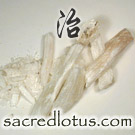 Shi Gao15 gDrain Fire
 Zhi Zi3 gDrain Fire
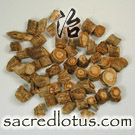 Fang Feng120 gWarm, Spicy Herbs that Release the Exterior
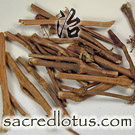 Huo Xiang21 gHuo Xiang Ye - Leaf UsedAromatic Herbs that Transform and Dissolve Dampness
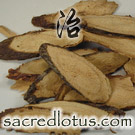 Gan Cao90 gTonify Qi
Preparation & dosage
How is Xie Huang San prepared?
Classically, the herbs are ground to a fine powder (“San”) and a small portion — not the full batch weight — is decocted or steeped in water and taken warm. This is why the original source-text proportions look unusually large for herbs like Fang Feng and Gan Cao: they describe the ratio of the powder mix, not a single day’s dose.
In modern practice the same proportions are more commonly prepared as a standard water decoction with the amounts scaled down, and doses are typically reduced further for children. It is generally used as a short course for an active flare rather than long-term.
Source: Bensky & Barolet, Formulas & Strategies (traditional powder preparation vs. modern decoction practice).
Traditionally prepared as a powder (San); a small portion decocted or steeped in water and taken warm, rather than the full listed weight taken at once. Reference relative proportions: Fang Feng 120 g; Gan Cao 90 g; Huo Xiang (leaf, Huo Xiang Ye) 21 g; Shi Gao 15 g; Zhi Zi 3 g — note Fang Feng and Gan Cao are proportionally the largest components, consistent with Fang Feng's venting role. Modern decoction practice scales these down; pediatric doses are reduced further. Reference only, not a prescription.
Safety — read before use
What are the cautions for Xie Huang San?
Xie Huang San is built around cold, heat-clearing herbs (Shi Gao and Zhi Zi), so it is not appropriate where the underlying pattern is actually Spleen/Stomach deficiency-cold — using it there risks further injuring Spleen yang and digestion rather than helping.
- Distinguish from Kidney-yin-deficiency fire and Heart-fire patterns: mouth sores driven by yin-deficiency fire or by Heart fire moving to the Small Intestine call for a different formula (see notes for comparisons); using this formula for those patterns would miss the underlying pattern.
- Tongue-thrusting in children: this formula addresses tongue-thrusting that accompanies heat signs; thrusting from a constitutional/congenital cause without heat signs is not its target.
- Pregnancy: Shi Gao and Zhi Zi are strongly cold — use only under professional guidance.
- Duration: traditionally a short-course formula for an acute flare of mouth sores, not an indefinite daily tonic; the unusually large dose of Fang Feng is specific to this formula’s design and should not be extrapolated to other uses of the herb.
Source: Bensky & Barolet, Formulas & Strategies (cautions and pattern differentiation for Spleen/Stomach heat-clearing formulas). Traditional-use framing; not medical advice.
Originally Appeared In:
- Craft of Medicinal Treatment for Childhood Disease Patterns (Xiao Er Yao Zheng Zhi Jue)
Notes:
How is Xie Huang San different from Dao Chi San, Qing Wei San, and Xie Bai San?
All four come from the same heat-clearing family but target different organs and severities. Choosing between them depends on which channel the heat is rooted in and how intense it is.
- vs Dao Chi San: also treats children’s mouth/tongue sores, but the fire is rooted in the Heart and moves to the Small Intestine (more restlessness, insomnia, or dark/scanty urine) rather than the Spleen/Stomach.
- vs Qing Wei San: Qing Wei San addresses stronger, more excess Stomach fire flaring upward — severe gum swelling, bleeding gums, and toothache — a more intense presentation than the smoldering heat Xie Huang San is built for.
- vs Xie Bai San: also from Qian Yi’s pediatric text and structurally similar in spirit, but Xie Bai San drains and vents heat from the Lung (cough, wheezing, skin heat) rather than the Spleen/Stomach.
Common modifications: for more severe sores, Huang Lian is sometimes added to strengthen heat-clearing; for persistent thirst or fluid damage, cooling, fluid-generating herbs such as Shi Hu are sometimes added; for accompanying skin or oral eruptions, heat-toxin herbs such as Jin Yin Hua and Lian Qiao are sometimes added. Modifications should be guided by a qualified practitioner rather than self-selected.
Source: Bensky & Barolet, Formulas & Strategies (comparison formulas and modification strategy); cross-checked for consistency against a public TCM formula reference (facts only, no text reproduced).
Clinical Studies & Research:
Is there modern research on Xie Huang San?
A targeted PubMed/PMC search found no dedicated clinical trials or pharmacological studies of Xie Huang San as a formula. This is a genuine evidence gap, not an oversight — the formula is well documented historically (Qian Yi, Song dynasty) but has not attracted the network-pharmacology or clinical-trial attention that larger, more commonly studied formulas have.
- Broader condition research exists but does not name this formula: systematic-review protocols on Chinese herbal medicine for recurrent aphthous stomatitis have been registered (e.g. PMID 30558077; PMID 33019476), but neither names or evaluates Xie Huang San specifically, so they are not cited here as evidence for it.
- Individual ingredients (Shi Gao, Zhi Zi, Fang Feng, Huo Xiang, Gan Cao) each have separate pharmacological literature, but formula-level (combined) research specific to Xie Huang San was not found.
Sources: PubMed/PMC search (no formula-specific results found, checked 2026-07). Absence of evidence stated as such; not a claim of efficacy or inefficacy.
Sources & References
Compiled and edited by Thomas Dehli, Founder & Editor, Sacred Lotus Updated
The information here is referenced from numerous sources — teachers, practitioners, class notes from Five Branches University, the books below, and the published research literature, with citations given as resolvable PubMed identifiers. Where sources disagree, I have flagged the discrepancies directly. If facts couldn't be verified, I have left them out. How we source our content.
Reference information for students and practitioners — not medical advice. Consult a qualified practitioner. Terms of use.
Chinese Formulas Books & References
 https://amzn.to/4fYI3f8
 https://amzn.to/4j55NRA
 https://amzn.to/4gMROyv
 https://amzn.to/4h7msSK