

Huang Lian e Jiao Tang (Coptis and Ass Hide Gelatin Decoction)
Huang Lian e Jiao Tang
Coptis and Ass Hide Gelatin Decoction
- Category
- Formulas that Calm the Spirit
- Ingredients
- 4 herbs
Actions
What does Huang Lian E Jiao Tang do?
Huang Lian E Jiao Tang nourishes Kidney yin, drains Heart fire, and calms the spirit — it is built from two opposing strategies working together: bitter, cold herbs that drain excess fire, and rich, sweet herbs that nourish the yin needed to anchor that fire in the first place. From the Shang Han Lun (Treatise on Cold Damage), it is the classic formula for Heart-Kidney disharmony, where depleted Kidney yin fails to hold down (“anchor”) Heart fire, letting it flare upward and disturb the spirit (Shen).
The five ingredients divide by role:
- Chief: Huang Lian (Coptis Rhizome) — bitter and very cold, it drains Heart fire directly. Subduing the fire is the formula’s first move; without it, the yin tonics alone cannot settle the spirit.
- Deputies: Huang Qin (Baical Skullcap Root) reinforces Huang Lian in draining fire from the Upper Jiao; E Jiao (Ass-Hide Gelatin) runs the opposite, nourishing half of the formula — a rich, animal-derived tonic that restores Kidney yin and Liver blood at a deep level.
- Assistant: Bai Shao (White Peony Root) is sour and slightly cold; it nourishes blood, gathers and preserves yin fluids, and supports both the fire-draining and yin-nourishing sides of the formula.
- Envoy: Ji Zi Huang (egg yolk), stirred in raw at the end — sweet and neutral, entering the Heart and Kidney, it unifies the two strategies and is considered especially effective at settling the spirit and anchoring floating fire.
Source: this site’s own composition record + this site’s own record (composition/prep cross-check) + Bensky & Barolet, Formulas & Strategies, and general TCM formula literature (chief/deputy/assistant/envoy analysis). Traditional-use framing; not medical advice.
Indications
What is Huang Lian E Jiao Tang used for?
Huang Lian E Jiao Tang treats Kidney-yin deficiency with Heart fire flaring upward (Heart-Kidney disharmony, sometimes described as Shao Yin heat-transformation syndrome) — a depletion pattern in which yin is too weak to hold Heart fire in check, so the fire rises and agitates the spirit rather than settling for rest.
Its classic clinical presentation:
- Spirit-disturbance signs: irritability, restlessness, and insomnia — classically an inability to fall asleep and lie still, sometimes with a sensation of heat in the chest, palms, and soles.
- Heart-fire / yin-deficiency signs: palpitations, dry mouth and throat, and a generally depleted, “burnt-out” quality to the presentation rather than a robust excess-heat picture.
Tongue and pulse: this site’s own record and this site’s own record describe a red tongue with a dry, yellow coat; the pulse is thin and rapid.
Discrepancy: several standard formula references (e.g., TCM formula-education materials, and multiple online sources) describe the classic tongue for this pattern as red with a thin, scanty, or absent coat — consistent with yin too depleted to sustain a full coating — rather than a yellow coat, which more typically signals active damp-heat with fluids still intact. Both descriptions appear across sources with reasonable frequency; this site’s own “dry yellow coat” is kept as the primary, authoritative field, with the scanty/peeled-coat variant noted here as a real, verifiable alternate finding rather than a copy error.
Source: this site’s own pattern/tongue/pulse record + this site’s own record (root) + Bensky & Barolet, Formulas & Strategies; tongue-coat variant cross-checked against independent TCM formula references. Traditional-use framing; not medical advice.
Western Uses:
What is Huang Lian E Jiao Tang used for in modern practice?
In modern practice Huang Lian E Jiao Tang is referenced for insomnia, especially difficulty falling asleep with restlessness, and for palpitations associated with a subjective sense of heat or arrhythmia — contexts where its traditional Heart-Kidney disharmony pattern (yin too weak to anchor Heart fire) maps loosely onto conditions Western medicine recognizes as difficulty initiating sleep, anxiety-linked palpitations, and some perimenopausal sleep disturbance.
These biomedical correlates are offered as a reference to the formula’s traditional use, not as a claim that it treats any diagnosed disease. Direct clinical-trial evidence specific to this formula remains limited; most contemporary study is preclinical or bibliometric/review-level (see research). Any use for a diagnosed sleep, mood, or cardiac condition belongs with a qualified practitioner and appropriate medical care.
Source: traditional-use correlates summarized from Bensky & Barolet, Formulas & Strategies, general TCM formula literature, and the research cited below; reference only, not a treatment claim.
Ingredients
4 substances in Huang Lian e Jiao Tang — each links to its full herb monograph.
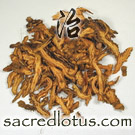 Huang Lian6-8 gClear Heat and Dry Dampness
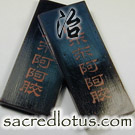 E Jiao9 gTonify Blood
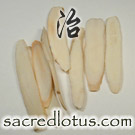 Bai Shao6 gTonify Blood
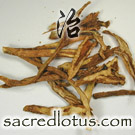 Huang Qin6 gClear Heat and Dry Dampness
Preparation & dosage
How is Huang Lian E Jiao Tang prepared?
Huang Lian E Jiao Tang uses a distinctive two-stage preparation: three herbs are decocted normally, then E Jiao and raw egg yolk are stirred into the strained decoction off the heat. This preserves the nourishing quality of the yin-restoring ingredients, which classical instruction holds would be diminished by further cooking.
- Decoct Huang Lian, Huang Qin, and Bai Shao in water and strain.
- Dissolve E Jiao into the hot, strained decoction.
- Let the liquid cool slightly, then stir in the egg yolks (Ji Zi Huang) raw — they are not cooked into the decoction.
- Take warm, classically in divided doses across the day.
Source: this site’s own record (preparation instructions, root-of-truth for this formula’s prep) + Bensky & Barolet, Formulas & Strategies (classical two-stage decoction method). Traditional-use framing; not medical advice.
Decoction, prepared in two stages (see preparation). Reference relative amounts: Huang Lian 6-8 g; Huang Qin 6 g; E Jiao 9 g (dissolved into the strained decoction); Bai Shao 6 g; 2 egg yolks (Ji Zi Huang, stirred in raw). Reference only.
Safety — read before use
What are the cautions for Huang Lian E Jiao Tang?
Huang Lian E Jiao Tang is appropriate only for a genuine yin-deficiency-fire pattern (red tongue, thin rapid pulse, restlessness/insomnia) and is not a general-purpose sedative or heat-clearing formula. Its bitter, very cold herbs (Huang Lian, Huang Qin) can injure Spleen yang with prolonged use, and its rich E Jiao can be cloying and hard to digest for a weak Spleen.
- Avoid, or use with caution, in Spleen/Middle-Jiao yang deficiency — signs such as loose stools, cold limbs, or poor appetite — since the bitter-cold herbs can further damage digestive yang.
- Not for exterior (early cold-damage) conditions or for excess heat/fire without an underlying yin-deficiency component; a purely excess-fire pattern is typically addressed with a stronger heat-clearing formula instead (see notes for Huang Lian Jie Du Tang).
- E Jiao is rich and can be cloying; it is dissolved into the strained decoction rather than decocted directly, partly to ease its digestibility.
- Raw egg yolk (Ji Zi Huang) is stirred in uncooked per the classical method; as with any raw-egg preparation, source and food-safety considerations (e.g., pasteurized eggs) are a practical concern, particularly for pregnant, elderly, or immunocompromised patients.
- Pregnancy: contains bitter-cold and blood-nourishing herbs — use only under professional guidance.
Source: Bensky & Barolet, Formulas & Strategies (cautions for bitter-cold/yin-nourishing formulas); raw-egg food-safety note is a general practical consideration, not sourced to a TCM text. Traditional-use framing; not medical advice.
Originally Appeared In:
- On Cold Damage (Shang Han Lun)
Notes:
How is Huang Lian E Jiao Tang different from Tian Wang Bu Xin Dan, Suan Zao Ren Tang, and Jiao Tai Wan?
All four formulas are used for insomnia rooted in deficiency, but they target different links in the Heart-Kidney-Liver chain and different balances of fire versus deficiency. Choosing among them depends on how much active fire is present versus how depleted and how the Liver blood is involved.
- vs Tian Wang Bu Xin Dan: Tian Wang Bu Xin Dan is a broader, gentler Heart-and-Kidney-yin tonic for chronic deficiency with milder heat signs; Huang Lian E Jiao Tang is more targeted and forceful, pairing strong fire-draining (Huang Lian, Huang Qin) with yin nourishment for a presentation with more pronounced fire (marked irritability, restlessness).
- vs Suan Zao Ren Tang: Suan Zao Ren Tang addresses Liver-blood deficiency with empty heat disturbing the Hun (ethereal soul), producing irritability with a tendency to sweat; it is milder and does not carry Huang Lian E Jiao Tang’s strong bitter-cold, fire-draining component.
- vs Jiao Tai Wan: Jiao Tai Wan (Huang Lian + Rou Gui) also treats Heart-Kidney disharmony but from the opposite direction — it is used when Kidney yang is too weak/cold to rise and “communicate” with Heart fire above, so it warms the Kidney (Rou Gui) while draining Heart fire (Huang Lian). Huang Lian E Jiao Tang instead treats disharmony from Kidney-yin deficiency, nourishing yin (E Jiao, Bai Shao) rather than warming yang.
- vs Huang Lian Jie Du Tang: Huang Lian Jie Du Tang is a pure excess-fire/heat-toxin formula with no yin-nourishing herbs; reserve it for robust excess-fire patterns without the underlying yin depletion this formula addresses.
Common modifications: add Fu Shen, Suan Zao Ren, or Long Chi for stronger spirit-calming when insomnia is severe; add Sheng Di Huang to strengthen yin nourishment in more depleted presentations.
Source: Bensky & Barolet, Formulas & Strategies and general TCM formula-comparison literature (formula-family distinctions for Heart-Kidney disharmony/insomnia). Traditional-use framing; not medical advice.
Clinical Studies & Research:
Is there modern research on Huang Lian E Jiao Tang?
Yes, though direct clinical-trial evidence specific to this formula is limited — the literature is mostly a formula-syndrome review, a bibliometric survey noting its frequent use, and preclinical mechanistic work. A 2021 review in the Chinese Journal of Chinese Materia Medica examined the formula’s classical Shao Yin heat-transformation syndrome and its modern application to refractory insomnia, arrhythmia, and oral ulcers. A 2022 bibliometric analysis of clinical research on yin-deficiency-pattern insomnia identified Huanglian Ejiao Decoction among the commonly used TCM prescriptions in that literature. A 2025/2026 preclinical study reported that the decoction reduced doxorubicin-induced cardiomyocyte injury in mouse and cell models, linked mechanistically to up-regulation of the protein ubiquilin1.
- Formula-syndrome review (clinical/theoretical): examined modern application to refractory insomnia, arrhythmia, and oral ulcers (PMID 34402298).
- Insomnia research landscape (bibliometric review): named among commonly used TCM prescriptions for yin-deficiency-syndrome insomnia across 184 clinical studies (PMID 36031101).
- Cardioprotection (preclinical): mouse/cell study reported reduced doxorubicin-induced cardiomyocyte apoptosis and autophagic dysregulation via ubiquilin1 up-regulation (PMID 41101550).
Sources: PubMed 34402298; PubMed 36031101; PubMed 41101550. Research context, not a therapeutic claim; direct randomized clinical-trial evidence for this specific formula remains limited.
Sources & References
Compiled and edited by Thomas Dehli, Founder & Editor, Sacred Lotus Updated
The information here is referenced from numerous sources — teachers, practitioners, class notes from Five Branches University, the books below, and the published research literature, with citations given as resolvable PubMed identifiers. Where sources disagree, I have flagged the discrepancies directly. If facts couldn't be verified, I have left them out. How we source our content.
Reference information for students and practitioners — not medical advice. Consult a qualified practitioner. Terms of use.
Chinese Formulas Books & References
 https://amzn.to/4fYI3f8
 https://amzn.to/4j55NRA
 https://amzn.to/4gMROyv
 https://amzn.to/4h7msSK