

Jiu Xian San (Nine Immortal Decoction)
Actions
What does Jiu Xian San do?
Jiu Xian San (Nine Immortal Powder) astringes and stabilizes a Lung that has been “leaking” qi through chronic, unremitting coughing, while tonifying the Lung qi and nourishing the Lung yin that a long illness has depleted. It is a classic “stabilize and bind” strategy: rather than continuing to chase phlegm or open the exterior, it closes down an exhausted Lung’s loss of qi so a lingering cough can finally quiet.
The nine ingredients divide roughly by role:
- Chief: Ying Su Ke (honey-fried opium poppy husk) — the formula’s defining, most potent astringent, directly restraining leaking Lung qi and arresting persistent coughing. Ren Shen tonifies Lung and Spleen qi, addressing the underlying deficiency, and is treated as a co-chief or lead deputy in some analyses (see discrepancy below).
- Deputies: Wu Mei and Wu Wei Zi reinforce Ying Su Ke’s astringent, cough-arresting action and help generate fluids; E Jiao nourishes Lung yin and moistens the dryness left by prolonged coughing.
- Assistants: Kuan Dong Hua and Chuan Bei Mu moisten the Lung, transform phlegm, and direct rebellious qi downward; Sang Bai Pi drains Lung heat and also descends qi; Jie Geng opens and guides the other herbs to the Lung, keeping this strongly astringent formula from over-constricting.
Clinical references disagree on the precise chief designation: some treat Ying Su Ke as the sole chief with Ren Shen as a deputy, others name Ying Su Ke and Ren Shen as co-chiefs, and at least one detailed analysis names Ren Shen alone as chief with Ying Su Ke grouped among the assistants. The disagreement appears to reflect whether the formula is read by its single most distinctive/potent herb (the astringent) or by the strategy of tonifying the deficiency at the pattern’s root; both readings appear in the literature, so this entry presents Ying Su Ke as the lead astringent chief while noting Ren Shen’s central tonifying role.
Source: Sacred Lotus sources & references + Bensky & Barolet, Formulas & Strategies (chief/deputy/assistant framework; role assignment cross-checked against multiple clinical references given a genuine disagreement in the secondary literature). Traditional-use framing; not medical advice.
Indications
What is Jiu Xian San used for?
Jiu Xian San treats a chronic, lingering cough caused by combined Lung qi and Lung yin deficiency — the pattern left behind once an illness has run on so long that the Lung’s capacity to hold and contain qi has itself become exhausted, so qi “leaks” upward as cough rather than descending normally.
Its classic clinical presentation:
- Core sign: a protracted, persistent cough, often present for weeks to months, that has not responded to formulas aimed at clearing an exterior invasion or excess phlegm.
- Qi-deficiency signs: shortness of breath, a weak voice, fatigue, and spontaneous sweating.
- Yin-deficiency signs: a dry throat and only scanty, sticky sputum, rather than copious phlegm.
Sources describe the tongue somewhat differently — some give a pale tongue with a thin white coating (consistent with qi deficiency predominating), others a redder, drier-looking tongue (consistent with yin-deficiency heat). Both are plausible depending on which side of the combined qi-and-yin deficiency predominates in a given case; the pulse is more consistently described across sources as weak (deficient) and rapid.
Source: Sacred Lotus sources & references on pattern + Bensky & Barolet, Formulas & Strategies, cross-checked against multiple clinical references for tongue/pulse. Traditional-use framing; not medical advice.
Western Uses:
What is Jiu Xian San used for in modern practice?
In modern practice Jiu Xian San is referenced for chronic, unremitting coughs that have outlasted whatever originally triggered them — practitioners have traditionally applied its Lung-astringing, qi-and-yin-tonifying pattern to situations resembling chronic bronchitis or the long tail-end cough following a respiratory infection: contexts where Western medicine recognizes prolonged, unproductive coughing without ongoing active infection or heavy phlegm.
These biomedical correlates describe the formula’s traditional use pattern, not a claim that it treats any diagnosed disease. Because the formula’s defining herb, Ying Su Ke, is an opium-poppy preparation, its modern clinical role is shaped as much by regulatory and safety considerations as by treatment evidence (see cautions and research). Any use for a diagnosed condition belongs with a qualified practitioner and appropriate medical care.
Source: traditional-use correlates summarized from Bensky & Barolet, Formulas & Strategies; reference only, not a treatment claim.
Ingredients
9 substances in Jiu Xian San — each links to its full herb monograph.
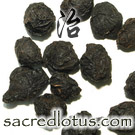 Wu Mei12-18 gAstringe, Stabilize, Bind
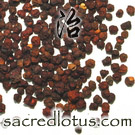 Wu Wei Zi3-4.5 gAstringe, Stabilize, Bind
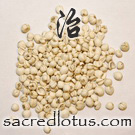 Chuan Bei Mu3-4.5 gCool and Transform Phlegm-Heat
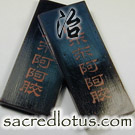 E Jiao3-4.5 gTonify Blood
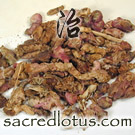 Kuan Dong Hua3-4.5 gRelieve Coughing and Wheezing
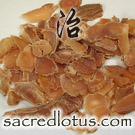 Ren Shen3-4.5 gTonify Qi
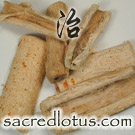 Sang Bai Pi3-4.5 gRelieve Coughing and Wheezing
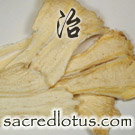 Jie Geng3-4.5 gWarm Herbs that Transform Phlegm-Cold
Preparation & dosage
How is Jiu Xian San prepared?
Classically taken as a fine powder in warm water (its name means “powder”), though it is also commonly decocted. Ying Su Ke is honey-fried before use — a standard processing step that moderates its astringent/opioid strength and directs its action to the Lung. E Jiao, a gelatin, is dissolved into the strained, hot liquid rather than boiled with the other herbs, which is standard practice for donkey-hide gelatin in any decoction.
Source: Sacred Lotus sources & references/preparation fields + standard TCM processing conventions for E Jiao.
Reference relative amounts (per Sacred Lotus sources & references): Ying Su Ke (honey-fried) 12–18 g; Wu Mei 12–18 g; Ren Shen, Wu Wei Zi, E Jiao, Kuan Dong Hua, Chuan Bei Mu, Jie Geng, Sang Bai Pi 3–4.5 g each. Decoction; E Jiao dissolved into the strained, hot liquid. Reference only — Ying Su Ke content makes professional guidance and jurisdiction-appropriate sourcing essential.
Safety — read before use
What are the cautions for Jiu Xian San?
Jiu Xian San is a strongly astringent, “binding” formula built around Ying Su Ke — honey-fried opium poppy husk (Papaveris Pericarpium) — and its safety profile is shaped as much by that ingredient as by TCM pattern-fit. Papaveris Pericarpium is a natural source of morphine and codeine; a pharmacokinetic study of a different opium-poppy-husk-containing Chinese antitussive preparation found measurable morphine and codeine in plasma and urine after oral dosing, a real risk of accumulation with repeated use, and a positive opiate urine drug-screen result for 6–14 hours after a single dose (PMID 29148050). Partly for this reason, Ying Su Ke’s sale and use is legally restricted or requires special licensing in many countries, and several modern commercial preparations sold as “Jiu Xian San” omit or substitute it entirely.
- Not for productive or acute cough: as an astringent formula it is contraindicated where cough is due to an active exterior/pathogenic invasion or is accompanied by copious phlegm — binding the Lung in those cases can trap the pathogen or phlegm inside and worsen the condition.
- Opioid-related restrictions: avoid in pregnancy and while nursing, in children, and alongside other CNS depressants or opioid medications; because of its morphine/codeine content, Ying Su Ke is traditionally used only for a limited course and is a controlled or restricted substance in many jurisdictions, including the United States.
- Wu Wei Zi drug interactions: Schisandra lignans are potent inhibitors of CYP3A metabolism and can raise blood levels of drugs with a narrow therapeutic window, such as certain immunosuppressants and anticoagulants — relevant for anyone on prescription medication (PMC 8962666).
- Rich/cloying ingredients: E Jiao and the astringent fruits can burden a weak, damp-prone Spleen; use cautiously with poor appetite or loose stools.
Sources: Bensky & Barolet, Formulas & Strategies (astringent-formula cautions); PubMed 29148050 (Papaveris Pericarpium morphine/codeine pharmacokinetics — cited as a reference fact about this formula’s key herb, studied in a different opium-poppy-husk antitussive preparation, not Jiu Xian San itself); PMC 8962666 (Schisandra chinensis CYP3A/P-glycoprotein drug-interaction review). Traditional-use framing; not medical advice — Ying Su Ke’s legal status and safety profile make this formula a matter for a licensed practitioner, not self-treatment.
Originally Appeared In:
- True Lineage of Medicine (Yi Xue Zheng Chuan)
Notes:
How does Jiu Xian San compare to other Lung-astringing formulas?
Jiu Xian San sits at the strong end of the Lung-astringing spectrum because it is built around Ying Su Ke, among the most potent Lung-astringent substances in the Chinese materia medica — most other “stabilize the Lung” formulas rely on gentler astringents such as Wu Wei Zi or Wu Mei alone, without an opium-poppy component.
- Reserved for the chronic, deficient stage: its strength is appropriate only once a cough is truly chronic and deficient, not during an active infection or while phlegm is still copious — that is when gentler formulas or phlegm-resolving strategies are used instead.
- Modern substitution: several commercial preparations replace or omit Ying Su Ke for regulatory and safety reasons, which changes the formula’s astringent strength; such products should be understood as milder relatives of, not equivalent to, the classical decoction.
Source: Bensky & Barolet, Formulas & Strategies (comparison of Lung-astringent strategies); modern-substitution note cross-checked across multiple commercial-formula references.
Clinical Studies & Research:
Is there modern research on Jiu Xian San?
No clinical trials of the Jiu Xian San formula itself were found in a PubMed/PMC search; available research instead covers its individual ingredients — most notably safety-relevant pharmacology of its defining herb, Ying Su Ke (opium poppy husk), plus antitussive/expectorant work on two of its other components.
- Ying Su Ke (Papaveris Pericarpium) safety pharmacokinetics: a study of a different opium-poppy-husk-containing Chinese antitussive syrup found dose-linear absorption of morphine and codeine, an accumulation risk with repeated dosing, and opiate-positive urine drug screens lasting 6–14 hours after a dose (PMID 29148050).
- Chuan Bei Mu (Fritillariae Cirrhosae Bulbus) antitussive alkaloids: four isolated alkaloids (imperialine, chuanbeinone, verticinone, verticine) significantly reduced cough frequency and increased cough latency in an ammonia-induced mouse-cough model, with expectorant and anti-inflammatory activity also observed (PMID 21958967).
- Wu Wei Zi (Schisandra) lignans: a comprehensive pharmacology review notes extract-level benefit for cough and airway hyperresponsiveness in animal models, alongside strong CYP3A/P-glycoprotein inhibition relevant to drug interactions (PMC 8962666).
Sources: PubMed 29148050; PubMed 21958967; PMC 8962666. Research on isolated components and other formulations, not the formula itself; not a therapeutic claim.
Sources & References
Compiled and edited by Thomas Dehli, Founder & Editor, Sacred Lotus Updated
The information here is referenced from numerous sources — teachers, practitioners, class notes from Five Branches University, the books below, and the published research literature, with citations given as resolvable PubMed identifiers. Where sources disagree, I have flagged the discrepancies directly. If facts couldn't be verified, I have left them out. How we source our content.
Reference information for students and practitioners — not medical advice. Consult a qualified practitioner. Terms of use.
Chinese Formulas Books & References
 https://amzn.to/4fYI3f8
 https://amzn.to/4j55NRA
 https://amzn.to/4gMROyv
 https://amzn.to/4h7msSK