

Wu Mei Wan (Mume Pill)
Wu Mei Wan
Mume Pill
- Category
- Formulas that Expel Parasites
- Subcategory
- Formulas that Expel Parasites
- Ingredients
- 10 herbs
Actions
What does Wu Mei Wan do?
Wu Mei Wan (Mume Pill) simultaneously warms the organs, clears heat, and calms roundworms (an hui), while also tonifying qi and blood. It is the classic Shang Han Lun formula for a “cold-heat complex” — heat above paired with cold below — built on the old clinical rule that intestinal roundworms are “quieted by sour, driven down by bitter, and subdued by acrid” (得酸則靜, 得苦則下, 得辛則伏).
The ten ingredients divide by role:
- Chief: Wu Mei (Mume Fructus), used in a notably large dose — its intensely sour flavor astringes the intestines to check chronic diarrhea and, per classical theory, quiets roundworms so they stop thrashing and boring into the bile duct.
- Deputies (bitter, cold — clear heat and, combined with the sour Wu Mei, help expel the worms): Huang Lian and Huang Bai.
- Deputies (acrid, hot — warm and scatter the underlying Organ cold, and complete the sour-bitter-acrid combination said to subdue roundworms): Fu Zi, Gan Jiang, Chuan Jiao (Sichuan pepper), Xi Xin, and Gui Zhi.
- Assistants: Ren Shen and Dang Gui tonify qi and blood — supporting the righteous qi (the Liver channel/Jue Yin pattern this formula treats is rooted in an underlying deficiency) and offsetting the harshness of the warming, worm-subduing herbs.
Source: Sacred Lotus sources & references + Bensky & Barolet, Formulas & Strategies (chief/deputy/assistant analysis; sour-bitter-acrid roundworm theory). Traditional-use framing; not medical advice.
Indications
What is Wu Mei Wan used for?
Wu Mei Wan treats two related patterns: acute “roundworm disorder” (蛔厥, hui jue — roundworm reversal) and chronic diarrhea or dysentery arising from a cold-heat complex. Both are framed in the Shang Han Lun as a Jue Yin (Liver channel) disorder, where cold below and heat above coexist in the same patient.
Its classic clinical presentations:
- Roundworm disorder (hui jue): the textbook picture behind what is now recognized as biliary ascariasis — sudden, severe, colicky epigastric or right-upper-abdominal pain that stops abruptly and recurs in waves, restlessness and vexation during an attack, vomiting (classically including vomiting of roundworms), cold hands and feet, and pain provoked or worsened by eating.
- Chronic diarrhea or dysentery: long-standing, recurring loose stool or dysenteric symptoms reflecting Liver-Spleen disharmony with mixed cold and heat, rather than a single simple pattern — a presentation that does not resolve with either purely warming or purely clearing formulas alone.
Tongue and pulse: classically variable given the mixed pattern — often a tongue that is not uniformly pale or uniformly red (may show a white or yellow-white coat over a pale-to-normal body), with a wiry pulse (reflecting the Liver/Jue Yin involvement) that may also be thin or deficient where underlying qi-and-blood deficiency is present.
Source: Bensky & Barolet, Formulas & Strategies; Chen & Chen, Chinese Herbal Formulas and Applications (hui jue / roundworm-reversal presentation and cold-heat complex pattern). Sacred Lotus sources & references on pattern/tongue/pulse were not populated for this formula. Traditional-use framing; not medical advice.
Western Uses:
What is Wu Mei Wan used for in modern practice?
In modern practice, Wu Mei Wan is traditionally associated with biliary ascariasis and with chronic, mixed-pattern colitis-type conditions. Its classic hui jue presentation — paroxysmal epigastric or right-upper-quadrant colicky pain with vomiting and cold extremities — corresponds to what Western medicine recognizes as roundworms migrating into and irritating the bile duct. Separately, its chronic-diarrhea application has drawn contemporary interest for patterns resembling ulcerative colitis, irritable bowel syndrome, and other chronic digestive conditions with a mixed cold-heat, deficiency-and-excess quality.
These biomedical correlates are offered as a reference to the formula’s traditional use, not as a claim that it treats any diagnosed disease. Confirmed biliary obstruction, cholangitis, or pancreatitis from ascariasis is a medical emergency requiring conventional care; any use of this formula for a diagnosed digestive condition belongs with a qualified practitioner alongside appropriate medical management (see research and cautions).
Source: traditional-use correlates summarized from Bensky & Barolet, Formulas & Strategies, and Chen & Chen, Chinese Herbal Formulas and Applications; reference only, not a treatment claim.
Ingredients
10 substances in Wu Mei Wan — each links to its full herb monograph.
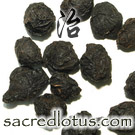 Wu Mei24-30 gAstringe, Stabilize, Bind
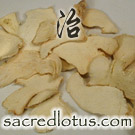 Gan Jiang6-9 gWarm the Interior and Expel Cold
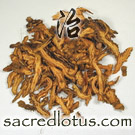 Huang Lian9-12 gClear Heat and Dry Dampness
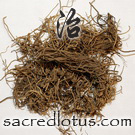 Xi Xin1.5-3 gWarm, Spicy Herbs that Release the Exterior
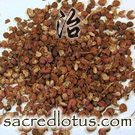 Chuan Jiao1.5-3 gWarm the Interior and Expel Cold
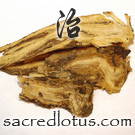 Dang Gui3-9 gTonify Blood
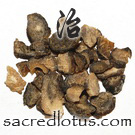 Fu Zi3-6 gWarm the Interior and Expel Cold
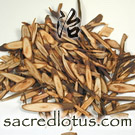 Gui Zhi3-6 gWarm, Spicy Herbs that Release the Exterior
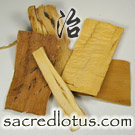 Huang Bai6-9 gClear Heat and Dry Dampness
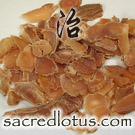 Ren Shen6-9 gTonify Qi
Preparation & dosage
How is Wu Mei Wan prepared?
Wu Mei Wan was traditionally prepared as a pill (wan), not a simple decoction. Wu Mei is soaked overnight in vinegar, pitted, and steamed over rice until soft, then pounded into a paste; the remaining nine herbs are ground to powder and combined with the plum paste and honey to form pills, traditionally taken before meals with warm rice porridge or diluted vinegar, with the dose increased gradually to gauge tolerance. In contemporary practice the same ten herbs are also commonly decocted as a tang, with amounts scaled down from the pill-form reference weights.
Source: Bensky & Barolet, Formulas & Strategies (traditional pill preparation). Traditional-use framing; not medical advice.
Traditionally prepared as a honey pill (wan) from vinegar-processed Wu Mei; also decocted (tang) with amounts scaled down. Reference relative amounts (pill-form): Wu Mei 24-30 g (chief, large dose); Huang Lian 9-12 g; Ren Shen, Gan Jiang 6-9 g; Huang Bai, Dang Gui 3-9/6-9 g; Fu Zi (prepared/zhi), Gui Zhi 3-6 g; Chuan Jiao, Xi Xin 1.5-3 g. Fu Zi must be properly processed (zhi fu zi); professional prescription and supervision required. Reference only.
Safety — read before use
What are the cautions for Wu Mei Wan?
Wu Mei Wan contains potent warming herbs, including Fu Zi (prepared aconite) and Chuan Jiao, and should only be used as a properly processed, professionally prescribed formula — not self-administered. Unprocessed or excessive aconite carries real toxicity (numbness, arrhythmia); this formula requires correctly prepared (zhi) Fu Zi and practitioner-supervised dosing.
- Contraindicated in pure heat or pure damp-heat excess patterns without an accompanying cold component — e.g., acute damp-heat dysentery — where the warming, toxic-if-misused herbs are inappropriate and potentially harmful.
- Pregnancy: contains Fu Zi and blood-moving/warming herbs; avoid unless directed by a qualified practitioner.
- Not a substitute for medical care of confirmed ascariasis or biliary/pancreatic obstruction — cholangitis, pancreatitis, or bowel obstruction from roundworms requires conventional diagnosis and treatment; this formula reflects a historical traditional approach, not emergency management.
- Digestive fit: as with other formulas combining strong bitter-cold and acrid-hot herbs, monitor for epigastric discomfort and adjust the balance of clearing versus warming herbs to the patient’s presentation.
Source: Bensky & Barolet, Formulas & Strategies (cautions for formulas containing prepared aconite and warming-toxic herbs). Traditional-use framing; not medical advice.
Originally Appeared In:
- On Cold Damage (Shang Han Lun)
Notes:
How is Wu Mei Wan different from other cold-heat-complex or antiparasitic formulas?
Wu Mei Wan is distinguished by combining all three of the classical worm-calming flavors — sour, bitter, and acrid — with qi-and-blood tonification, rather than relying on purgation or a single warming or clearing strategy. This is what separates it from simpler antiparasitic or diarrhea formulas.
- vs Gan Jiang Huang Qin Huang Lian Ren Shen Tang (another Shang Han Lun cold-heat-complex formula, for vomiting and diarrhea from cold below/heat above): that formula clears and warms without Wu Mei Wan’s astringent, worm-calming sour component or its Xi Xin/Chuan Jiao/Gui Zhi warming trio, and does not target roundworm disorder.
- vs simple anthelmintic (worm-expelling) formulas (e.g., those built around Bing Lang and Shi Jun Zi/Quisqualis): those purge and expel worms directly; Wu Mei Wan instead “calms” (an) the worms and addresses the underlying cold-heat complex and deficiency, and is the formula of choice when the roundworm has caused acute biliary colic (hui jue) rather than routine intestinal infestation.
- vs Li Zhong Wan (warms the Spleen/Stomach middle alone): Li Zhong Wan has no clearing or astringing component and does not address a mixed cold-heat presentation or roundworms.
Key modifications: for acute biliary colic, Bing Lang and Ku Lian Gen Pi (Chinaberry root-bark) are commonly added to more directly expel roundworms; where heat signs dominate, the doses of Fu Zi, Gan Jiang, Chuan Jiao, and Xi Xin are reduced; where cold signs dominate, Huang Lian and Huang Bai are reduced; for chronic diarrhea without roundworm involvement, Chuan Jiao and Xi Xin are often reduced or omitted while the astringing, warming-tonifying core is retained.
Source: Bensky & Barolet, Formulas & Strategies; Chen & Chen, Chinese Herbal Formulas and Applications (comparisons and modifications).
Clinical Studies & Research:
Is there modern research on Wu Mei Wan?
Yes — research clusters around chronic digestive/inflammatory bowel conditions, particularly ulcerative colitis, spanning a clinical meta-analysis and preclinical mechanism studies. A meta-analysis of randomized controlled trials found Wumei Bolus (Wu Mei Wan) combined with conventional treatment more effective than conventional treatment alone for ulcerative colitis, with fewer adverse reactions and reduced inflammatory markers. Mechanistic studies in animal models point to effects on intestinal immune regulation and mucosal barrier repair.
- Ulcerative colitis (clinical meta-analysis): 37 RCTs (3,145 patients) found Wumei Bolus plus conventional therapy more effective than conventional therapy alone (RR 1.24), with lower adverse-reaction rates and reduced TNF-α and IL-8 (PMID 37180938).
- Ulcerative colitis (preclinical mechanism): in DSS-induced colitis mice, Wu-Mei-Wan ameliorated colitis by shifting macrophage polarization from pro-inflammatory M1 toward anti-inflammatory M2 via p38MAPK, NF-κB, and STAT6 signaling (PMID 35387334).
- Chronic digestive disease (network pharmacology): a network-pharmacology and molecular-docking analysis proposed shared mechanisms by which Wumei Pills may act across ulcerative colitis, diabetic enteropathy, and irritable bowel syndrome — an example of the classical “treating different diseases with the same method” principle (PMID 36046907).
Sources: PubMed 37180938; PubMed 35387334; PubMed 36046907. Research context, not a therapeutic claim; direct clinical evidence for the formula’s classical roundworm/hui jue indication remains a matter of historical and case-based record rather than modern trials.
Sources & References
Compiled and edited by Thomas Dehli, Founder & Editor, Sacred Lotus Updated
The information here is referenced from numerous sources — teachers, practitioners, class notes from Five Branches University, the books below, and the published research literature, with citations given as resolvable PubMed identifiers. Where sources disagree, I have flagged the discrepancies directly. If facts couldn't be verified, I have left them out. How we source our content.
Reference information for students and practitioners — not medical advice. Consult a qualified practitioner. Terms of use.
Chinese Formulas Books & References
 https://amzn.to/4fYI3f8
 https://amzn.to/4j55NRA
 https://amzn.to/4gMROyv
 https://amzn.to/4h7msSK