

Hua Chong Wan (Dissolve Parasites Pill)
Hua Chong Wan
Dissolve Parasites Pill
- Category
- Formulas that Expel Parasites
- Subcategory
- Formulas that Expel Parasites
- Ingredients
- 5 herbs
Actions
What does Hua Chong Wan do?
Hua Chong Wan (Dissolve Parasites Pill) kills and expels intestinal parasites — roundworms, pinworms, and tapeworms — using a combination of anthelmintic herbs and toxic mineral substances. It belongs to the "Formulas that Expel Parasites" category and is one of the more overtly toxic formulas in that group, reserved classically for short, carefully dosed courses.
The five ingredients divide by role:
- Chief: He Shi (Carpesii Fructus) — the formula’s primary anthelmintic, traditionally used against roundworm, pinworm, and tapeworm.
- Deputies: Bing Lang (Areca Semen) paralyzes tapeworms and promotes bowel movement to help carry the worms out; Ku Lian Gen Pi (Meliae Cortex) is strongly active against roundworms (its marker constituent, toosendanin, is neuroactive and itself toxic); Qian Dan (Chao Qian Dan, dry-fried lead oxide/minium) contributes broad, toxic antiparasitic action.
- Assistant: Ming Fan (Alumen, alum) dries dampness and astringes, rounding out the formula and supporting elimination of the parasites.
Source: this site’s own composition record + Bensky & Barolet, Formulas & Strategies (category placement, "Formulas that Expel Parasites") + multiple online sources. Traditional-use framing; not medical advice.
Indications
What is Hua Chong Wan used for?
Hua Chong Wan treats intestinal parasite infestation — classically roundworm (ascariasis), pinworm, and tapeworm — presenting with intermittent, cramping abdominal pain that moves around and is often worse near the umbilicus, sometimes with vomiting of clear fluid or the passage of visible worms.
- Core presentation: periumbilical, moving/gripping abdominal pain in episodic attacks.
- Associated signs: nausea or vomiting (occasionally of clear fluid), reduced appetite, and in severe or long-standing infestation, sallow complexion or malnutrition.
Reliable tongue and pulse correlates for this formula could not be confirmed across sources and are omitted rather than guessed.
Source: multiple online sources + Bensky & Barolet category placement. Traditional-use framing; not medical advice.
Western Uses:
What is Hua Chong Wan used for in modern practice?
Hua Chong Wan’s traditional target — intestinal worm infestation — corresponds to conditions Western medicine calls ascariasis (roundworm), enterobiasis (pinworm), and taeniasis (tapeworm). These are now routinely treated with proven, well-tolerated antiparasitic drugs (e.g., albendazole, mebendazole, praziquantel) under medical supervision.
In its unmodified classical form, Hua Chong Wan contains Qian Dan (lead oxide), a toxic heavy-metal mineral. Case-report literature documents lead poisoning linked to lead-containing traditional Chinese medicine preparations, and for that reason this formula’s classical recipe is essentially obsolete in contemporary practice — it is presented here as a historical/traditional reference, not as a treatment option. Any suspected parasitic infection should be evaluated and treated with a qualified clinician using modern, safety-tested antiparasitics.
Source: traditional-use correlate summarized from Bensky & Barolet, Formulas & Strategies; lead-in-TCM safety context from PubMed 29081456. Reference only, not a treatment claim.
Ingredients
5 substances in Hua Chong Wan — each links to its full herb monograph.
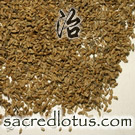 He Shi1500 gExpel Parasites
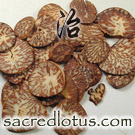 Bing Lang1500 gExpel ParasitesNo specimen photographKu Lian Gen Pi1500 gExpel Parasites
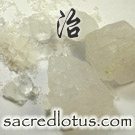 Ming Fan375 gSubstances for External ApplicationNo specimen photographQian Dan1500 gSubstances for External Application
Preparation & dosage
How is Hua Chong Wan prepared?
Classically, the five ingredients are ground to a fine powder and formed into pills with a wheat-flour dough binder. A typical single adult dose is about 6 g, taken once daily on an empty stomach with warm rice water (rice soup); children take a proportionally smaller dose (roughly 1.5–3 g), adjusted for age and only under professional guidance. The formula is intended for short courses only, not ongoing use.
Source: multiple online sources. Traditional preparation reference; not a dosing recommendation.
Pill form. Reference manufacturing ratio (per this site’s own composition record): He Shi, Bing Lang, Ku Lian Gen Pi, Qian Dan 1500 g each; Ming Fan 375 g (batch ratio for pill production, not a single dose). Classical single dose: approximately 6 g for adults, once daily on an empty stomach with warm rice water; smaller, age-adjusted doses for children. Short courses only — not for prolonged use, given the toxicity of Qian Dan (lead oxide). Reference only; use requires professional supervision.
Safety — read before use
What are the cautions for Hua Chong Wan?
Hua Chong Wan is toxic by design and is presented here strictly as a public-safety and historical reference, not a self-treatment recommendation. Its mineral ingredient Qian Dan is lead oxide (minium); lead is a cumulative neurotoxin with no safe exposure threshold, and its inclusion is the primary reason this classical recipe is not used unmodified today. Ku Lian Gen Pi (via toosendanin) and He Shi are also independently toxic in overdose.
- Absolutely avoid in pregnancy and while breastfeeding — lead crosses the placenta and passes into breast milk, with recognized developmental and reproductive toxicity.
- Not for prolonged use or doses beyond classical reference amounts — classical sources restrict it to short courses precisely because of cumulative mineral toxicity.
- Avoid in children, the elderly, and anyone with a weak or deficient constitution without professional modification; children absorb ingested lead far more readily than adults.
- Watch for signs of lead toxicity — abdominal pain/cramping ("lead colic"), constipation, anemia, headache, and neurological symptoms — and seek medical care if they occur.
- Professional supervision only. This formula should never be self-prescribed; modern, non-toxic antiparasitic medications are the appropriate first-line choice for a real parasitic infection.
Source: Bensky & Barolet, Formulas & Strategies (toxicity of mineral/parasite-expelling ingredients) + PubMed 29081456 (lead poisoning caused by traditional Chinese medicine). Public-safety framing; not medical advice.
Originally Appeared In:
- Imperial Grace Formulary of the Tai Ping Era (Tai Ping Hui Min He Ji Ju Fang)
Notes:
How does Hua Chong Wan compare to other parasite-expelling formulas?
Within the "Formulas that Expel Parasites" category, Hua Chong Wan is one of the more aggressively toxic options, built around mineral and strongly toxic botanical anthelmintics rather than the warm-cold, herb-only strategy used elsewhere in the same category (e.g., Wu Mei Wan, which combines warming and cooling herbs around Wu Mei/Mume Fructus for roundworm-related patterns without a toxic mineral ingredient). Where a gentler classical option exists, it is generally preferred; Hua Chong Wan represents the more forceful, historically higher-risk end of the category.
Formula source: Tai Ping Hui Min He Ji Ju Fang (Formulas of the Peaceful Benevolent Dispensary, Song dynasty, 1078–1085).
Source: Bensky & Barolet, Formulas & Strategies (category chapter comparison) + multiple online sources for formula origin.
Clinical Studies & Research:
Is there modern research on Hua Chong Wan?
No direct modern clinical studies of the combined Hua Chong Wan formula were found; available research instead addresses its individual toxic and anthelmintic ingredients. That research base mostly supports historical use while flagging real safety concerns rather than validating the formula as a modern treatment.
- He Shi (Carpesium abrotanoides): an ethnobotanical/phytochemical review confirms traditional use "as an anthelmintic versus round-, tape-, hook-, and pinworms," while noting a need for rigorous scientific validation of these traditional claims (PMID 35736748).
- Bing Lang (Areca catechu) / arecoline: reviews document arecoline’s historical use as a taenicide (tapeworm expellant) alongside significant carcinogenicity concerns — areca nut is classified by IARC as a Group 1 human carcinogen (PMID 31805361).
- Qian Dan (lead oxide): case-report literature on lead poisoning from lead-containing traditional Chinese medicine documents the real toxicity risk this ingredient class carries, underscoring why the unmodified classical formula is not used in contemporary practice (PMID 29081456).
Sources: PubMed 35736748; PubMed 31805361; PubMed 29081456. Research context on individual components, not the combined formula; not a therapeutic claim.
Sources & References
Compiled and edited by Thomas Dehli, Founder & Editor, Sacred Lotus Updated
The information here is referenced from numerous sources — teachers, practitioners, class notes from Five Branches University, the books below, and the published research literature, with citations given as resolvable PubMed identifiers. Where sources disagree, I have flagged the discrepancies directly. If facts couldn't be verified, I have left them out. How we source our content.
Reference information for students and practitioners — not medical advice. Consult a qualified practitioner. Terms of use.
Chinese Formulas Books & References
 https://amzn.to/4fYI3f8
 https://amzn.to/4j55NRA
 https://amzn.to/4gMROyv
 https://amzn.to/4h7msSK