

Gua Lou Xie Bai Bai Jiu Tang (Trichosanthes Fruit, Chinese Chive, and Wine Decoction)
Gua Lou Xie Bai Bai Jiu Tang
Trichosanthes Fruit, Chinese Chive, and Wine Decoction
- Category
- Formulas that Regulate the Qi
- Subcategory
- Formulas that Promote the Movement of Qi
- Ingredients
- 2 herbs
Actions
What does Gua Luo Xie Bai Bai Jiu Tang do?
Gua Luo Xie Bai Bai Jiu Tang opens the chest, disperses phlegm-turbidity, and unblocks the yang qi of the chest. It is the foundational formula from the Jin Gui Yao Lue (Essentials from the Golden Cabinet) for chest bi (胸痹, "chest painful obstruction") — a pattern in which phlegm-turbidity accumulates and obstructs the chest's yang qi, producing oppression and pain.
Two herbs plus wine, each with a distinct role:
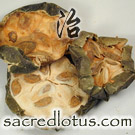
- Chief: Gua Lou (Trichosanthes Fruit; our herb record correctly spells it Gua Lou, though the formula's own pinyin field reads "Gua Luo" — see note above) clears phlegm-heat, moistens, and specifically opens/disperses binding and nodulation in the chest.
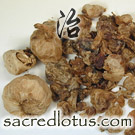
- Deputy: Xie Bai (Bulb of Chinese Chive) is acrid and warm; it unblocks yang qi, disperses stagnation and phlegm-turbidity in the chest, and is the classic herb for chest-bi pain, working in the opposite thermal direction from Gua Lou to balance the pair.
- Envoy: Bai Jiu (white/rice wine), added to the decoction, invigorates the blood, disperses stagnation, and guides the other two herbs upward and outward into the chest.
Source: Sacred Lotus sources & references + Bensky & Barolet, Formulas & Strategies (chief/deputy/envoy analysis; roles not pre-flagged in our records). Traditional-use framing; not medical advice.
Indications
What is Gua Luo Xie Bai Bai Jiu Tang used for?
Gua Luo Xie Bai Bai Jiu Tang treats chest bi caused by phlegm-turbidity obstructing the chest's yang qi — a deficiency of chest yang that allows phlegm-damp to accumulate and block the free movement of qi, producing oppression, fullness, and pain.
Its classic clinical presentation:
- Chest signs: fullness, oppression, and pain in the chest, sometimes radiating to the back; a sensation of heaviness or blockage.
- Respiratory signs: cough with copious white/watery sputum, wheezing, and shortness of breath that can worsen when lying flat.
Tongue and pulse: a thick, greasy tongue coating; a submerged (deep) and wiry, or hidden and tight, pulse — both signs of phlegm-turbidity obstructing yang.
Source: Sacred Lotus sources & references on pattern/tongue/pulse + Bensky & Barolet, Formulas & Strategies (chest-bi presentation, Jin Gui Yao Lue). Traditional-use framing; not medical advice.
Western Uses:
What is Gua Luo Xie Bai Bai Jiu Tang used for in modern practice?
In modern practice, this classical chest-bi formula and its later modifications (adding Ban Xia, or Zhi Shi/Gui Zhi/Hou Po) are referenced by practitioners in connection with coronary heart disease and angina pectoris — conditions whose chest oppression and pain overlap with the traditional chest-bi presentation this formula was designed for.
This biomedical correlate is offered as a reference to the formula's traditional use, not as a claim that it treats any diagnosed disease. Most of the clinical evidence available concerns the Ban Xia-added variant (Gua Lou Xie Bai Ban Xia Tang) rather than this exact three-ingredient formula, and even that evidence is of limited methodological quality (see research). Any use for a diagnosed cardiac condition belongs with a qualified practitioner and appropriate medical care — never as a substitute for it.
Source: traditional-use correlate summarized from Bensky & Barolet, Formulas & Strategies; clinical-research framing from PubMed 31860998. Reference only, not a treatment claim.
Ingredients
2 substances in Gua Lou Xie Bai Bai Jiu Tang — each links to its full herb monograph.
Preparation & dosage
How is Gua Luo Xie Bai Bai Jiu Tang prepared?
The two herbs are decocted together with white wine (Bai Jiu). our existing preparation note (unchanged here) specifies 30–60 ml of white wine added to the decoction, or the decoction can be prepared with roughly even amounts of water and wine; the alcohol can also be omitted entirely.
Source: Sacred Lotus sources & references + Bensky & Barolet, Formulas & Strategies.
Decoction with white wine (Bai Jiu), 30-60 ml added to the decoction, or roughly equal parts water and wine; alcohol may be omitted. Reference relative amounts (per Sacred Lotus sources & references): Gua Lou 12 g; Xie Bai 9-12 g. Reference only.
Safety — read before use
What are the cautions for Gua Luo Xie Bai Bai Jiu Tang?
This formula disperses and moves rather than tonifies, so it is not appropriate where the underlying pattern is qi/yang deficiency without phlegm-turbidity accumulation — in that case the dispersing action alone will not address the root deficiency, and a warming/tonifying approach (or an added-tonic modification) is indicated instead.
- Contains alcohol (Bai Jiu): our own preparation note allows the wine to be reduced (mixed with water) or omitted; consider this for anyone who should avoid alcohol (pregnancy, certain medications, liver disease, alcohol-use recovery).
- Pregnancy: a moving, dispersing formula containing wine — use only under professional guidance.
- Digestive fit: Gua Lou's moistening, slightly laxative quality can loosen stool in patients with a weak, cold Spleen; watch for loose stools and modify if they occur.
Source: Bensky & Barolet, Formulas & Strategies (cautions for dispersing chest-bi formulas) + Sacred Lotus sources & references. Traditional-use framing; not medical advice.
Originally Appeared In:
- Essentials from the Golden Cabinet (Jin Gui Yao Lue)
Notes:
How is Gua Luo Xie Bai Bai Jiu Tang different from its two classic modifications?
Gua Luo Xie Bai Bai Jiu Tang is the base formula in a small family of Jin Gui Yao Lue chest-bi prescriptions; the two modifications are chosen when the phlegm-turbidity or qi-stagnation component is more severe.
- Gua Lou Xie Bai Ban Xia Tang adds Ban Xia (Pinellia) to the same two herbs for more severe phlegm-turbidity, with copious sputum and an inability to lie flat — this is the variant most often studied in the modern clinical-research literature (see research).
- Zhi Shi Xie Bai Gui Zhi Tang adds Zhi Shi, Hou Po, and Gui Zhi (dropping the wine) for more pronounced qi stagnation, with fullness extending into the epigastrium and a sensation of qi surging upward against the chest.
Source: Bensky & Barolet, Formulas & Strategies (Jin Gui Yao Lue chest-bi formula family and its modifications).
Clinical Studies & Research:
Is there modern research on Gua Luo Xie Bai Bai Jiu Tang?
Yes, though most clinical evidence concerns the Ban Xia-added variant (Gua Lou Xie Bai Ban Xia Tang, GLXBBX) rather than this exact three-ingredient formula, and that evidence is preliminary. A systematic review of 17 randomized controlled trials (1,676 patients) found GLXBBX combined with conventional care "might benefit" stable-angina patients on angina symptoms, ECG findings, and blood lipids, but the authors could not draw a definite conclusion due to poor methodological quality, high risk of bias, and inadequate reporting across the included trials — they called for larger, more rigorous double-blind RCTs.
- Clinical (Ban Xia variant, systematic review): GLXBBX decoction for stable angina pectoris, 17 RCTs / 1,676 patients, cautious positive signal with significant quality caveats (PMID 31860998).
- Preclinical mechanism (base formula): in a hyperlipidemic rat model, Gua Lou Xie Bai Decoction protected against ischemia-reperfusion injury (preserved myocardial blood flow, reduced infarct size and apoptosis) via mitochondrial energy modulation and RhoA/ROCK pathway suppression (PMID 29674972).
- Pharmacokinetics (exact formula, with Bai Jiu): UPLC-Q-TOF-MS profiling identified 133 chemical components in Gua Lou Xie Bai Bai Jiu decoction and 138 related metabolites (chiefly flavonoid metabolites) in rats after oral dosing, supporting further pharmacological and quality-control study (PMID 29635208).
Sources: PubMed 31860998; PubMed 29674972; PubMed 29635208. Research context, not a therapeutic claim; direct clinical trial evidence on this exact three-ingredient formula remains limited.
Sources & References
Compiled and edited by Thomas Dehli, Founder & Editor, Sacred Lotus Updated
The information here is referenced from numerous sources — teachers, practitioners, class notes from Five Branches University, the books below, and the published research literature, with citations given as resolvable PubMed identifiers. Where sources disagree, I have flagged the discrepancies directly. If facts couldn't be verified, I have left them out. How we source our content.
Reference information for students and practitioners — not medical advice. Consult a qualified practitioner. Terms of use.
Chinese Formulas Books & References
 https://amzn.to/4fYI3f8
 https://amzn.to/4j55NRA
 https://amzn.to/4gMROyv
 https://amzn.to/4h7msSK