

Da Ding Feng Zhu (Major Arrest Wind Pearl)
Da Ding Feng Zhu
Major Arrest Wind Pearl
- Category
- Formulas that Expel Wind
- Subcategory
- Formulas that Extinguish Internal Wind
- Ingredients
- 10 herbs
Actions
What does Da Ding Feng Zhu do?
Da Ding Feng Zhu (Major Arrest Wind Pearl) heavily nourishes yin and blood and anchors internal wind — the strongest of the classic late-stage warm-disease (Wen Bing) “arrest wind” formulas, devised for the point at which a prolonged febrile illness has nearly exhausted the body’s yin, leaving nothing to restrain movement from within.
The ingredients divide by role, per Bensky & Barolet:
- Chief: E Jiao (donkey-hide gelatin) and Ji Zi Huang (egg yolk, blended in at the end of cooking) — the paired “flesh-and-blood” substances that most directly replenish nearly-depleted true yin.
- Deputies: Bai Shao, Sheng Di Huang, and Mai Men Dong reinforce yin and blood across Liver, Kidney, and Stomach/Lung.
- Assistants: Gui Ban, Bie Jia, and Mu Li — three heavy, mineral-dense shells — anchor floating yang and subdue internal wind from below; Wu Wei Zi astringes to stem further loss of yin/fluids; Huo Ma Ren moistens and further nourishes yin.
- Envoy: Zhi Gan Cao harmonizes the formula and, with Bai Shao, helps ease cramping.
Source: Sacred Lotus sources & references (composition) + Bensky & Barolet, Formulas & Strategies (chief/deputy/assistant/envoy analysis, attributed to this formulary). Traditional-use framing; not medical advice.
Indications
What is Da Ding Feng Zhu used for?
Da Ding Feng Zhu treats internal wind stirring from severe yin and blood depletion in the final stage of a warm/febrile disease — tremor and spasm that arise not from an acute external attack but from yin so exhausted it can no longer restrain movement.
- Marked tremor or twitching of the hands and feet, sometimes with spasm.
- Severe dryness of the mouth and lips, and a generally depleted, emaciated appearance following prolonged fever.
- Weakness, lethargy, and residual low-grade heat after the acute febrile illness has largely resolved.
- Restlessness or difficulty settling, reflecting the underlying yin exhaustion.
Tongue and pulse: a deep red, dry tongue with little or no coating (sometimes described as shriveled); a thin, rapid pulse that feels weak or forceless on pressure, reflecting near-exhaustion of yin rather than active heat.
Source: Bensky & Barolet, Formulas & Strategies; Chen & Chen, Chinese Medical Herbology and Pharmacology (classic presentation for this late-stage Wen Bing pattern). Traditional-use framing; not medical advice.
Ingredients
10 substances in Da Ding Feng Zhu — each links to its full herb monograph.
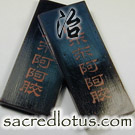 E Jiao9 gTonify Blood
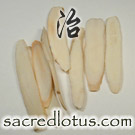 Bai Shao18 gTonify Blood
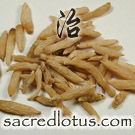 Mai Men Dong18 gTonify Yin
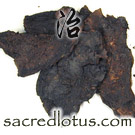 Sheng Di Huang18 gCool the Blood
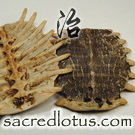 Bie Jia12 gTonify Yin
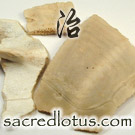 Gui Ban12 gTonify Yin
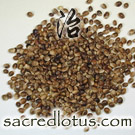 Huo Ma Ren6 gMoist Laxatives
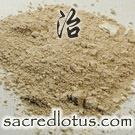 Mu Li12 gAnchor, Settle, and Calm the Spirit
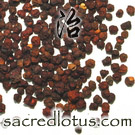 Wu Wei Zi6 gAstringe, Stabilize, Bind
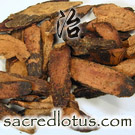 Zhi Gan Cao12 gTonify Qi
Preparation & dosage
How is Da Ding Feng Zhu prepared?
Prepared as a decoction, with two raw egg yolks (Ji Zi Huang) blended into the final strained liquid — the egg yolk is not simmered with the other herbs but stirred in after straining, so its nourishing quality is preserved rather than cooked out.
- Cooking order: the ten herbs are decocted and strained first; the egg yolks are then whisked into the still-hot strained decoction until fully blended.
- Shell processing: Gui Ban, Bie Jia, and Mu Li are mineral-dense shells traditionally decocted first (often crushed) for longer to extract their anchoring properties before the remaining herbs are added.
Source: Sacred Lotus sources & references (preparation) + Bensky & Barolet, Formulas & Strategies (classical preparation of shell-heavy decoctions).
Safety — read before use
What are the cautions for Da Ding Feng Zhu?
Da Ding Feng Zhu is one of the richest, most cloying formulas in the TCM repertoire and is reserved for genuine, severe yin/blood depletion — it is not appropriate for wind arising from other mechanisms or for patients whose digestion cannot tolerate its heaviness.
- Not for wind from excess or external causes — acute exterior-wind invasion, phlegm-heat stirring wind, or Liver-yang-rising wind in a still-robust patient calls for a different strategy (see Ling Jiao Gou Teng Tang, below) rather than this formula’s heavy yin-anchoring approach.
- Caution in Spleen/Stomach deficiency or dampness: E Jiao, the egg yolk, and the three shells are rich and heavy and can be difficult to digest, particularly with loose stools or a weak appetite.
- Raw egg yolk: as with any preparation using raw or lightly cooked egg, ordinary food-safety handling (fresh, properly stored eggs) applies.
- Professional guidance advised given the severity of the pattern this formula addresses and its rich, heavily tonifying composition, particularly in pregnancy or for prolonged use.
Source: Bensky & Barolet, Formulas & Strategies (cautions for rich yin-anchoring Wen Bing formulas). Traditional-use framing; not medical advice.
Originally Appeared In:
- Systematic Differentiation of Warm Diseases (Wen Bing Tiao Bian)
Notes:
How is Da Ding Feng Zhu different from Xiao Ding Feng Zhu and Ling Jiao Gou Teng Tang?
All three formulas address tremor/wind arising in the course of a febrile illness, but for different severities and mechanisms — the choice between them tracks how depleted the patient’s yin is and whether heat is still active.
- vs Xiao Ding Feng Zhu Tang (“Minor Arrest Wind Pearl,” from the same source text, Wen Bing Tiao Bian): described in the formulary literature as a lighter companion formula for a milder or earlier presentation of the same yin-deficiency wind pattern, built on a smaller set of yin-nourishing and anchoring herbs. This formula is not yet in Sacred Lotus’s own composition data, so its exact ingredient list is not cross-checked here; the comparison is strategic (milder version of the same approach), not ingredient-by-ingredient.
- vs Ling Jiao Gou Teng Tang (Antelope Horn and Uncaria Decoction): per Sacred Lotus sources & references, this formula is built around Ling Yang Jiao, Gou Teng, Sang Ye, Ju Hua, Bai Shao, Sheng Di Huang, Chuan Bei Mu, Zhu Ru, Fu Shen, and Gan Cao — it clears heat and extinguishes wind for an excess-type pattern (Liver heat stirring wind, still with active heat signs) rather than nourishing yin. Da Ding Feng Zhu is chosen instead when the underlying problem is yin/blood exhaustion with little or no residual heat to clear.
Source: Bensky & Barolet, Formulas & Strategies (Wen Bing wind-arresting formula group) + Sacred Lotus sources & references for Ling Jiao Gou Teng Tang’s composition.
Clinical Studies & Research:
Is there modern research on Da Ding Feng Zhu?
No dedicated clinical or pharmacological studies on this specific classical compound formula were found in available searches — it is documented mainly in classical and clinical case literature rather than controlled trials. One of its two chief ingredients, however, has been studied on its own.
- E Jiao (component-level, clinical): a randomized, double-blind, placebo-controlled trial in women with blood-deficient-pattern symptoms reported improvement with donkey-hide gelatin (PMID 34707496) — evidence on the herb, not on this compound formula.
- Formula-specific: no PubMed-indexed clinical or pharmacological studies on Da Ding Feng Zhu itself were identified as of this review (2026-07).
Sources: PubMed 34707496; PubMed searches conducted 2026-07 for “Da Ding Feng Zhu” / “Dading Fengzhu Tang” returned no formula-specific studies. Research context on a component herb, not a therapeutic claim for the formula.
Sources & References
Compiled and edited by Thomas Dehli, Founder & Editor, Sacred Lotus Updated
The information here is referenced from numerous sources — teachers, practitioners, class notes from Five Branches University, the books below, and the published research literature, with citations given as resolvable PubMed identifiers. Where sources disagree, I have flagged the discrepancies directly. If facts couldn't be verified, I have left them out. How we source our content.
Reference information for students and practitioners — not medical advice. Consult a qualified practitioner. Terms of use.
Chinese Formulas Books & References
 https://amzn.to/4fYI3f8
 https://amzn.to/4j55NRA
 https://amzn.to/4gMROyv
 https://amzn.to/4h7msSK