

Di Huang Yin Zi (Rehmannia Decoction)
Di Huang Yin Zi
Rehmannia Decoction
- Category
- Formulas that Expel Wind
- Subcategory
- Formulas that Extinguish Internal Wind
- Ingredients
- 12 herbs
Actions
What does Di Huang Yin Zi do?
Di Huang Yin Zi (Rehmannia Decoction) enriches Kidney yin, tonifies Kidney yang, and transforms phlegm to open the orifices — the classic combination for “wind-stroke” arising from combined Kidney yin-and-yang deficiency with phlegm obstructing the sensory orifices. Twelve herbs plus three decoction additions divide by role:
- Chief: Shu Di Huang and Shan Zhu Yu richly nourish Kidney yin and essence; Rou Cong Rong and Ba Ji Tian warm and tonify Kidney yang — together restoring the yin-yang root that anchors the body’s essence and fire.
- Deputies: Fu Zi and Rou Gui warm Ming Men (the Gate of Vitality) and draw floating yang back to its source; Shi Hu, Mai Men Dong, and Wu Wei Zi nourish fluids and astringe escaping yin, balancing the warming deputies so the formula does not overheat and dry out what little yin remains.
- Assistants: Shi Chang Pu and Yuan Zhi transform phlegm and open the orifices of the Heart to restore speech and clarity of mind; Fu Ling strengthens the Spleen, drains dampness, and calms the shen, supporting the phlegm-resolving pair.
- Envoys: Sheng Jiang and Da Zao harmonize the Stomach and moderate the rich, warming tonics; a small amount of Bo He, added near the end of decoction, lifts the formula’s action upward to the head and throat to help restore speech.
Source: this site’s own composition record + cross-checked chief/deputy/assistant/envoy analysis from multiple online sources. Traditional-use framing; not medical advice.
Indications
What is Di Huang Yin Zi used for?
Di Huang Yin Zi treats the “deficiency wind-stroke” pattern known as yin fei (“mute paralysis”) — a stiff, rigid tongue with inability to speak (aphasia), and weak, paralyzed, or cold lower limbs, arising from Kidney yin and yang deficiency with phlegm misting the Heart and sensory orifices. It is distinguished from wind-stroke caused by internal Liver wind or ascendant yang: here the root is depletion at the Kidney, not excess.
Its classic clinical presentation:
- Orifice-obstruction signs: a stiff, rigid tongue with loss of speech or slurred speech; mental clouding or dullness.
- Kidney-deficiency signs: weak, wilted, or cold and paralyzed lower limbs; lower back soreness; dry mouth (from yin deficiency) without strong thirst; cold feet that may coexist with a flushed face from floating, unanchored yang.
Pulse: this site’s own record records a submerged, thin, slow, and frail pulse at both wrists, consistent with combined yin-yang depletion at the Kidney — cross-checked references agree (deep/submerged, thin, and weak, especially at the chi/foot position).
Discrepancy: this site’s tongue field currently reads “greasy yellow tongue coat,” which does not match this pattern — a greasy yellow coat points to damp-heat, not the yin-yang deficiency with phlegm-damp this formula treats. Every cross-checked formula reference instead describes a pale-to-red tongue with little or no coating, sometimes noted as stiff/rigid; several instead emphasize dry mouth as the defining fluid sign. We flag this as a likely data-entry mismatch rather than silently overwriting the identity field; the tongue and pulse fields were left untouched pending owner review.
Source: this site’s own pattern/pulse/tongue record + multiple online sources. Traditional-use framing; not medical advice.
Western Uses:
What is Di Huang Yin Zi used for in modern practice?
In modern practice Di Huang Yin Zi is referenced for post-stroke aphasia and lower-limb weakness, and for the speech, cognition, and coordination decline seen in vascular dementia and related neurodegeneration — contexts that map to its classic “wind-stroke with obstructed orifices” pattern. It is also referenced in the context of thirst-and-wasting presentations (informed by its yin-nourishing, fluid-generating herbs such as Shi Hu, Mai Men Dong, and Wu Wei Zi).
These biomedical correlates are offered as a reference to the formula’s traditional use, not as a claim that it treats any diagnosed disease. A randomized, placebo-controlled clinical study in recent ischemic stroke reported better motor-function recovery scores with the formula as an adjunct at 12 weeks (see research). Any use for a diagnosed neurological condition belongs with a qualified practitioner and appropriate medical care — not as a substitute for emergency stroke treatment.
Source: traditional-use correlates summarized from multiple online sources + PubMed 26275652. Reference only, not a treatment claim.
Ingredients
12 substances in Di Huang Yin Zi — each links to its full herb monograph.
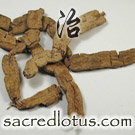 Ba Ji TianEqual QuantityTonify Yang
 Rou Cong RongEqual QuantityTonify Yang
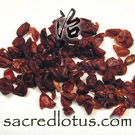 Shan Zhu YuEqual QuantityAstringe, Stabilize, Bind
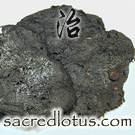 Shu Di HuangEqual QuantityTonify Blood
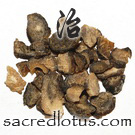 Fu ZiEqual QuantityWarm the Interior and Expel Cold
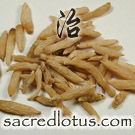 Mai Men DongEqual QuantityTonify Yin
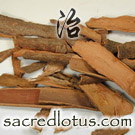 Rou GuiEqual QuantityWarm the Interior and Expel Cold
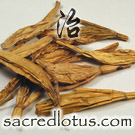 Shi HuEqual QuantityTonify Yin
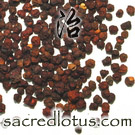 Wu Wei ZiEqual QuantityAstringe, Stabilize, Bind
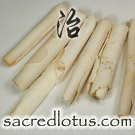 Fu LingEqual QuantityRegulate Water and Drain Dampness
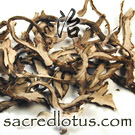 Shi Chang PuEqual QuantityAromatic Substances that Open the Orifices
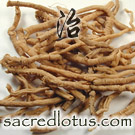 Yuan ZhiEqual QuantityNourish the Heart and Calm the Spirit
Preparation & dosage
How is Di Huang Yin Zi prepared?
Di Huang Yin Zi is traditionally prepared as a coarse-powder decoction, cooked with fresh ginger (Sheng Jiang) and jujube (Da Zao), with a small amount of mint (Bo He) added near the end of cooking so its lifting, orifice-opening action is not lost to prolonged heat. Fu Zi requires longer initial decoction time, consistent with standard practice for processed aconite.
Modern practice commonly decocts the whole herbs (rather than powder) in proportionally adjusted amounts, taken warm, in one or two divided daily doses.
Source: multiple online sources on classic and modern preparation method. Traditional-use framing; not medical advice.
Decoction (traditionally a coarse powder, ~9 g per dose, cooked with Sheng Jiang and Da Zao, with Bo He added near the end). The 12 core herbs — Shu Di Huang, Ba Ji Tian, Shan Zhu Yu, Rou Cong Rong, Shi Hu, Fu Zi, Rou Gui, Wu Wei Zi, Fu Ling, Mai Men Dong, Shi Chang Pu, Yuan Zhi — are used in equal quantity per this site’s own composition record; modern whole-herb decoctions commonly use roughly 9-12 g each, adjusted by practitioner judgment, with Fu Zi dosed conservatively and only as pharmaceutical-grade processed material. Reference only, not a prescription.
Safety — read before use
What are the cautions for Di Huang Yin Zi?
Di Huang Yin Zi contains Fu Zi (prepared aconite), a potent warming herb that is toxic if raw or improperly processed, so it requires pharmaceutical-grade processed material, correct dosing, and adequate decoction time under a qualified practitioner. The formula is built for a deficiency pattern and is inappropriate where phlegm-heat, high fever, or ascendant Liver yang (excess-type wind-stroke) are present.
- Pregnancy: contraindicated — contains Fu Zi and Rou Gui, both cautioned or avoided in pregnancy.
- Acute stroke: not used in the acute crisis phase of stroke; it is a recovery-phase formula for the deficiency pattern, never a substitute for emergency medical care.
- Pattern fit: avoid in phlegm-heat, high fever, or Liver-yang-rising (excess wind) presentations, and use cautiously in pure yin deficiency without accompanying yang-deficiency signs, since the formula’s warming herbs (Fu Zi, Rou Gui) could aggravate heat.
- Fu Zi general cautions: avoid combining with Ban Xia, Gua Lou, Bei Mu, Bai Ji, or Bai Lian per traditional incompatibility guidance; discuss with a practitioner if taking anticoagulant medication.
Source: multiple online sources on cautions for Fu Zi-containing deficiency formulas. Traditional-use framing; not medical advice.
Originally Appeared In:
- Formulas from the Discussion Illuminating the Yellow Emperor's Basic Questions (Huang Di Su Wen Xuan Ming Lun Fang)
Notes:
How is Di Huang Yin Zi different from Zhen Gan Xi Feng Tang or Da Ding Feng Zhu for wind-stroke?
Di Huang Yin Zi treats wind-stroke from Kidney yin-and-yang deficiency with phlegm obstructing the orifices — a deficiency, cold-leaning pattern — which is a different mechanism from the Liver-wind, yin-deficient-heat formulas used for other wind-stroke presentations. Choosing between them depends on whether the underlying pattern is yin-yang deficiency with phlegm, or Liver wind with rising yang or deficient heat.
- vs. formulas for internal Liver wind / ascendant yang: those formulas (e.g., anchoring, heavy, Liver-wind-subduing formulas) address excess-leaning wind-stroke with headache, dizziness, and a wiry or forceful pulse — the opposite presentation from Di Huang Yin Zi’s submerged, frail pulse and cold limbs.
- vs. yin-deficiency-with-internal-wind formulas: those nourish yin and subdue wind without Di Huang Yin Zi’s Kidney-yang-warming herbs (Fu Zi, Rou Gui, Ba Ji Tian, Rou Cong Rong) or its orifice-opening pair (Shi Chang Pu, Yuan Zhi); Di Huang Yin Zi is reserved for the combined yin-and-yang deficiency with phlegm misting the orifices.
Common modifications (per cross-checked formula references): add Ren Shen for pronounced qi deficiency; add Tian Ma and Fang Feng where wind signs are prominent; add mineral/heavy-settling herbs for deficient heat with floating yang; add Quan Xie and Wu Gong for spasm or tremor; add Di Long and Huang Qi to support paralysis recovery.
Source: multiple online sources on modifications and formula differentiation. Traditional-use framing; not medical advice.
Clinical Studies & Research:
Is there modern research on Di Huang Yin Zi?
Yes — a randomized placebo-controlled clinical trial in ischemic stroke plus a growing body of preclinical network-pharmacology and animal-model research on cognition and phlegm-related neurological patterns. The strongest single piece of clinical evidence is a double-blind, placebo-controlled trial in patients with recent ischemic stroke, where the formula was associated with significantly better motor-function recovery (Fugl-Meyer Assessment) at 8 and 12 weeks compared to placebo. Other work is mechanistic and preclinical.
- Ischemic stroke (clinical RCT): a 12-week randomized, placebo-controlled study (n=87 completers) found significantly better Fugl-Meyer motor-recovery scores with Di-huang-yin-zi as an adjunct versus placebo at weeks 8 and 12 (PMID 26275652).
- Cognition / Alzheimer’s model (preclinical): in a transgenic Alzheimer’s mouse model, Dihuang-Yinzi improved spatial-memory performance and eased disturbances in energy-related metabolism (glycolysis, TCA cycle, mitochondrial function), integrating metabolomics with network pharmacology (PMID 35431901).
Sources: PubMed 26275652; PubMed 35431901. Research context, not a therapeutic claim; the formula is not a substitute for emergency stroke care. A published Chinese-language systematic review/meta-analysis on Dihuang Yinzi for vascular dementia was located but not cited here because a resolvable PMID could not be confirmed — omitted per the never-guess rule.
Sources & References
Compiled and edited by Thomas Dehli, Founder & Editor, Sacred Lotus Updated
The information here is referenced from numerous sources — teachers, practitioners, class notes from Five Branches University, the books below, and the published research literature, with citations given as resolvable PubMed identifiers. Where sources disagree, I have flagged the discrepancies directly. If facts couldn't be verified, I have left them out. How we source our content.
Reference information for students and practitioners — not medical advice. Consult a qualified practitioner. Terms of use.
Chinese Formulas Books & References
 https://amzn.to/4fYI3f8
 https://amzn.to/4j55NRA
 https://amzn.to/4gMROyv
 https://amzn.to/4h7msSK