

Zhen Gan Xi Feng Tang (Sedate the Liver and Extinguish Wind Decoction)
Zhen Gan Xi Feng Tang
Sedate the Liver and Extinguish Wind Decoction
- Category
- Formulas that Expel Wind
- Subcategory
- Formulas that Extinguish Internal Wind
- Ingredients
- 12 herbs
Actions
What does Zhen Gan Xi Feng Tang do?
Zhen Gan Xi Feng Tang ("Sedate the Liver and Extinguish Wind Decoction") subdues ascendant Liver yang, extinguishes internal Liver wind, and nourishes Liver-Kidney yin so the anchored yang has something to root in. Devised by the physician Zhang Xichun and recorded in Yi Xue Zhong Zhong Can Xi Lu (1918), it targets the specific mechanism of yin failing to restrain yang until yang rises unchecked and stirs internal wind — classically described as qi and blood rushing pathologically upward toward the head.
The twelve ingredients (per current Sacred Lotus sources & references) divide by role:
- Chief: Huai Niu Xi (30 g) and Dai Zhe Shi (30 g) — Zhang Xichun’s core pair. Niu Xi nourishes Liver and Kidney while specifically guiding blood and qi downward; the heavy mineral Dai Zhe Shi (hematite) directs rebellious qi and blood down and anchors ascendant yang. This “descending” logic — reversing the pathological upward rush rather than only sedating it — is the formula’s defining strategy.
- Deputies: Long Gu and Mu Li (heavy, sedating shells that subdue yang and calm the spirit) work alongside Gui Ban, Xuan Shen, Tian Men Dong, and Bai Shao, which richly nourish Liver-Kidney yin and blood so the anchored yang has a root to return to.
- Assistants: small doses of Yin Chen, Chuan Lian Zi, and Mai Ya gently course Liver qi and protect its preference for free, unobstructed flow — keeping the formula’s heavy descending/anchoring bulk from over-suppressing the Liver.
- Envoy: Gan Cao harmonizes the formula.
Source: Sacred Lotus sources & references + Bensky & Barolet, Formulas & Strategies (chief/deputy/assistant/envoy analysis); origin per Sacred Lotus sources & references (Yi Xue Zhong Zhong Can Xi Lu).
Indications
What is Zhen Gan Xi Feng Tang used for?
Zhen Gan Xi Feng Tang treats ascendant Liver yang generating internal wind on a base of Liver-Kidney yin deficiency — a pattern classically described as qi and blood rushing upward and overwhelming the head. Presentation ranges from a chronic, milder picture to an acute, dangerous one bordering on or following wind-stroke (zhong feng).
- Core presentation: dizziness and vertigo, a throbbing or distending headache, tinnitus, a flushed/red face, a sensation of qi or blood surging up into the head or chest, irritability, and insomnia.
- Severe/urgent presentation: Zhang Xichun described this pattern as the prodrome of wind-stroke and the formula as treatment for its sequelae — heaviness or numbness of a limb, slurred speech, or gradually clouding consciousness accompanying the rising-yang picture.
- Tongue and pulse: a wiry, long, and forceful pulse (per Sacred Lotus sources & references) is the hallmark; the literature describes the tongue as often red, sometimes with a dry or yellow coating, reflecting the underlying yin deficiency beneath the rising yang.
Source: Sacred Lotus sources & references on pattern/pulse + Bensky & Barolet, Formulas & Strategies; tongue description from literature (Sacred Lotus sources & references on tongue not yet populated).
Western Uses:
What is Zhen Gan Xi Feng Tang used for in modern practice?
In modern practice this formula is referenced for the traditional Liver-yang-rising/internal-wind pattern that overlaps with essential hypertension and the prodromal phase of cerebrovascular accident (stroke) or transient ischemic attack. Its historical description of qi and blood rushing to the head parallels how practitioners today discuss dizziness, throbbing headache, and facial flushing accompanying elevated blood pressure.
These biomedical correlates describe the formula’s traditional use and are not a claim that it treats or prevents hypertension, stroke, or any diagnosed disease. A published systematic review of six randomized trials found it associated with blood-pressure and symptom improvement compared with antihypertensive drugs alone, but rated the included trials’ methodological quality as generally low (see research). Any suspected stroke or hypertensive emergency is a medical emergency requiring immediate professional care, not herbal self-treatment.
Source: traditional-use correlates summarized from Bensky & Barolet, Formulas & Strategies; clinical evidence summarized in research (PMID 23573163). Reference only, not a treatment claim.
Ingredients
12 substances in Zhen Gan Xi Feng Tang — each links to its full herb monograph.
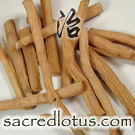 Huai Niu Xi30 gInvigorate Blood and Remove Stagnation
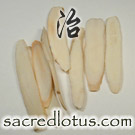 Bai Shao15 gTonify Blood
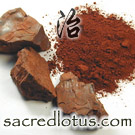 Dai Zhe Shi30 gAnchor, Settle, and Calm the Spirit
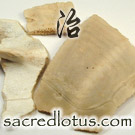 Gui Ban15 gTonify Yin
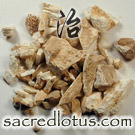 Long Gu15 gAnchor, Settle, and Calm the Spirit
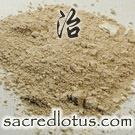 Mu Li15 gAnchor, Settle, and Calm the Spirit
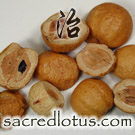 Chuan Lian Zi6 gRegulate the Qi
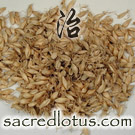 Mai Ya6 gRelieve Food Stagnation
 Tian Men Dong15 gTonify Yin
 Xuan Shen15 gCool the Blood
 Yin Chen6 gRegulate Water and Drain Dampness
 Gan Cao4.5 gTonify Qi
Preparation & dosage
How is Zhen Gan Xi Feng Tang prepared?
Zhen Gan Xi Feng Tang is prepared as a decoction, with its mineral and shell ingredients started first. Dai Zhe Shi, Long Gu, Mu Li, and Gui Ban are dense, hard substances that release their constituents slowly, so they are conventionally decocted alone for roughly 20–30 minutes before the remaining herbs are added; the combined decoction is then simmered and strained.
Source: standard TCM decoction practice for mineral/shell ingredients, per Bensky & Barolet, Formulas & Strategies.
Decoction; mineral/shell ingredients (Dai Zhe Shi, Long Gu, Mu Li, Gui Ban) decocted first. Reference relative amounts: Huai Niu Xi, Dai Zhe Shi 30 g; Long Gu, Mu Li, Gui Ban, Xuan Shen, Tian Men Dong, Bai Shao 15 g; Yin Chen, Chuan Lian Zi, Mai Ya 6 g; Gan Cao 4.5 g. Reference only; not a prescription.
Safety — read before use
What are the cautions for Zhen Gan Xi Feng Tang?
Zhen Gan Xi Feng Tang is a strong, heavy formula for a specific excess-above/deficiency-below pattern and is inappropriate outside it. Because it is built on cold, heavy minerals/shells and rich yin tonics, it can burden a weak Spleen and Stomach and is generally avoided in patterns of Spleen-yang deficiency, cold from deficiency, or where digestion is already weak and loose stools are present.
- Not a substitute for emergency care: the acute, symptomatic phase of an actual stroke or hypertensive crisis requires immediate professional/emergency medical evaluation; herbal treatment of this pattern is traditionally adjunctive and practitioner-guided.
- Pregnancy: contains Huai Niu Xi (traditionally cautioned against in pregnancy for its downward-guiding, blood-moving action) and Chuan Lian Zi — use only under professional guidance.
- Chuan Lian Zi (Fructus Toosendan): used here in a small, short-term dose (6 g); sources caution against prolonged or excessive dosing of this herb.
- Preparation matters: the mineral/shell ingredients (Dai Zhe Shi, Long Gu, Mu Li, Gui Ban) are conventionally decocted first, before the other herbs are added (see preparation).
Source: Bensky & Barolet, Formulas & Strategies (cautions for heavy anchoring/yin-nourishing formulas and related materia medica safety notes). Traditional-use framing; not medical advice.
Originally Appeared In:
- Records of Heart Felt Experiences in Medicine with References to the West (Yi Xue Zhong Zhong Can Xi Lu)
Notes:
How is Zhen Gan Xi Feng Tang different from Tian Ma Gou Teng Yin?
Both formulas treat ascendant Liver yang generating internal wind, but Zhen Gan Xi Feng Tang is the heavier, more urgent version. Tian Ma Gou Teng Yin uses Tian Ma and Gou Teng to calm the Liver and extinguish wind for a milder, earlier-stage presentation; Zhen Gan Xi Feng Tang instead leads with large doses of heavy, descending minerals and shells (Dai Zhe Shi, Long Gu, Mu Li, plus Huai Niu Xi’s downward-guiding action) for a more severe pattern — Zhang Xichun conceived it specifically for cases approaching or following wind-stroke.
- vs Tian Ma Gou Teng Yin: favor Zhen Gan Xi Feng Tang when the rising-yang picture is more forceful (strongly wiry-forceful pulse, marked facial flushing, a sensation of qi/blood surging to the head) or when limb heaviness/numbness or speech changes suggest impending wind-stroke.
- vs Ling Yang Gou Teng Tang: that formula extinguishes wind generated by extreme heat within a febrile (Wen Bing) disease presenting high fever and convulsions — a different etiology from this formula’s yin-deficiency-based rising yang.
Key modifications (from Zhang Xichun’s original text): add Shi Gao or Long Dan Cao for more pronounced heat signs; add E Jiao for more severe yin deficiency; add Dan Nan Xing or Chuan Bei Mu where phlegm signs are present; add Da Huang where constipation accompanies the rising-yang pattern.
Source: Bensky & Barolet, Formulas & Strategies (comparison and modifications, attributed to Zhang Xichun’s original text).
Clinical Studies & Research:
Is there modern research on Zhen Gan Xi Feng Tang?
Yes — a mix of clinical-trial synthesis for hypertension and preclinical network-pharmacology/mechanistic work. A systematic review of six randomized controlled trials found Zhen Gan Xi Feng Decoction, alone or combined with antihypertensive drugs, associated with improved blood pressure and symptom scores compared with conventional drugs alone, though it rated the included trials’ methodological quality as generally low. More recent work has focused on identifying the formula’s bioactive constituents and their computational targets.
- Essential hypertension (clinical synthesis): systematic review of 6 RCTs found blood-pressure and symptom benefit versus antihypertensive drugs alone, with low-quality evidence overall (PMID 23573163).
- Antihypertensive mechanism (preclinical): plasma UPLC-MS combined with network pharmacology and molecular dynamics simulation identified absorbed constituents (e.g., liquiritigenin, caffeic acid) with stable binding to cardiovascular-pathway targets (PMID 41155608).
- Parkinson’s disease (preclinical): network pharmacology and molecular docking proposed active constituents (including beta-sitosterol) and targets, highlighting the neuroactive ligand-receptor interaction pathway (PMID 40958250).
Sources: PubMed 23573163; PubMed 41155608; PubMed 40958250. Research context, not a therapeutic claim; direct high-quality clinical trial evidence remains limited.
Sources & References
Compiled and edited by Thomas Dehli, Founder & Editor, Sacred Lotus Updated
The information here is referenced from numerous sources — teachers, practitioners, class notes from Five Branches University, the books below, and the published research literature, with citations given as resolvable PubMed identifiers. Where sources disagree, I have flagged the discrepancies directly. If facts couldn't be verified, I have left them out. How we source our content.
Reference information for students and practitioners — not medical advice. Consult a qualified practitioner. Terms of use.
Chinese Formulas Books & References
 https://amzn.to/4fYI3f8
 https://amzn.to/4j55NRA
 https://amzn.to/4gMROyv
 https://amzn.to/4h7msSK